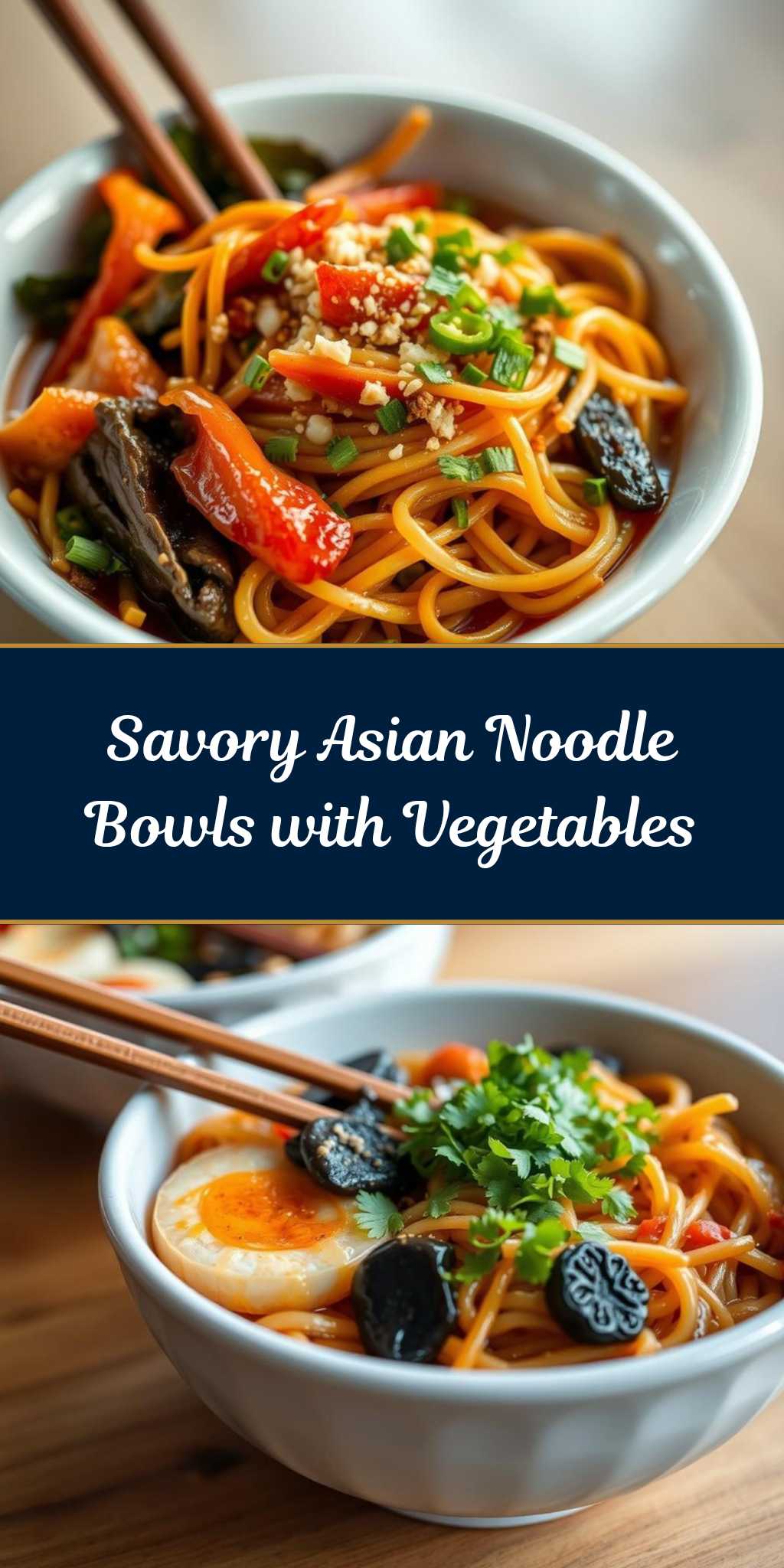
Craving a quick and easy weeknight dinner solution? Try this homemade Asian Noodle Bowl recipe made with tender noodles, savory sauce, and your favorite vegetables for a delicious family favorite meal. Save for later
Asian Noodle Bowls
Introduction
Imagine a dish that is not only a feast for the eyes but also a harmonious balance of flavors and textures, all coming together in a single, satisfying bowl. Asian Noodle Bowls are exactly that – a creative, easy, and incredibly flavorful meal that can be tailored to your taste using everyday ingredients. Whether you’re a fan of spicy kick, savory umami, or the freshness of herbs, this recipe allows you to explore the vibrant world of Asian cuisine from the comfort of your own kitchen. With its versatility and simplicity, it’s perfect for a quick weeknight dinner or a leisurely weekend meal, making it a staple for anyone looking to spice up their meal routine.
Why This Works
- Flavor balance and ingredient accessibility: The beauty of Asian Noodle Bowls lies in their ability to balance a wide range of flavors – from sweet and sour to spicy and savory – using ingredients that are readily available in most supermarkets.
- Ease of preparation: Despite the complex flavors, the preparation is surprisingly straightforward, making it accessible to cooks of all skill levels.
- Impressive results with minimal effort: With just a few ingredients and some basic cooking techniques, you can create a dish that looks and tastes like it came from a high-end restaurant, making it perfect for entertaining guests or a special occasion.
Key Ingredients
The foundation of a great Asian Noodle Bowl starts with a few key ingredients: noodles (rice noodles or soba noodles work well), a protein source (chicken, tofu, or shrimp are popular choices), a variety of colorful vegetables (bell peppers, carrots, and snap peas add a nice crunch), and a flavorful broth or sauce (soy sauce, hoisin sauce, and sriracha are staples). Practical substitutions can be made based on dietary preferences and ingredient availability – for example, swapping chicken for tofu or using different types of noodles. The beauty of this dish is its adaptability, allowing you to experiment with different combinations to find your perfect bowl.
Instructions
- Step 1: Begin by preparing your ingredients. Chop your vegetables, slice your protein into thin strips, and cook your noodles according to the package instructions. This prep work is crucial as it ensures that everything is ready to go when you start cooking.
- Step 2: Cook or mix the base ingredients. If using a protein, cook it in a pan with some oil until it’s browned and cooked through. Set it aside. Then, in the same pan, add more oil if necessary and sauté your chopped vegetables until they’re tender but still crisp.
- Step 3: Layer flavors or textures. This is where you add your noodles, protein, and vegetables together in a bowl. You can then top it with a variety of items to add texture and flavor – think sliced green onions, toasted sesame seeds, pickled ginger, or a soft-boiled egg.
- Step 4: Final touches and plating. Drizzle your broth or sauce over the top of your bowl and garnish with fresh herbs or additional toppings of your choice. The presentation is part of the fun, so don’t be afraid to get creative and make your bowl visually appealing.
Handy Tips
- One of the most helpful kitchen advice for making Asian Noodle Bowls is to have all your ingredients ready before you start cooking. This ensures a smooth and efficient cooking process. Also, don’t overcook your noodles or vegetables – you want them to retain some crunch and texture. If you’re looking for substitutions, consider swapping soy sauce for tamari if you’re gluten-free, or using different colored bell peppers for varied flavor and texture.
Heat Control
If heat is used in your recipe, such as cooking your protein or sautéing vegetables, explain the ideal temperature and timing. For example, cooking chicken should be done at medium-high heat until it reaches an internal temperature of 165°F (74°C), and vegetables should be sautéed at medium heat until they’re tender but still crisp. Signs of doneness include the chicken being fully white and firm to the touch, and vegetables being slightly softened but retaining their color and crunch.
Crunch Factor
The crunch factor in Asian Noodle Bowls can come from a variety of sources – toasted nuts or seeds, crispy fried onions, or raw vegetables like carrots or bell peppers. To achieve the perfect crunch, make sure not to overcook your ingredients. For example, if adding nuts or seeds, toast them in a pan for just a minute or two until fragrant and lightly browned. For vegetables, cook them until they’re just tender, still retaining some of their natural crunch.
Pro Kitchen Tricks
- One expert tip for better results is to use a mixture of sauces for added depth of flavor. For example, combining soy sauce, hoisin sauce, and a squeeze of fresh lime juice can create a balanced and tantalizing flavor profile. Another trick is to add aromatics like garlic and ginger at the beginning of your cooking process to infuse your dish with a rich, aromatic flavor.
Storage Tips
- For leftover storage, it’s best to keep the components of your Asian Noodle Bowl separate to maintain freshness and texture. Store cooked noodles, protein, and vegetables in separate containers in the refrigerator for up to 3 days. Reheat gently when ready to serve, and add fresh toppings just before serving. For longer storage, consider freezing the cooked components, then thawing and reheating as needed.
Gift Packaging Ideas
If you’re considering gifting Asian Noodle Bowls, a thoughtful and visually appealing packaging can make all the difference. Consider using decorative bowls or containers, and garnish with fresh herbs or edible flowers. You could also include a side of homemade sauce or toppings, packaged in small jars or bags and tied with a ribbon. For a more substantial gift, assemble a noodle bowl kit with pre-cooked ingredients, sauces, and toppings, along with a recipe card for the recipient to follow.
Flavor Variations
- Different spices: Experiment with various spice blends like Chinese five-spice, Korean chili flakes (gochugaru), or Japanese curry powder to give your noodle bowls distinct flavors.
- Creative toppings: Add unique toppings such as kimchi, pickled ginger, toasted coconut flakes, or crispy fried shallots to add texture and flavor variety.
- Ingredient swaps: Swap noodles for zucchini noodles or shirataki noodles for a low-carb version, or use different proteins like beef, pork, or tofu for varied flavor profiles.
Troubleshooting
- Texture problems: If your noodles are too sticky, try rinsing them in cold water after cooking. If your vegetables are too soft, reduce cooking time in future attempts.
- Ingredient replacements: If you can’t find a specific ingredient, look for substitutes that offer similar flavor or texture. For example, if you can’t find soba noodles, rice noodles could be a good alternative.
- Over/undercooking signs: Keep an eye on your cooking times and temperatures. Overcooked noodles will be mushy, while undercooked ones will be hard. Similarly, overcooked protein will be dry, and undercooked will be raw and unsafe to eat.
FAQs
- Can I freeze it? Yes, you can freeze the cooked components of your Asian Noodle Bowl. Just thaw and reheat when you’re ready to serve.
- Is it gluten-free? Depending on the sauces and ingredients used, Asian Noodle Bowls can be gluten-free. Just be sure to use gluten-free soy sauce or tamari, and check the ingredients of any store-bought sauces.
- Can I double the recipe? Absolutely. Simply multiply all the ingredients by two (or more, depending on how many servings you need), and adjust cooking times as necessary.
Conclusion
Asian Noodle Bowls are a culinary delight that offers endless possibilities for creativity and customization. With their balance of flavors, variety of textures, and ease of preparation, they’re perfect for anyone looking to add some excitement to their meal routine. Whether you’re a seasoned cook or just starting out, this recipe is a great place to begin your culinary journey. So don’t be afraid to experiment, share your creations, and enjoy the process of making something truly delicious and unique. Happy cooking!