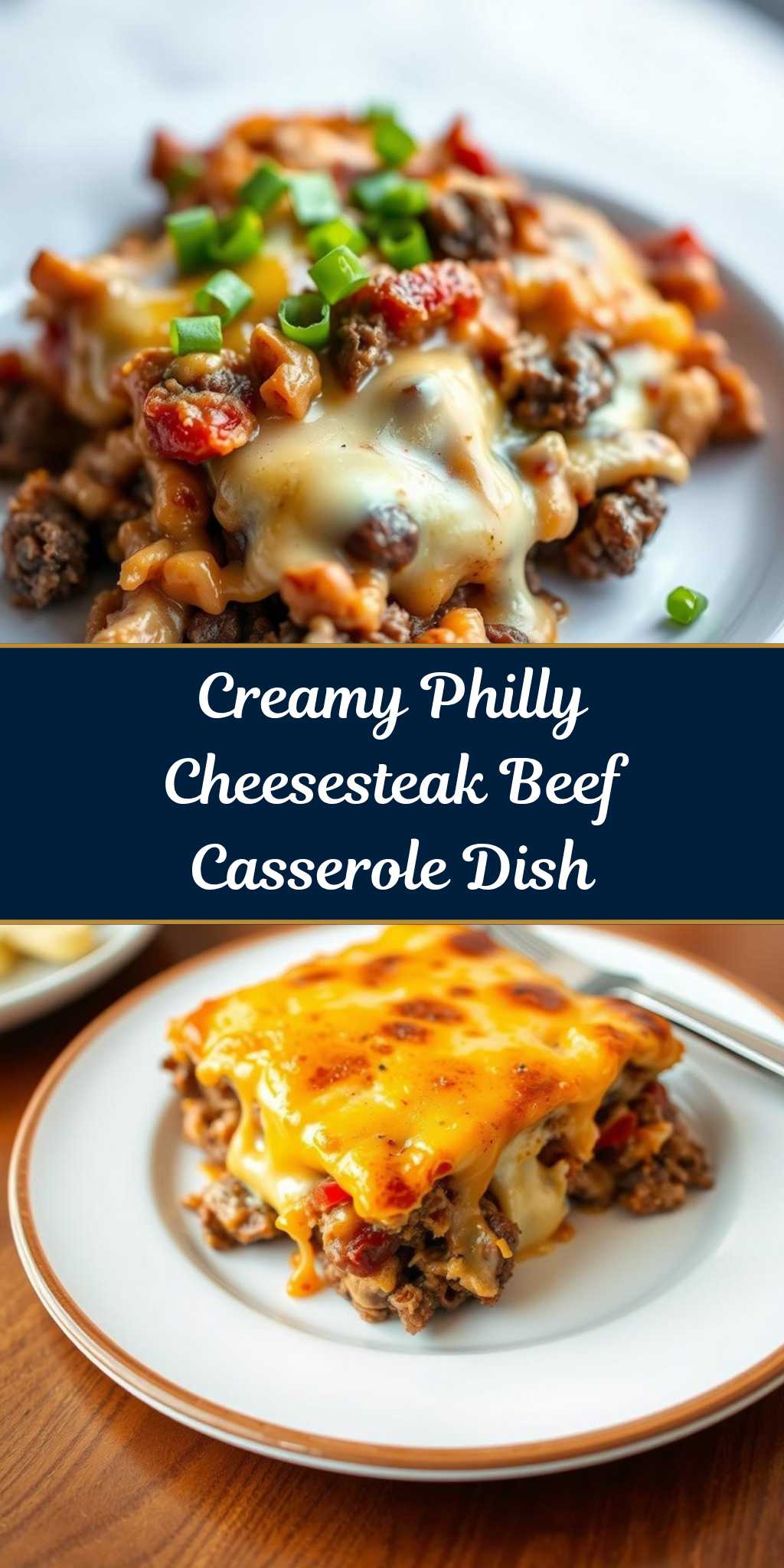
Craving a hearty weeknight dinner solution? This easy Philly Cheesesteak Casserole is a homemade family favorite made with tender beef and melted cheese, perfect for a quick dinner. Save for later and try it tonight
Philly Cheesesteak Casserole
Introduction
The Philly Cheesesteak Casserole is a creative twist on the classic Philadelphia cheesesteak, transforming it into a hearty, comforting casserole that’s perfect for family dinners or casual gatherings. This dish combines the rich flavors of sautéed steak, onions, and bell peppers with the creamy indulgence of melted cheese, all wrapped up in a satisfying casserole. One of the most appealing aspects of this recipe is its ease of preparation and the use of everyday ingredients, making it accessible to anyone looking to spice up their meal routine. Whether you’re a fan of traditional cheesesteaks or just looking for a new casserole recipe to add to your repertoire, the Philly Cheesesteak Casserole is sure to please with its balanced flavors and creative approach to a beloved classic.
Why This Works
- Flavor balance and ingredient accessibility: The combination of tender steak, caramelized onions and bell peppers, and melted cheese creates a flavor profile that’s both hearty and refined, using ingredients that are readily available in most supermarkets.
- Ease of preparation: Despite its impressive presentation, the Philly Cheesesteak Casserole is relatively simple to prepare, requiring basic cooking skills and minimal special equipment.
- Impressive results with minimal effort: This casserole is perfect for those looking to make a big impact with little fuss, ideal for busy weeknights or special occasions when you want to serve something memorable without spending hours in the kitchen.
Key Ingredients
The main ingredients in the Philly Cheesesteak Casserole include thinly sliced steak (ribeye or top round work well), onions, bell peppers, mushrooms, cheese (a combination of cheddar and mozzarella is recommended for optimal flavor and melt), and pasta or bread for the base. Practical substitutions can be made based on personal preferences or dietary needs, such as using chicken or tofu for a vegetarian option, or substituting the cheese with a dairy-free alternative. The key to a great Philly Cheesesteak Casserole is using high-quality ingredients and not overcomplicating the dish, allowing each component to shine in the final product.
Instructions
- Step 1: Begin by prepping your ingredients. Slice the steak into thin strips and season with salt, pepper, and any other desired spices. Chop the onions and bell peppers into bite-sized pieces. If using mushrooms, slice them as well. Cook your pasta according to the package instructions until it’s al dente, then set it aside.
- Step 2: In a large skillet, heat a couple of tablespoons of oil over medium-high heat. Add the steak and cook until it’s browned, about 3-4 minutes. Remove the steak from the skillet and set it aside. In the same skillet, add a bit more oil if necessary, then add the chopped onions and bell peppers. Cook until they’re tender and lightly caramelized, which should take about 5-7 minutes. Add the mushrooms (if using) and cook for an additional 2 minutes.
- Step 3: In a large mixing bowl, combine the cooked pasta, steak, and vegetable mixture. Stir in shredded cheese (reserving some for the top) and any additional seasonings you like. Transfer this mixture to a 9×13 inch baking dish.
- Step 4: Top the casserole with the remaining cheese and any desired toppings (such as diced tomatoes or chopped fresh parsley). Place the dish in a preheated oven at 350°F (175°C) and bake for about 20-25 minutes, or until the cheese is melted and bubbly. Remove from the oven and let it cool for a few minutes before serving.
Handy Tips
- Use a cast-iron skillet for cooking the steak and vegetables if possible, as it retains heat well and can achieve a nice sear. If not, any large skillet will work.
- Don’t overcook the steak or it will become tough. Aim for medium-rare to medium, depending on your preference.
- For an extra crispy top, broil the casserole for 1-2 minutes after baking. Keep an eye on it to prevent burning.
Heat Control
When cooking the steak and vegetables, it’s crucial to maintain a medium-high heat to achieve a good sear and cook the ingredients quickly. For the casserole, baking it in a preheated oven at 350°F (175°C) ensures that the cheese melts evenly and the flavors meld together without burning the top or undercooking the interior. The casserole is done when the cheese is golden brown and bubbly, and the internal temperature reaches 165°F (74°C) for food safety.
Crunch Factor
To achieve a satisfying crunch in your Philly Cheesesteak Casserole, consider adding some crispy elements on top before baking, such as crushed crackers, crispy fried onions, or even a sprinkle of toasted breadcrumbs. These add texture contrast to the dish, making each bite more engaging. Additionally, not overcooking the vegetables helps retain some of their crunch, adding to the overall texture of the casserole.
Pro Kitchen Tricks
- For easier cleanup, line your baking dish with parchment paper before adding the casserole mixture. This prevents the cheese from sticking and makes post-meal cleanup a breeze.
- Let the casserole rest for 10-15 minutes before serving. This allows the juices to redistribute, making the first bite even more flavorful and tender.
- Experiment with different types of cheese for unique flavor profiles. While cheddar and mozzarella provide a classic taste, gouda, provolone, or even feta can add interesting twists.
Storage Tips
- Leftovers can be stored in the refrigerator for up to 3 days. Reheat in the oven or microwave until warmed through.
- For longer storage, the casserole can be frozen before baking. Assemble the casserole up to the point of baking, then cover and freeze. When ready to eat, thaw overnight in the fridge and bake as instructed.
- Use airtight, shallow containers for storing leftovers to prevent moisture from accumulating and making the casserole soggy.
Gift Packaging Ideas
While casseroles are typically served hot and fresh, the Philly Cheesesteak Casserole can be a thoughtful gift for new neighbors, friends in need of a meal, or as a potluck contribution. Consider packaging it in a disposable aluminum baking dish covered with foil, and include a card with reheating instructions. For a more personalized touch, add a side of garlic bread or a green salad in a separate container, and tie everything together with a ribbon or twine.
Flavor Variations
- Different spices: Add some heat with red pepper flakes, or use Italian seasoning for a Mediterranean twist.
- Creative toppings: In addition to the standard cheese, consider adding diced tomatoes, chopped bacon, or a sprinkle of chopped fresh herbs like parsley or basil.
- Ingredient swaps: Use chicken or tofu for a protein swap, or substitute the pasta with cauliflower rice for a low-carb option.
Troubleshooting
- Texture problems: If the casserole turns out too dry, it may be due to overcooking. Conversely, a soggy casserole could result from underbaked pasta or too much liquid in the dish.
- Ingredient replacements: Always taste as you go and adjust seasonings accordingly. If substituting ingredients, consider their flavor profiles and textures to ensure they complement the dish.
- Over/undercooking signs: Keep an eye on the casserole while it’s baking. If the top is browning too quickly, cover it with foil. If the cheese isn’t melting, it may need a bit more time in the oven.
FAQs
- Can I freeze it? Yes, the casserole can be frozen either before or after baking. If freezing, it’s best to do so in airtight, freezer-safe containers or bags to preserve freshness.
- Is it gluten-free? The basic recipe contains pasta, which has gluten. However, you can easily make it gluten-free by substituting the pasta with gluten-free alternatives like zucchini noodles or rice.
- Can I double the recipe? Yes, the recipe can be doubled or even tripled if you’re serving a large crowd. Just ensure you have a large enough baking dish and adjust the cooking time slightly, as a larger casserole may take a bit longer to heat through evenly.
Conclusion
The Philly Cheesesteak Casserole is a versatile, satisfying dish that’s sure to become a staple in your household. With its rich flavors, hearty portions, and ease of preparation, it’s perfect for both everyday meals and special occasions. Don’t be afraid to experiment with different ingredients and toppings to make the recipe your own, and enjoy the process of sharing a delicious, homemade meal with your loved ones. Whether you’re a seasoned chef or a beginner in the kitchen, this casserole is a great way to explore new flavors and techniques, all while enjoying the comfort and warmth that only a well-crafted casserole can provide.