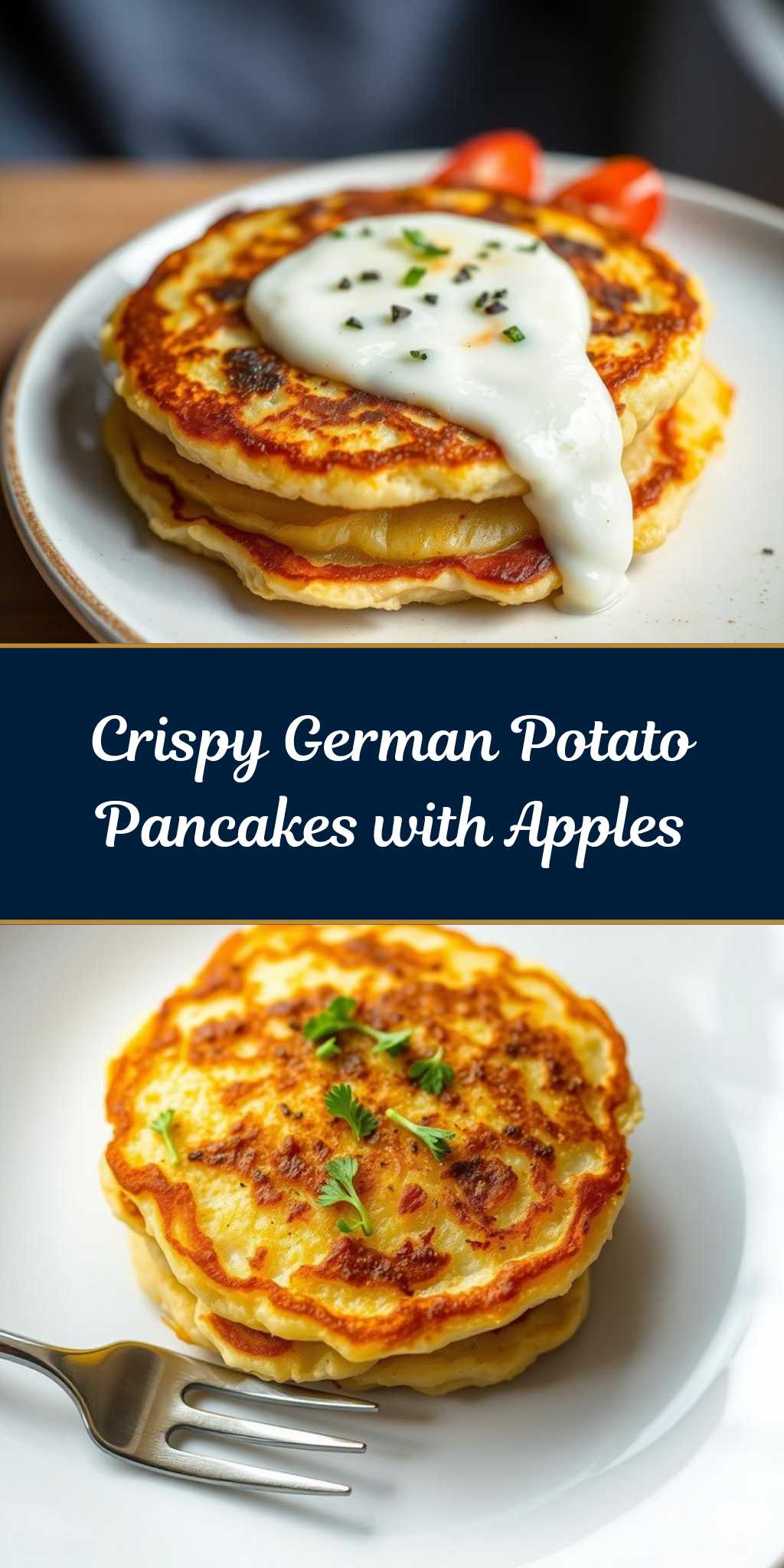
Craving a satisfying weeknight dinner idea? Try these easy German Potato Pancakes made with shredded potatoes and onions for a quick homemade family favorite, save for later
German Potato Pancakes
Introduction
Imagine a dish that combines the simplicity of everyday ingredients with the richness of traditional German cuisine. German Potato Pancakes, or “Kartoffelpuffer” as they’re known in Germany, are a delightful treat that embodies the perfect balance of flavors and textures. These crispy, golden pancakes are not only a staple in German households but also a favorite at outdoor markets and festivals. With their ease of preparation and the versatility to be served as a side dish, snack, or even dessert, it’s no wonder why German Potato Pancakes have won the hearts of many around the world. In this article, we’ll delve into the world of these delicious pancakes, exploring what makes them so special, how to prepare them with minimal effort, and the numerous ways you can customize them to suit your taste preferences.
Why This Works
- Flavor balance and ingredient accessibility: The beauty of German Potato Pancakes lies in their simplicity. The primary ingredients are potatoes, onions, eggs, and flour, which are readily available in most kitchens. The combination of these ingredients creates a flavor profile that is both comforting and exciting.
- Ease of preparation: One of the most appealing aspects of German Potato Pancakes is how easy they are to make. With a few simple steps, you can transform basic ingredients into a delicious meal or snack. The process involves grating potatoes and onions, mixing them with eggs and flour, and then frying the mixture in hot oil until it’s crispy and golden.
- Impressive results with minimal effort: Despite the simplicity of the ingredients and the preparation process, German Potato Pancakes yield impressive results. They’re perfect for impressing guests at a dinner party or for a quick, satisfying meal on a busy day. The crispy exterior and fluffy interior make for a delightful texture that complements a variety of toppings or sides.
Key Ingredients
The foundation of German Potato Pancakes is built around a few key ingredients: potatoes, onions, eggs, flour, salt, and vegetable oil for frying. Potatoes are the star of the show, providing the necessary bulk and flavor. Onions add a sweetness and depth to the pancakes, while eggs serve as a binder, holding the mixture together. Flour helps to absorb excess moisture from the potatoes and onions, ensuring the pancakes fry up crispy rather than soggy. Salt enhances the flavor, and vegetable oil is used for frying. For those looking for substitutions, sweet potatoes can be used in place of regular potatoes for a slightly sweeter version, and gluten-free flour can be used for those with dietary restrictions.
Instructions
- Step 1: Begin by peeling and grating 2-3 large potatoes and 1 medium onion. It’s crucial to squeeze out as much moisture from the grated potatoes and onions as possible to ensure the pancakes fry up crispy. This can be done by wrapping the grated mixture in a clean kitchen towel and squeezing it tightly over a bowl or the sink.
- Step 2: In a large bowl, combine the drained potato and onion mixture with 1 egg, 1/4 cup of flour, and a pinch of salt. Mix well until all the ingredients are fully incorporated. The mixture should still be slightly lumpy, which is perfect for creating a textured pancake.
- Step 3: Heat about 1/2 inch of vegetable oil in a large frying pan over medium-high heat. Once the oil is hot, use a spoon to drop small amounts of the potato mixture into the oil, flattening them slightly with a spatula. Fry the pancakes for about 4-5 minutes on each side, or until they’re golden brown and crispy.
- Step 4: Once the pancakes are done, remove them from the oil with a slotted spoon and place them on a paper towel-lined plate to drain any excess oil. Serve the German Potato Pancakes hot with your choice of toppings, such as sour cream, applesauce, or chives.
Handy Tips
- For an extra crispy exterior, make sure to not overcrowd the frying pan. Fry the pancakes in batches if necessary, to ensure they have enough room to cook evenly.
- Don’t overmix the potato mixture, as this can make the pancakes dense and heavy.
- Experiment with different seasonings, such as garlic powder or smoked paprika, to add unique flavors to your German Potato Pancakes.
Heat Control
The key to achieving perfectly cooked German Potato Pancakes is in the heat control. The oil should be hot but not smoking. If the oil is too hot, the pancakes will burn on the outside before they’re fully cooked on the inside. Ideally, the oil should be between 350°F and 375°F. This temperature range allows for the pancakes to fry up crispy on the outside and remain fluffy on the inside. Fry the pancakes for about 4-5 minutes on each side, or until they’re golden brown. Signs of doneness include a crispy, golden-brown color and a firm texture that doesn’t fall apart when lifted with a spatula.
Crunch Factor
Achieving the perfect crunch factor is what sets great German Potato Pancakes apart from good ones. The secret to a crunchy exterior lies in removing as much moisture from the grated potatoes and onions as possible and not overmixing the batter. Additionally, frying the pancakes in hot oil and not overcrowding the pan helps to ensure they cook evenly and develop a nice crust. For an extra crunchy coating, you can also dust the pancakes with a little bit of flour or cornstarch before frying.
Pro Kitchen Tricks
- Use a thermometer to ensure the oil is at the right temperature. This is especially important if you’re new to frying, as it helps prevent the oil from becoming too hot or not hot enough.
- Don’t be afraid to experiment with different types of oil for frying. While vegetable oil is a classic choice, oils with a higher smoke point like avocado oil or peanut oil can add unique flavors and improve the frying process.
- For a quicker cleanup, line your frying pan with a piece of parchment paper before adding the oil. This makes disposing of the used oil and cleaning the pan much easier.
Storage Tips
- Leftover German Potato Pancakes can be stored in an airtight container in the refrigerator for up to 2 days. To reheat, simply place them in the oven at 350°F for about 10 minutes, or until they’re crispy and hot.
- For longer storage, the pancakes can be frozen. Place them in a single layer on a baking sheet, and once frozen, transfer them to a freezer-safe bag or container. Frozen pancakes can be reheated in the oven or fried again in hot oil until crispy.
- When storing or reheating, keep in mind that the pancakes are best served fresh. However, with proper storage, they can remain delicious for several days.
Gift Packaging Ideas
German Potato Pancakes make for a thoughtful and unique gift, especially when packaged with love and care. Consider placing a batch of freshly made pancakes in a decorative tin or jar, sealed with a ribbon and a handwritten note. For a more rustic approach, wrap the pancakes individually in parchment paper and place them in a woven basket. You can also include a small jar of homemade applesauce or sour cream for a complete gift. This is a perfect idea for holidays, birthdays, or as a welcoming gift for new neighbors.
Flavor Variations
- Different spices: Add a pinch of nutmeg, cumin, or smoked paprika to the potato mixture for a unique twist on the traditional recipe.
- Creative toppings: Experiment with different toppings such as diced ham, chopped fresh herbs, grated cheese, or a dollop of sour cream mixed with chives.
- Ingredient swaps: Use sweet potatoes instead of regular potatoes for a sweeter version, or add some grated carrot or zucchini to the mixture for added flavor and nutrition.
Troubleshooting
- Texture problems: If your pancakes turn out too dense, it might be because the mixture was overmixed. Try mixing the ingredients just until they come together, and then stop mixing. If they’re too soggy, it could be due to excess moisture in the potatoes and onions. Make sure to squeeze out as much moisture as possible before mixing.
- Ingredient replacements: If you don’t have eggs, you can try using flax eggs (1 tablespoon ground flaxseed + 3 tablespoons water, mixed and allowed to gel for 5 minutes) as a substitute. For those without flour, cornstarch or oat flour can be used as alternatives.
- Over/undercooking signs: Keep an eye on the color and texture of the pancakes. If they’re not golden brown after the recommended frying time, they might need a bit more time. Conversely, if they’re too dark, they’re likely overcooked.
FAQs
- Can I freeze it? Yes, German Potato Pancakes can be frozen. The best way to freeze them is to place the fried pancakes in a single layer on a baking sheet, freeze until solid, and then transfer them to a freezer-safe bag or container.
- Is it gluten-free? The traditional recipe includes flour, which contains gluten. However, you can easily make a gluten-free version by substituting the flour with a gluten-free alternative like almond flour, coconut flour, or rice flour.
- Can I double the recipe? Yes, the recipe can be easily doubled or tripled. Just remember to fry the pancakes in batches to avoid overcrowding the pan, which can lead to greasy or undercooked pancakes.
Conclusion
German Potato Pancakes are a culinary delight that embodies the heart of traditional German cuisine with its simplicity, flavor, and creativity. Whether you’re looking for a new side dish to impress your family and friends, a quick snack to satisfy your cravings, or a unique gift idea, these pancakes are sure to hit the spot. With their ease of preparation, versatility in toppings and ingredients, and the joy of biting into a crispy, golden-brown pancake, it’s no wonder why German Potato Pancakes have become a beloved dish around the world. So, don’t be afraid to experiment, share your creations, and enjoy the process of making these delicious treats. Happy cooking!