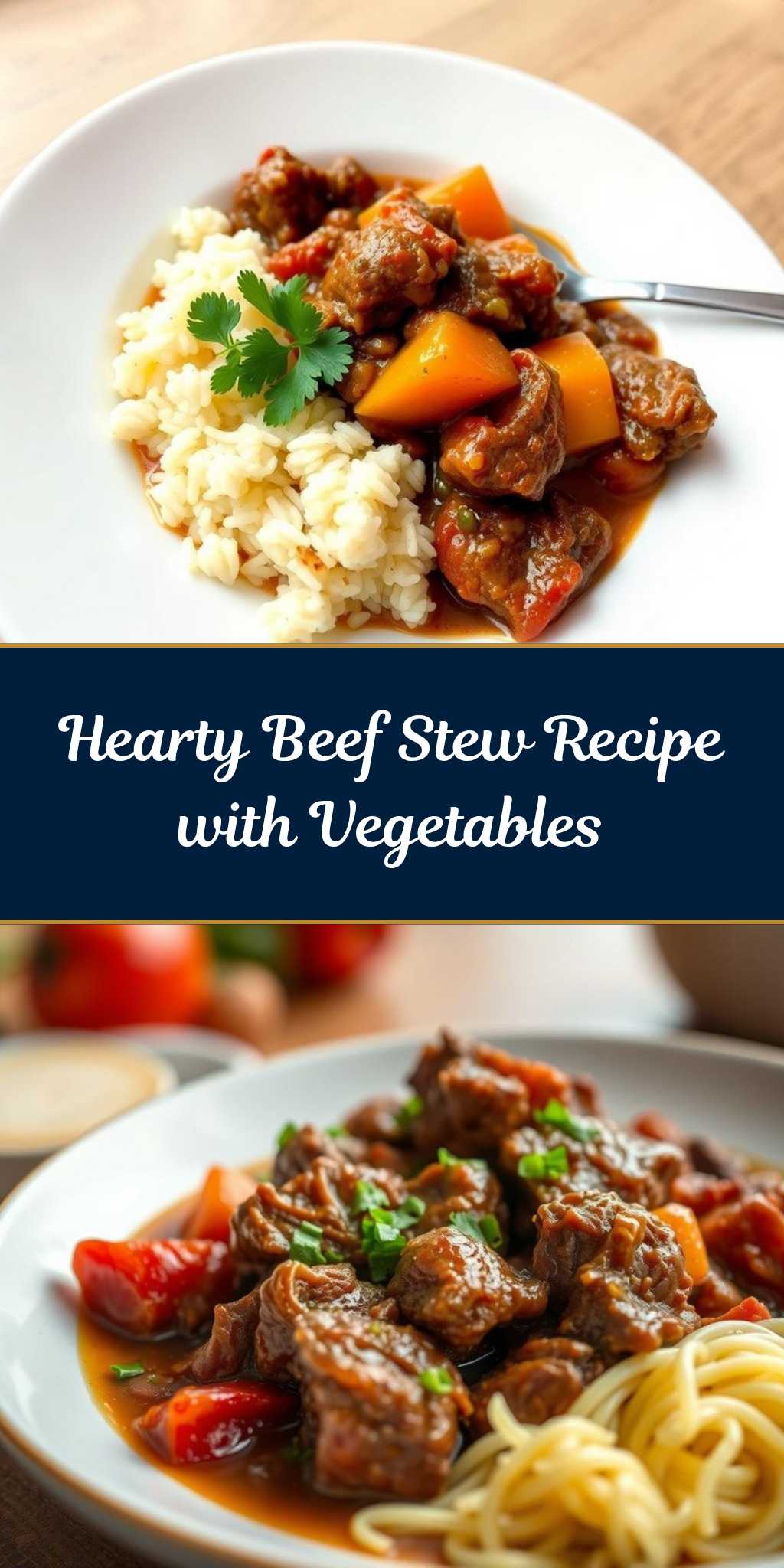
Looking for a hearty weeknight dinner idea? This easy beef stew recipe is a homemade family favorite made with tender beef and fresh vegetables, perfect for a quick weeknight meal, save for later
Beef Stew Recipe
Introduction
This hearty beef stew recipe is a masterclass in comfort food, blending the richness of beef with the vibrancy of vegetables, all wrapped in a broth that’s as soothing as it is flavorful. What makes this recipe truly special is its accessibility – using everyday ingredients, it’s a dish that anyone can make, regardless of their culinary experience. The beauty of beef stew lies in its simplicity and versatility, allowing for a myriad of creative twists and substitutions that cater to any taste or dietary requirement. Whether you’re a seasoned chef or a beginner in the kitchen, this beef stew recipe promises to deliver impressive results with minimal effort, making it a perfect addition to any meal repertoire.
Why This Works
- Flavor balance and ingredient accessibility: This recipe strikes a perfect balance between the deep, savory flavor of beef and the freshness of vegetables, all while using ingredients that are easily found in most supermarkets.
- Ease of preparation: The steps involved in preparing this beef stew are straightforward and uncomplicated, making it an ideal choice for a weeknight dinner or a special occasion meal.
- Impressive results with minimal effort: Despite its simplicity, this beef stew recipe yields a dish that’s not only delicious but also visually appealing, sure to impress family and friends alike.
Key Ingredients
The foundation of a great beef stew is in its ingredients. For this recipe, you’ll need a combination of tender beef cuts (such as chuck or round), a variety of colorful vegetables (like carrots, potatoes, and onions), and aromatic spices (including thyme, rosemary, and bay leaves). The broth is another critical component, and you can use either beef stock or a combination of stock and red wine for added depth. Practical substitutions can be made based on personal preference or dietary needs – for example, using leaner cuts of beef or substituting certain vegetables with others of similar texture and flavor.
Instructions
- Step 1: Begin by preparing your ingredients. Chop the onions, carrots, and potatoes into bite-sized pieces. Cut the beef into similarly sized chunks, ensuring they will cook evenly. Measure out your spices and broth.
- Step 2: In a large Dutch oven or pot, heat a couple of tablespoons of olive oil over medium heat. Add the chopped onions and cook until they’re translucent and starting to caramelize, which will add a rich flavor to your stew.
- Step 3: Add the beef chunks to the pot, browning them on all sides. This step is crucial for developing the stew’s flavor. Once the beef is browned, add the chopped carrots and potatoes, along with the measured spices and broth. Bring the mixture to a boil, then reduce the heat to low and let it simmer.
- Step 4: Allow the stew to cook for about 1.5 to 2 hours, or until the beef and vegetables are tender. Season with salt and pepper to taste. Serve hot, garnished with fresh herbs if desired.
Handy Tips
- One of the most helpful tips for making a great beef stew is to not rush the cooking process. Allowing the stew to simmer slowly over low heat helps to break down the connective tissues in the beef, making it tender and flavorful.
- Another tip is to brown the beef properly before adding the other ingredients. This step enhances the flavor of the stew significantly.
- Consider using a slow cooker for an even more hands-off approach. Simply brown the beef and cook the onions in a pan, then transfer everything to the slow cooker with the remaining ingredients and cook on low for 6-8 hours.
Heat Control
Heat control is crucial when cooking a beef stew. After browning the beef and cooking the onions, the heat should be reduced to a simmer. This low heat, typically around 180°F to 190°F, allows for gentle cooking that breaks down the beef without boiling away the flavorful broth. The cooking time will depend on the cut of beef and the size of the vegetable pieces, but generally, 1.5 to 2 hours on the stovetop or 6-8 hours in a slow cooker is sufficient. Signs of doneness include tender beef and vegetables that can be easily pierced with a fork.
Crunch Factor
The ideal texture for a beef stew is tender, with the beef and vegetables cooked through but still retaining some of their natural texture. To achieve this, it’s essential not to overcook the stew. The carrots and potatoes should be soft but not mushy, while the beef should be easy to chew but still have a bit of substance to it. Avoiding overcooking ensures that the stew remains hearty and satisfying, with a pleasant contrast of textures in each bite.
Pro Kitchen Tricks
- One expert tip is to use a mixture of all-purpose flour and butter to thicken the stew towards the end of its cooking time. This creates a rich, velvety broth that coats the beef and vegetables beautifully.
- Another trick is to add a bit of acidity, such as a splash of red wine vinegar or lemon juice, to balance out the flavors in the stew.
- For easier cleanup, consider cooking the stew in a Dutch oven, which can go from stovetop to oven and then be served directly from the pot.
Storage Tips
- Beef stew can be stored in the refrigerator for up to 3 days. It’s best to cool it down quickly after cooking and then refrigerate it in a covered container.
- For longer storage, the stew can be frozen. Divide it into portions, place them in airtight containers or freezer bags, and store in the freezer for up to 3 months. Reheat gently over low heat or in the microwave.
- When reheating, make sure the stew is heated through to an internal temperature of at least 165°F to ensure food safety.
Gift Packaging Ideas
While beef stew might not be the first dish that comes to mind when thinking of gifts, it can actually make a wonderful and thoughtful present, especially during the colder months. Consider packaging the stew in decorative mason jars or containers, garnished with a sprig of fresh rosemary or thyme. You could also include a side of crusty bread or a green salad for a complete meal. Wrap the container in a cozy kitchen towel or a piece of rustic fabric, and add a handwritten note with reheating instructions for a personal touch.
Flavor Variations
- Different spices can drastically change the flavor profile of the stew. For example, adding a bit of cumin and chili powder can give it a southwestern twist, while paprika and caraway seeds can lean towards a more European flavor.
- Creative toppings can also enhance the stew. Consider adding a dollop of sour cream, some chopped fresh herbs, or a sprinkle of grated cheese to each serving.
- Ingredient swaps are another way to vary the recipe. You could use different types of protein, such as lamb or pork, or substitute some of the vegetables with others that are in season.
Troubleshooting
- Texture problems, such as tough beef or mushy vegetables, can often be traced back to overcooking or using the wrong cut of meat. Make sure to cook the stew low and slow, and choose a cut of beef that’s suitable for slow cooking.
- Ingredient replacements can sometimes affect the flavor or texture of the stew. When substituting ingredients, try to maintain the balance of flavors and textures that the original ingredients provided.
- Over/undercooking signs include beef that’s not tender or vegetables that are still hard. Adjust the cooking time based on the specific ingredients and their quantities.
FAQs
- Can I freeze it? Yes, beef stew can be frozen for up to 3 months. Divide it into portions and store in airtight containers or freezer bags.
- Is it gluten-free? The basic recipe is gluten-free, but be cautious of the broth and any thickeners used. Ensure that these ingredients are gluten-free to accommodate dietary restrictions.
- Can I double the recipe? Yes, the recipe can be easily doubled or tripled to feed a larger crowd. Just be sure to use a large enough pot and adjust the cooking time slightly, as a larger quantity will take longer to cook through.
Conclusion
This beef stew recipe is a testament to the power of simple, wholesome ingredients and traditional cooking methods. It’s a dish that not only warms the belly but also the heart, perfect for cozy nights in with family or as a comforting meal to share with friends. Feel free to experiment with the recipe, adapting it to your tastes and the ingredients you have on hand. Whether you’re a fan of rich, comforting stews or just looking for a new recipe to add to your repertoire, this beef stew is sure to become a favorite. So go ahead, give it a try, and enjoy the warmth and comfort it brings to your table.