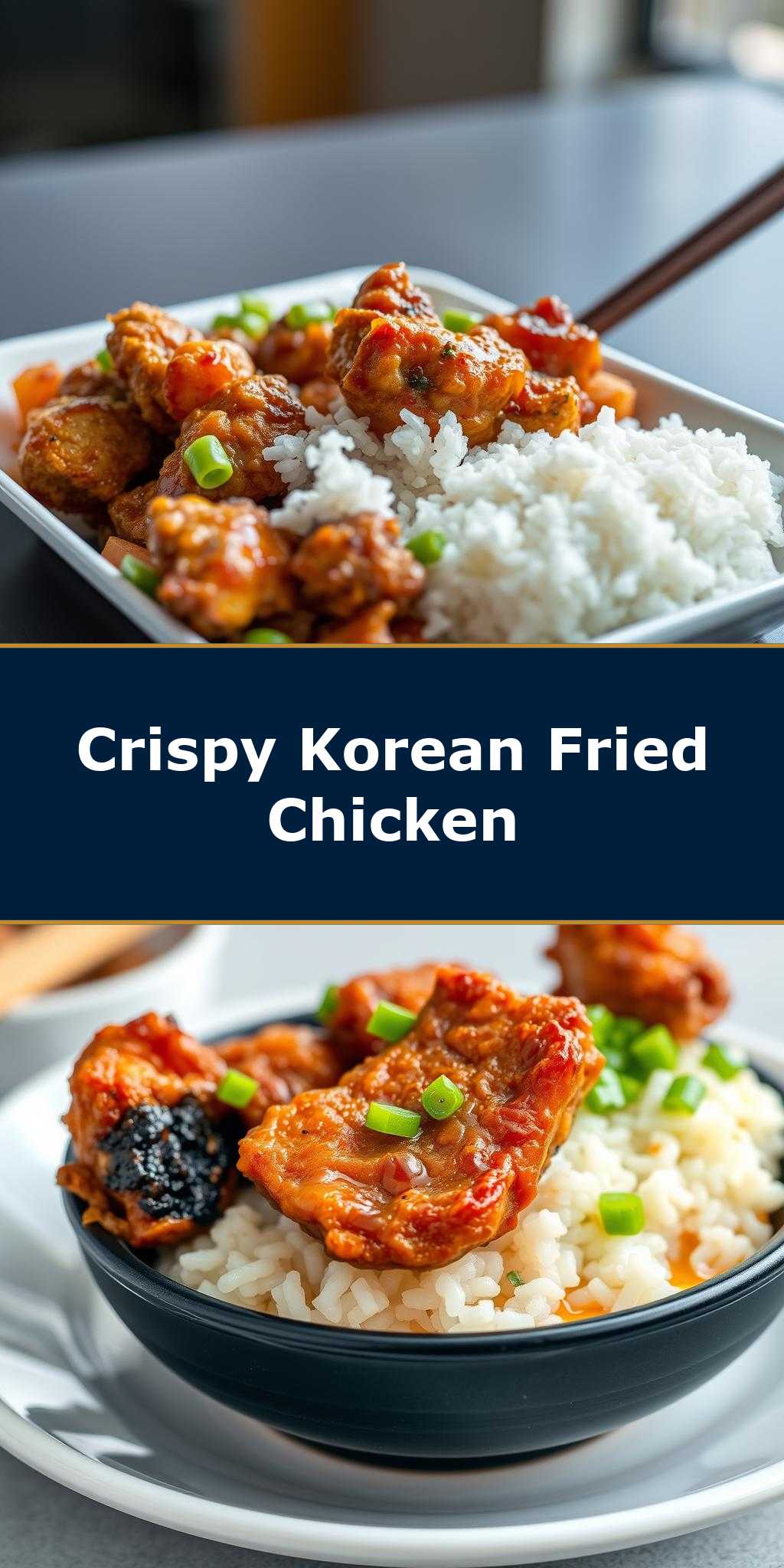
What makes the perfect weeknight dinner? For me, it’s all about quick and easy homemade meals like sticky Korean fried chicken served over a bed of fluffy rice, made with double-fisted crispy chicken and a drizzle of spicy Gochujang sauce. Save this idea for a family favorite meal that’s sure to become a staple in your household, perfect for a busy weeknight dinner. Try it soon and enjoy the flavors of Korea in the comfort of your own home, Pin for later
Sticky Korean Fried Chicken and Rice Bowls
Introduction
Imagine a dish that combines the crispy, golden goodness of fried chicken with the savory, slightly sweet flavors of Korean cuisine, all served over a bed of fluffy rice. Look no further than Sticky Korean Fried Chicken and Rice Bowls, a recipe that is as easy to make as it is impressive. Using everyday ingredients and requiring minimal effort, this dish is perfect for a quick weeknight dinner or a special occasion. The best part? It’s incredibly versatile, allowing you to get creative with toppings and flavors to make it your own. In this article, we’ll dive into the world of Sticky Korean Fried Chicken and Rice Bowls, exploring what makes it tick, the key ingredients you’ll need, and a step-by-step guide to making it happen in your kitchen.
Why This Works
- Flavor balance and ingredient accessibility: The combination of Korean chili flakes (gochugaru), soy sauce, brown sugar, and garlic creates a depth of flavor that is both spicy and sweet, while using ingredients that are easily found in most supermarkets.
- Ease of preparation: Despite its impressive presentation, this dish requires minimal preparation time, making it perfect for busy evenings when you need something delicious but don’t have hours to spend in the kitchen.
- Impressive results with minimal effort: The sticky, caramelized sauce and the crispy fried chicken are sure to impress, whether you’re serving family, friends, or yourself a special treat.
Key Ingredients
To make Sticky Korean Fried Chicken and Rice Bowls, you’ll need a few key ingredients. For the chicken, you’ll need boneless, skinless chicken breasts, which can be substituted with thighs if you prefer darker meat. The sauce is where the magic happens, combining gochujang (Korean chili paste), soy sauce, brown sugar, garlic, and ginger for a sweet, spicy, and savory flavor profile. For the rice, Japanese short-grain rice or Korean rice works best, but you can also use jasmine or basmati rice as a substitute. Finally, for the toppings, kimchi, green onions, toasted sesame seeds, and pickled ginger add texture, flavor, and visual appeal, but feel free to get creative with your favorite toppings.
Instructions
- Step 1: Begin by preparing your ingredients. Chop the green onions, slice the kimchi, and pickled ginger. Measure out the rice and water for cooking. For the chicken, cut it into bite-sized pieces and season with salt and pepper.
- Step 2: Cook the rice according to the package instructions. Typically, it’s a 1:1 ratio with water, brought to a boil, then reduced to a simmer, covered, and cooked until the water is absorbed and the rice is fluffy.
- Step 3: Prepare the sauce by whisking together gochujang, soy sauce, brown sugar, garlic, and ginger in a bowl. This sauce will be used both as a marinade for the chicken and as a glaze during the cooking process.
- Step 4: For the chicken, dredge the pieces in flour, shaking off excess, then dip in the beaten eggs, and finally coat in a mixture of panko breadcrumbs and toasted sesame seeds. Fry the chicken in hot oil until golden and crispy, then drain on paper towels.
- Step 5: In the same pan, add a bit more oil if necessary, then pour in the sauce, bringing it to a simmer. Add the fried chicken back into the pan, tossing to coat evenly with the sauce. Reduce the sauce until it’s sticky and caramelized, glazing the chicken.
- Step 6: To assemble the bowls, place a scoop of cooked rice at the bottom, followed by a few pieces of the sticky fried chicken, then your choice of toppings. Serve immediately and enjoy!
Handy Tips
- For an extra crispy coating on the chicken, chill it in the refrigerator for 30 minutes after breading before frying.
- Adjust the level of spiciness in the sauce to your liking by adding more or less gochujang.
- Don’t overcrowd the pan when frying the chicken. Cook in batches if necessary, to ensure each piece has enough room to cook evenly.
Heat Control
When frying the chicken, it’s crucial to maintain the right temperature. Aim for 350°F (175°C) for the oil. If you don’t have a thermometer, you can test the heat by dropping a small piece of bread into the oil; it should sizzle and start to brown within a few seconds. For the sauce, a medium heat is best, as you want it to simmer and reduce slowly to achieve that perfect sticky glaze.
Crunch Factor
The crunch in this dish comes from the crispy fried chicken and the toasted sesame seeds. To ensure your chicken stays crispy, don’t overcrowd the pan, and make sure the oil is at the right temperature. For extra crunch, you can also top your dish with additional toasted sesame seeds or chopped nuts.
Pro Kitchen Tricks
- Use a cast-iron or stainless steel pan for frying, as these retain heat well and can achieve a nice crust on the chicken.
- Don’t skip the step of chilling the breaded chicken before frying. This helps the coating adhere and creates a crunchier exterior.
- For easier cleanup, line your pans with parchment paper before frying, and have a tray lined with paper towels ready for draining the fried chicken.
Storage Tips
- Leftover chicken and rice can be stored in separate airtight containers in the refrigerator for up to 3 days. Reheat the chicken in the oven at 350°F (175°C) for about 10-15 minutes, or until heated through, and microwave the rice with a splash of water to revive it.
- For freezing, it’s best to freeze the chicken and rice separately. The chicken can be frozen after breading, before frying, and then fried from frozen. Cooked rice can also be frozen but mix it with a bit of water before freezing to help it reheat more evenly.
Gift Packaging Ideas
While Sticky Korean Fried Chicken and Rice Bowls are best served fresh, components like the sauce, kimchi, and pickled ginger can be packaged in decorative jars or containers and given as gifts. Consider pairing these with a bag of specialty rice or a bottle of sesame oil for a complete gift. Wrap the jars in decorative paper or cloth, add a ribbon, and include a recipe card for a personal touch.
Flavor Variations
- Different spices: Experiment with adding a pinch of cumin for a smoky depth or some grated cinnamon for a warm, aromatic flavor.
- Creative toppings: Try adding diced mango for a sweet contrast, crispy bacon for a smoky element, or a fried egg for added richness.
- Ingredient swaps: Use tofu or tempeh for a vegan version, or swap the chicken with pork or beef for a different protein profile.
Troubleshooting
- Texture problems: If your chicken isn’t crispy, it might be due to the oil not being hot enough or the chicken being overcrowded in the pan. If your sauce is too thick, add a bit of water. If it’s too thin, reduce it further by simmering.
- Ingredient replacements: If you can’t find gochujang, you can make a substitute by mixing gochugaru (Korean chili flakes) with soy sauce, brown sugar, garlic, and ginger.
- Over/undercooking signs: Chicken should be cooked to an internal temperature of 165°F (74°C). If it’s undercooked, it will feel soft and squishy. If overcooked, it will be dry and hard. Adjust your cooking time as needed.
FAQs
- Can I freeze it? Yes, you can freeze the chicken after breading and before frying, and also freeze cooked rice. However, it’s best to freeze components separately for the best results.
- Is it gluten-free? The recipe as written contains gluten due to the soy sauce. However, you can easily make it gluten-free by substituting the soy sauce with a gluten-free alternative.
- Can I double the recipe? Yes, you can double or even triple the recipe. Just ensure you have enough oil for frying and adjust the cooking time as necessary for larger quantities of chicken.
Conclusion
Sticky Korean Fried Chicken and Rice Bowls are a game-changer for anyone looking to spice up their meal routine. With its perfect balance of spicy, sweet, and savory, this dish is sure to become a favorite. Don’t be afraid to experiment with different toppings and flavors to make it your own, and enjoy the process of creating something delicious and impressive with minimal effort. Whether you’re a seasoned chef or a beginner in the kitchen, this recipe is a must-try. So go ahead, get cooking, and share your creations with friends and family!