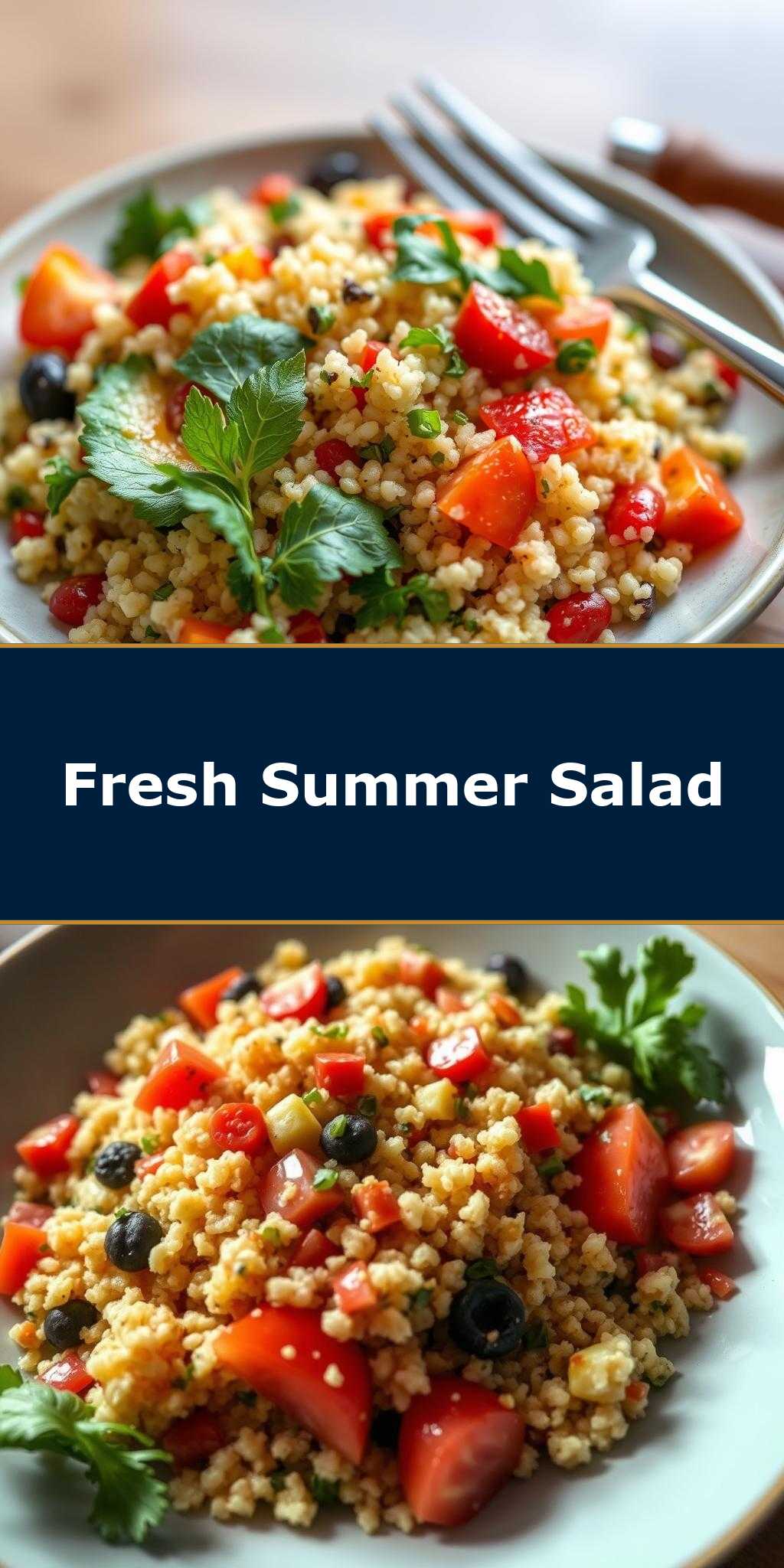
What makes a perfect summer salad? This fresh couscous recipe is a quick and easy homemade solution, featuring juicy tomatoes and a hint of lemon, ideal for a weeknight dinner. Save this idea for a family favorite meal to enjoy all season long, try it soon and make it your own.
Fresh Couscous Summer Salad Recipe
Introduction
Welcome to the perfect dish for warm weather: a Fresh Couscous Summer Salad that embodies the essence of summer in every bite. This recipe is all about ease, flavor, and creativity, using everyday ingredients to create a salad that’s not only delicious but also visually appealing. With the combination of fluffy couscous, vibrant vegetables, and a zesty lemon-tahini dressing, this salad is sure to become a staple in your kitchen. It’s perfect for picnics, barbecues, or a simple weekday lunch, offering a refreshing twist on traditional salads. The best part? It’s incredibly easy to make and requires minimal cooking, making it an ideal choice for those looking to beat the heat while still enjoying a satisfying meal.
Why This Works
- Flavor balance and ingredient accessibility: This recipe strikes a perfect balance between tangy, sweet, and savory flavors, using ingredients that are easily found in most supermarkets.
- Ease of preparation: The steps are straightforward, and the cooking time is minimal, making it perfect for busy days or when you need a quick, impressive dish.
- Impressive results with minimal effort: Despite its simplicity, the Fresh Couscous Summer Salad presents beautifully and tastes complex, making it suitable for both casual gatherings and more formal events.
Key Ingredients
The main ingredients in this recipe include couscous, which serves as the base of! the salad, providing a light and fluffy texture. Mixed with it are diced cucumbers, cherry tomatoes, and bell peppers, which add freshness and crunch. A sprinkle of chopped fresh parsley and mint brings in a burst of herbal flavors. The dressing, made with lemon juice, tahini, garlic, and olive oil, ties everything together with its creamy and tangy notes. For protein, you can optionally add cooked chicken, grilled salmon, or tofu for a vegetarian option. Practical substitutions can be made with the vegetables, using what’s in season or your personal favorites, and you can also experiment with different types of citrus for the dressing.
Instructions
- Step 1: Begin by preparing your ingredients. Chop the cucumbers, cherry tomatoes, and bell peppers into bite-sized pieces. Finely chop the parsley and mint. If using, cook your protein of choice according to your preference (grilling, baking, or sautéing) and let it cool.
- Step 2: Cook the couscous according to the package instructions. Typically, it involves boiling water, adding the couscous, covering, and letting it steam for about 5 minutes until it’s fluffy and light. Fluff the cooked couscous with a fork and set it aside to cool.
- Step 3: In a large bowl, combine the cooled couscous, chopped vegetables, and herbs. If using, add your cooled protein on top. In a small bowl, whisk together the lemon juice, tahini, minced garlic, salt, and pepper to make the dressing. Pour the dressing over the salad and toss gently to combine, ensuring all the ingredients are well coated.
- Step 4: Taste and adjust the seasoning as needed. You can add more lemon juice, salt, or pepper to taste. Cover the bowl with plastic wrap and refrigerate for at least 30 minutes to allow the flavors to meld together. Just before serving, give the salad a good stir and garnish with additional parsley or mint if desired.
Handy Tips
- For the best flavor, use fresh and high-quality ingredients. Don’t overcook the couscous, as it can become mushy. If you find the dressing too thick, you can thin it out with a bit of water. Experiment with different vegetables and proteins to keep the salad interesting and tailored to your dietary preferences.
Heat Control
Since this recipe primarily involves cooling and mixing, heat control is minimal. However, when cooking the couscous or your protein of choice, ensure you follow the recommended temperatures and times to achieve the perfect doneness. For couscous, it’s usually a brief steam, and for proteins, it depends on the method you’ve chosen (e.g., internal temperature for chicken, flakiness for fish).
Crunch Factor
Achieving the right texture is key to this salad’s appeal. The combination of fluffy couscous, crunchy vegetables, and potentially crispy protein elements (if you’ve grilled or baked them) creates a delightful mix of textures. To maintain crunch, prepare your vegetables just before assembling the salad, and avoid over-dressing, which can make the salad soggy.
Pro Kitchen Tricks
- Use a fine-mesh strainer to rinse the couscous before cooking to remove any impurities and excess starch, resulting in a cleaner flavor and texture.
- Let the salad sit at room temperature for about 30 minutes before serving to allow the flavors to meld together and the textures to harmonize.
- Consider adding nuts or seeds (like pine nuts, almonds, or pumpkin seeds) for an extra crunch and nutty flavor.
Storage Tips
- The salad can be prepared ahead of time, but it’s best to dress it just before serving to prevent sogginess. Store any leftovers in an airtight container in the refrigerator for up to 2 days.
- If you’ve added protein, you might want to store it separately and combine just before serving to keep textures distinct.
- Reheat gently if necessary, though this salad is best served cold or at room temperature.
Gift Packaging Ideas
This salad makes a wonderful gift, especially for potlucks, picnics, or as a healthy option for friends and family. Consider packaging it in a large, decorative bowl or individual mason jars for a more personalized touch. Add a ribbon around the bowl or a sprig of fresh herb on top of each jar for a charming presentation. Include a small card with the recipe and your personal touches or suggestions for variations.
Flavor Variations
- Different spices: Add a pinch of cumin for a Middle Eastern flair, smoked paprika for a smoky depth, or chili flakes for a spicy kick.
- Creative toppings: Include diced avocado for creaminess, sliced olives for a salty bite, or crumbled feta cheese for a tangy surprise.
- Ingredient swaps: Use quinoa or bulgur for a nutritional twist, or substitute the lemon juice with lime or orange juice for a different citrus profile.
Troubleshooting
- Texture problems: If the salad becomes too soggy, add more couscous or vegetables. If it’s too dry, add a bit more dressing.
- Ingredient replacements: If you can’t find a specific ingredient, look for similar substitutes. For example, if tahini is not available, you could use a mixture of peanut butter and lemon juice as a rough substitute.
- Over/undercooking signs: Ensure your couscous is fluffy and not mushy, and your protein is cooked to the recommended internal temperature to avoid undercooking.
FAQs
- Can I freeze it? While you can prepare components ahead of time, freezing the assembled salad is not recommended as it can become watery and lose texture.
- Is it gluten-free? Traditional couscous contains gluten, but there are gluten-free alternatives made from rice, corn, or quinoa that you can use instead.
- Can I double the recipe? Yes, simply multiply all the ingredients. This salad is perfect for large gatherings or events.
Conclusion
In conclusion, the Fresh Couscous Summer Salad Recipe is a versatile, flavorful, and refreshing dish perfect for any occasion. With its light and airy texture, combined with the vibrant colors of the vegetables and the tang of the lemon-tahini dressing, it’s sure to delight both your taste buds and your guests. Feel free to experiment with the ingredients and suggestions provided to make this salad your own, and don’t hesitate to share your creations and variations with friends and family. Whether you’re a seasoned chef or a beginner in the kitchen, this recipe is a great way to enjoy the simplicity and beauty of summer in a bowl.