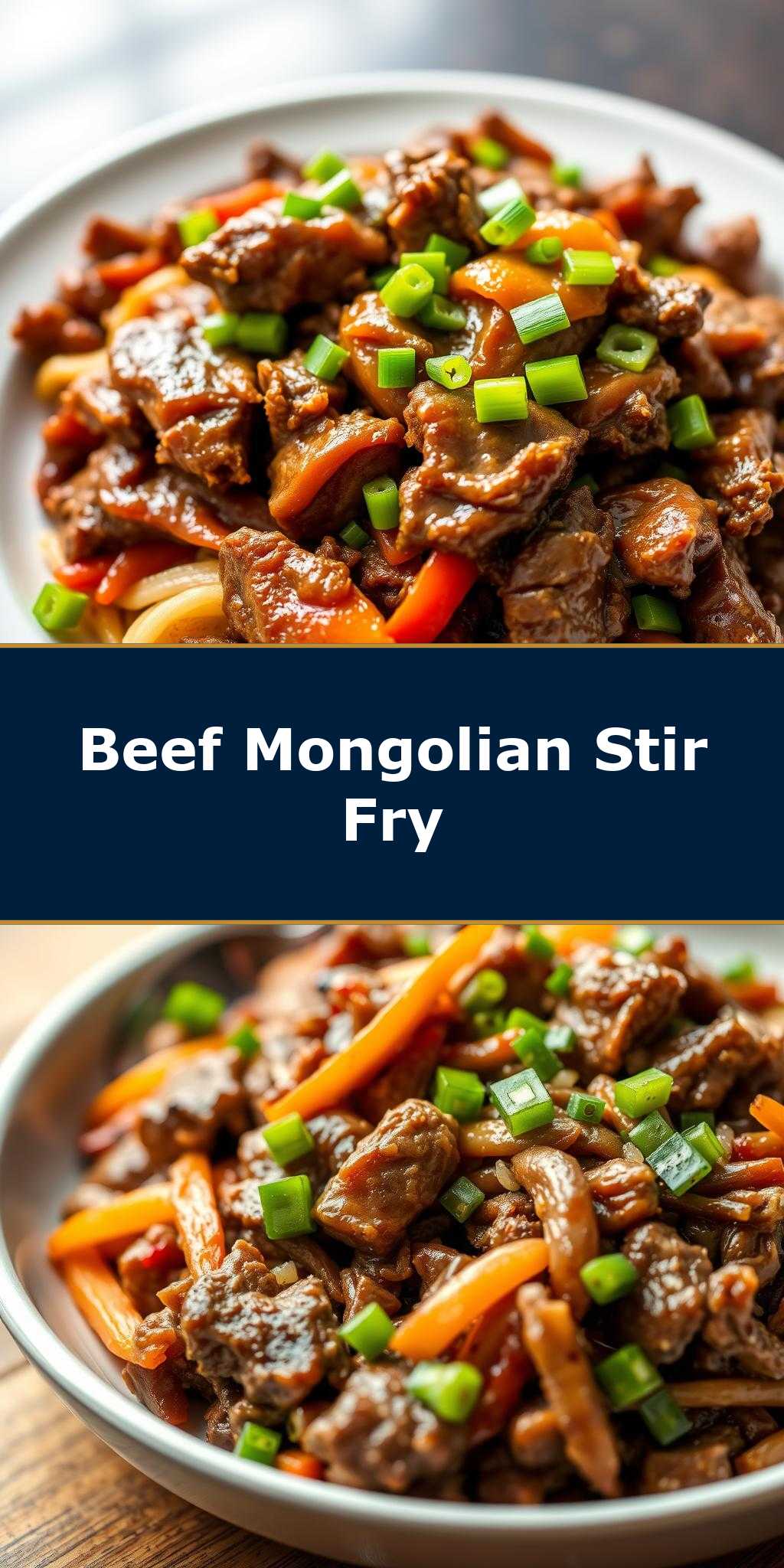
What makes Mongolian beef so irresistibly delicious? This quick and easy homemade recipe relies on savory soy sauce and crispy stir-fried beef to create a weeknight dinner sensation. Save this idea for a family favorite meal that’s ready in no time, try it soon and enjoy the flavors of a classic Chinese dish.
Mongolian Beef Recipe
Introduction
Mongolian Beef is a dish that embodies the perfect blend of ease, flavor, and creativity, all while utilizing everyday ingredients that you might already have in your pantry. This recipe is a masterclass in balancing sweet, savory, and spicy flavors, creating a culinary experience that will leave you and your guests wanting more. The beauty of Mongolian Beef lies in its simplicity and versatility, making it an ideal choice for a quick weeknight dinner or a special occasion. With its origins in Chinese cuisine, specifically from the Taiwan region, this dish has evolved over time, incorporating various influences to become the beloved recipe we know today. In this article, we will delve into the world of Mongolian Beef, exploring what makes it tick, the key ingredients, step-by-step instructions, and expert tips to ensure your dish turns out nothing short of spectacular.
Why This Works
- Flavor balance and ingredient accessibility: The combination of soy sauce, hoisin sauce, and chili flakes creates a depth of flavor that is both complex and accessible, using ingredients that are readily available in most supermarkets.
- Ease of preparation: Despite its impressive flavor profile, Mongolian Beef is incredibly easy to prepare. The dish requires minimal prep time and can be cooked in under 30 minutes, making it perfect for busy evenings.
- Impressive results with minimal effort: The simplicity of the recipe belies the impressive results. With just a few ingredients and some basic cooking techniques, you can create a dish that looks and tastes like it was prepared in a high-end restaurant.
Key Ingredients
The success of Mongolian Beef hinges on the quality and combination of its key ingredients. These include sliced beef (preferably flank steak or ribeye), a mixture of vegetables such as bell peppers, carrots, and broccoli, and a sauce made from soy sauce, hoisin sauce, garlic, ginger, and chili flakes. For a more authentic flavor, using high-quality soy sauce and hoisin sauce is crucial. If you’re looking for substitutions, you can replace beef with chicken or tofu for a vegetarian option, and adjust the vegetables based on your preferences and what’s in season. Additionally, for those who prefer less heat, the amount of chili flakes can be adjusted to taste.
Instructions
- Step 1: Begin by preparing your ingredients. Slice the beef into thin strips and season with a pinch of salt. Mince the garlic and ginger. Slice the bell peppers and other vegetables into bite-sized pieces.
- Step 2: In a small bowl, whisk together the soy sauce, hoisin sauce, and chili flakes to make the sauce. Set aside. In a large skillet or wok, heat a couple of tablespoons of oil over high heat. Add the beef and cook until browned, about 3-4 minutes. Remove the beef from the skillet and set aside.
- Step 3: In the same skillet, add a bit more oil if necessary, then add the minced garlic and ginger. Cook for about 1 minute until fragrant. Add the sliced vegetables and cook until they start to soften, about 3-4 minutes. Pour in the sauce and bring to a boil, letting it cook for about 2 minutes until it thickens. Return the beef to the skillet and stir everything together, ensuring the beef is well coated with the sauce.
- Step 4: Final touches involve adjusting the seasoning if necessary and garnishing with green onions and sesame seeds. Serve over rice or noodles and enjoy. The key to a great Mongolian Beef is achieving the right balance of flavors and textures, so don’t hesitate to experiment and adjust the recipe to your taste preferences.
Handy Tips
- One of the most helpful kitchen advice for making Mongolian Beef is to have all your ingredients ready before you start cooking, as the dish comes together quickly. Also, using a wok or a large skillet with a non-stick surface can prevent the ingredients from sticking and make the cooking process smoother.
Heat Control
Heat control is crucial when making Mongolian Beef. The ideal temperature for cooking the beef and vegetables is high heat, as it helps to achieve a nice sear on the beef and a crisp texture on the vegetables. However, it’s essential to adjust the heat as needed to prevent burning. A good sign of doneness for the beef is when it reaches your desired level of brownness, and for the vegetables, it’s when they are tender but still crisp. The sauce should thicken and coat the ingredients evenly, indicating it’s ready to be served.
Crunch Factor
Achieving the right crunch factor in Mongolian Beef is about striking a balance between tender beef and crisp vegetables. The key is not to overcook the vegetables; they should retain some of their crunch to provide a satisfying texture contrast to the soft beef. Additionally, garnishing with toasted sesame seeds and chopped green onions can add an extra layer of crunch and freshness to the dish.
Pro Kitchen Tricks
- One expert tip for better results is to cook the beef in batches if necessary, to ensure it has enough room to cook evenly and prevent it from steaming instead of searing. Another trick is to add a small amount of cornstarch to the beef before cooking to help it brown more evenly and stay tender.
Storage Tips
- For leftover Mongolian Beef, it’s best to store it in an airtight container in the refrigerator. It can be safely stored for up to 3 days. For reheating, add a bit of water or sauce to prevent the dish from drying out, and heat it over low heat, stirring frequently. While freezing is possible, it’s best consumed fresh for optimal flavor and texture.
Gift Packaging Ideas
While Mongolian Beef is typically served as a main dish, components of the recipe can be gifted, such as homemade hoisin sauce or a spice blend. For gifting, consider packaging these items in decorative jars or bags, tied with a ribbon and accompanied by a recipe card for a personal touch.
Flavor Variations
- Different spices: Experimenting with various spices and seasonings can greatly alter the flavor profile of Mongolian Beef. For example, adding a bit of cumin can give it a smoky flavor, while paprika can add a smoky sweetness.
- Creative toppings: Adding creative toppings such as toasted nuts, dried cranberries, or pickled ginger can add new dimensions of flavor and texture to the dish.
- Ingredient swaps: Swapping beef with other proteins like chicken, pork, or tofu, and experimenting with different vegetables can make the recipe more versatile and adaptable to different tastes and dietary requirements.
Troubleshooting
- Texture problems: If the beef becomes too tough, it might be overcooked. Prevent this by cooking the beef in batches and not overcrowding the skillet. For soggy vegetables, cook them for a shorter time or add them towards the end of cooking.
- Ingredient replacements: If an ingredient is not available, consider what can provide a similar flavor or texture. For example, if hoisin sauce is not available, a combination of soy sauce and honey can provide a similar sweet and savory flavor.
- Over/undercooking signs: Keep an eye on the color and texture of the ingredients. Beef should be browned and cooked through, and vegetables should be tender but crisp. Adjust cooking time based on these signs to achieve the perfect doneness.
FAQs
- Can I freeze it? Yes, Mongolian Beef can be frozen, but it’s best consumed fresh for optimal flavor and texture. If freezing, make sure to cool it down completely before placing it in an airtight container or freezer bag.
- Is it gluten-free? Traditional Mongolian Beef recipes include soy sauce and hoisin sauce, which contain gluten. However, gluten-free alternatives for these sauces are available, making it possible to adapt the recipe for gluten-free diets.
- Can I double the recipe? Yes, the recipe can be easily doubled or tripled for larger gatherings. Just ensure you have a large enough skillet or wok to accommodate all the ingredients without overcrowding.
Conclusion
In conclusion, Mongolian Beef is a versatile and flavorful dish that can elevate any meal. With its easy preparation, impressive results, and the potential for countless variations, it’s a recipe that can be enjoyed by everyone. Whether you’re a seasoned chef or a beginner in the kitchen, this recipe is sure to become a staple. So, don’t hesitate to experiment, share your creations, and most importantly, enjoy the process of cooking and the joy of sharing a delicious meal with others. Happy cooking!