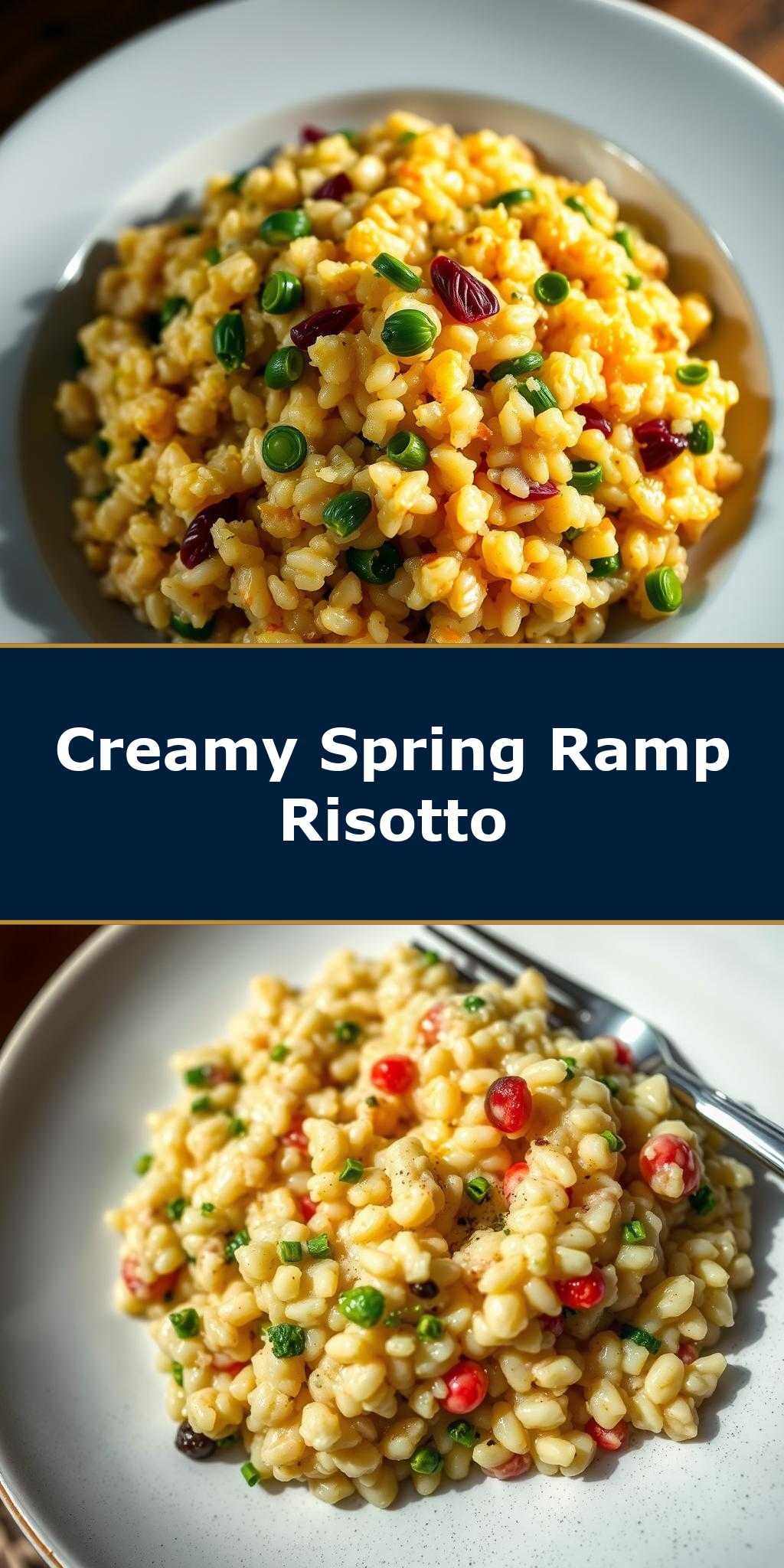
What makes a perfect spring evening dinner? A creamy Spring Ramp Risotto, of course, made with fresh ramps and parmesan cheese for a quick and easy weeknight dinner that’s sure to become a family favorite. Save this idea for a homemade meal that’s full of flavor.
Spring Ramp Risotto
Introduction
As the warmth of spring begins to awaken the earth, our kitchens can also come alive with the vibrant flavors and ingredients of the season. One of the most delightful and overlooked treasures of spring is the ramp, a type of wild garlic that adds a depth of flavor and aroma to any dish. In this recipe, we’ll explore how to harness the beauty of ramps in a classic Italian dish, the risotto, creating a Spring Ramp Risotto that is both a celebration of the season and a masterclass in simplicity and elegance. This dish is perfect for those looking to elevate their culinary skills without spending hours in the kitchen, as it combines ease of preparation, impressive results, and the versatility of everyday ingredients.
Why This Works
- Flavor balance and ingredient accessibility: The key to a great risotto lies in its balance of flavors and textures, and the Spring Ramp Risotto achieves this by combining the earthy sweetness of ramps with the creamy richness of Arborio rice and Parmesan cheese, all of which are readily available in most supermarkets.
- Ease of preparation: Despite its sophisticated taste, this dish is remarkably easy to prepare. The steps are straightforward, and the ingredients require minimal preprocessing, making it an ideal choice for a weeknight dinner or a special occasion.
- Impressive results with minimal effort: The beauty of risotto is its ability to transform simple ingredients into a luxurious meal. With just a few ingredients and some attentive stirring, you can create a dish that is sure to impress your family and friends with its creamy texture and deep, satisfying flavors.
Key Ingredients
The foundation of a great Spring Ramp Risotto lies in its ingredients. You will need:
– 1 cup of Arborio rice, the preferred variety for risotto due to its high starch content, which creates the creamy texture.
– 2 cups of ramps, cleaned and chopped. Ramps can be substituted with a combination of garlic and leeks if not available, though the flavor will be slightly different.
– 4 cups of vegetable or chicken broth, warmed. The broth can be homemade or store-bought, and its flavor will significantly impact the final dish.
– 2 tablespoons of olive oil, for its mild flavor and high smoke point.
– 1/2 cup of white wine (optional), which adds a layer of complexity to the dish but can be omitted for a family-friendly version.
– 1/4 cup of grated Parmesan cheese, the saltiness of which balances the sweetness of the ramps and the richness of the rice.
– Salt and pepper, to taste, for adjusting the seasoning of the dish.
– Fresh parsley or thyme, for garnish, adding a pop of color and freshness to the finished dish.
Instructions
- Step 1: Begin by preparing your ingredients. Chop the ramps, making sure to separate the bulbs from the leaves, as they will be used at different stages of cooking. Measure out your broth, wine (if using), and olive oil. Grate the Parmesan cheese and set it aside.
- Step 2: In a large skillet, heat the olive oil over medium heat. Add the chopped ramp bulbs and sauté until they are softened and fragrant, about 3-4 minutes. Then, add the Arborio rice and cook for 1-2 minutes, until the rice is coated in oil and slightly toasted.
- Step 3: If using wine, add it to the skillet and cook until the liquid is fully absorbed, stirring constantly. Then, begin adding the warmed broth one cup at a time, stirring continuously and allowing each portion to absorb before adding the next. This process should take about 20-25 minutes, or until the rice is cooked and creamy. During the last 5 minutes of cooking, stir in the chopped ramp leaves, allowing them to wilt into the rice.
- Step 4: Once the rice is cooked, remove the skillet from the heat. Stir in the grated Parmesan cheese until it is fully incorporated and the cheese has melted, creating a creamy and indulgent texture. Season with salt and pepper to taste, then serve immediately, garnished with fresh parsley or thyme.
Handy Tips
- When working with ramps, be sure to use both the bulbs and the leaves, as they offer different flavors and textures. The bulbs provide a deeper, more garlic-like flavor, while the leaves are milder and slightly sweet.
- To enhance the flavor of your risotto, use high-quality ingredients, including a good broth and real Parmesan cheese. These will make a significant difference in the final taste and texture of your dish.
- For a creamier risotto, do not overcook the rice. It should retain a slight firmness in the center, known as “al dente,” which is key to a well-made risotto.
Heat Control
The success of a risotto also depends on heat control. It’s crucial to maintain a medium heat throughout the cooking process, as high heat can cause the rice to cook too quickly on the outside, leading to an undercooked interior. Conversely, too low heat can result in a risotto that is gluey or sticky. Ideally, the heat should be adjusted so that the broth is absorbed at a steady, gentle pace, allowing for constant stirring and observation of the dish’s progress.
Crunch Factor
The texture of a Spring Ramp Risotto is a delicate balance of creamy and tender, with a slight crunch from the ramp leaves and any added garnishes. To achieve this, it’s essential not to overcook the rice or the ramps, preserving their natural textures within the dish. For added crunch, consider topping your risotto with toasted pine nuts or a sprinkle of crispy breadcrumbs, which can enhance the textural experience without overpowering the other flavors!
Pro Kitchen Tricks
- One of the most significant challenges in making risotto is the constant stirring required. To make this process easier, use a skillet with a heavy bottom, as it distributes heat more evenly, and consider enlisting a helper to share the stirring duties.
- For an extra creamy risotto, stir in a tablespoon or two of unsalted butter at the end of cooking, just before serving. The butter adds richness and helps to bind the flavors together.
- To make cleanup easier, prepare all your ingredients before starting to cook, and have your broth and wine (if using) warmed and ready to go. This will streamline the cooking process and reduce the likelihood of spills or messes.
Storage Tips
- Leftover risotto can be stored in the refrigerator for up to 3 days. It’s best to cool it down quickly after cooking to prevent bacterial growth, then refrigerate it in a covered container.
- Reheating risotto requires care to prevent it from becoming dry or sticky. The best method is to add a little liquid (broth or water) to the risotto and heat it over low heat, stirring constantly, until warmed through.
- Risotto can also be frozen, though the texture may change slightly upon reheating. It’s best to freeze it in portions, allowing for easier thawing and reheating as needed.
Gift Packaging Ideas
While risotto is typically considered a dish to be enjoyed fresh, it can be gifted in creative ways, especially when presented in an appealing manner. Consider packaging cooled risotto in decorative jars or containers, topped with a layer of grated Parmesan cheese and a sprinkle of fresh herbs. This can be accompanied by a bottle of wine or a baguette for a complete gift. For a more personal touch, include a recipe card with your own tips and variations, making the gift not just a meal, but a culinary experience to be shared.
Flavor Variations
- Different spices: Experiment with various spices and herbs to change the flavor profile of your risotto. For example, a pinch of saffron can add a luxurious, aromatic flavor, while dried thyme can provide a more rustic, earthy taste.
- Creative toppings: Risotto is a versatile dish that can be enhanced by a variety of toppings. Consider adding roasted vegetables, grilled meats, or a fried egg to create different versions of the dish.
- Ingredient swaps: Don’t be afraid to substitute ingredients based on what’s available and your personal preferences. For instance, using different types of cheese or adding some heat with red pepper flakes can significantly alter the character of your risotto.
Troubleshooting
- Texture problems: If your risotto turns out too sticky or dry, it’s likely due to overcooking or insufficient liquid. Adjusting the cooking time and the amount of broth can help achieve the perfect texture.
- Ingredient replacements: When substituting ingredients, consider their flavor profiles and textures. For example, if using leeks instead of ramps, you may need to adjust the cooking time and the amount used to achieve the desired flavor.
- Over/undercooking signs: A well-cooked risotto should be creamy and tender, with a slight firmness in the center of the rice grains. Overcooked risotto will be mushy and sticky, while undercooked risotto will be hard and crunchy.
FAQs
- Can I freeze it? Yes, risotto can be frozen, but it’s best to do so in portions and to expect a slight change in texture upon reheating.
- Is it gluten-free? Traditional risotto made with Arborio rice is gluten-free, but be cautious of the broth and any added ingredients, which may contain gluten.
- Can I double the recipe? Yes, the recipe can be doubled or even tripled, but be sure to use a large enough skillet and adjust the cooking time accordingly to ensure that the rice cooks evenly and thoroughly.
Conclusion
Spring Ramp Risotto is a dish that embodies the spirit of the season, with its vibrant flavors, fresh ingredients, and the promise of new beginnings. It’s a recipe that invites creativity and experimentation, encouraging you to explore the possibilities of your kitchen and the beauty of the natural world. Whether you’re a seasoned chef or a culinary novice, this risotto is sure to delight, with its creamy texture, aromatic flavors, and the simple joy of cooking something special. So, take a moment to appreciate the ramps, those humble, garlicky greens that bring such depth and richness to this dish, and enjoy the process of crafting a meal that is at once comforting, elegant, and uniquely yours.