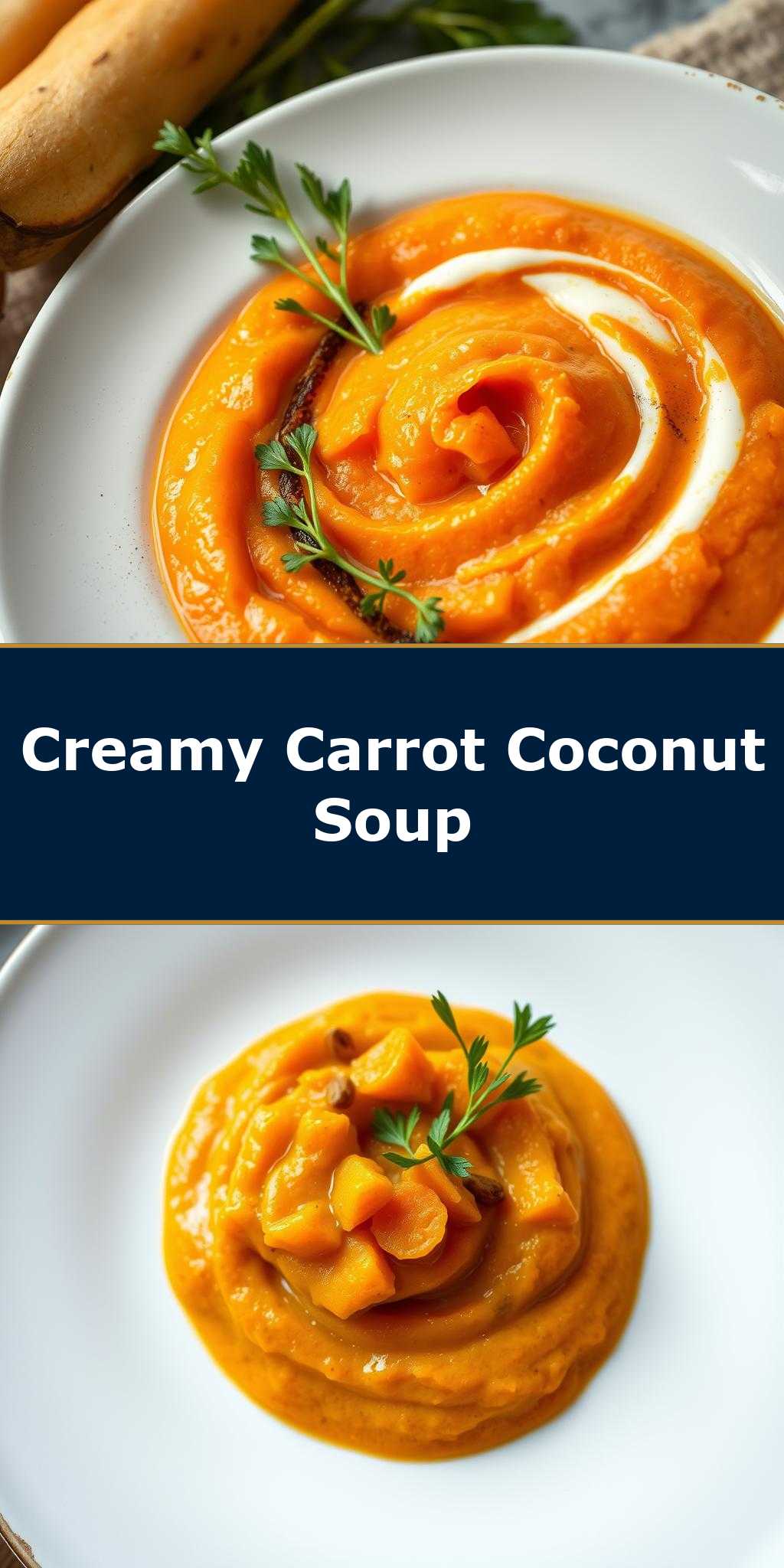
What makes a perfect weeknight dinner? A bowl of roasted carrot coconut soup, that’s what. This easy and homemade recipe blends roasted carrots with coconut milk for a creamy and comforting family favorite. Save this idea for a quick weeknight meal solution.
Roasted Carrot Coconut Soup
Introduction
Imagine a soup that’s not only a feast for the taste buds but also a vibrant display of color and a symphony of textures. Welcome to the world of Roasted Carrot Coconut Soup, where the humble carrot takes center stage, elevated by the lushness of coconut and the depth of aromatic spices. This recipe is a masterclass in simplicity, requiring minimal effort for a dish that’s as impressive as it is delicious. Whether you’re a seasoned chef or a culinary newcomer, this soup is sure to become a staple, perfect for cozy nights in, special occasions, or as a healthy, comforting treat any day of the week.
Why This Works
- Flavor balance and ingredient accessibility: The combination of roasted carrots, coconut milk, and a blend of spices creates a perfectly balanced flavor profile that’s both comforting and exciting. Plus, the ingredients are easily found in most grocery stores, making this dish accessible to everyone.
- Ease of preparation: Despite its sophisticated taste, this soup is incredibly easy to prepare. The process involves simple steps like roasting, blending, and simmering, making it a great option for busy days or for those who are new to cooking.
- Impressive results with minimal effort: The transformation of carrots from a raw, crunchy state to a soft, velvety soup, combined with the richness of coconut milk, yields a dish that’s sure to impress. The best part? It requires minimal effort, making it perfect for both everyday meals and special occasions.
Key Ingredients
The Roasted Carrot Coconut Soup hinges on a few key ingredients that bring its unique flavor and texture to life. Carrots are the base, providing natural sweetness and a vibrant orange color. Coconut milk adds a creamy richness and a subtle coconut flavor. Onions, garlic, and ginger form the aromatic backbone, contributing depth without overpowering the carrots. Chicken or vegetable broth helps to thin out the soup to the desired consistency while adding more flavor. Finally, a blend of spices such as cumin, coriander, and turmeric not only adds warmth but also enhances the soup’s nutritional profile. For practical substitutions, you can use other sweet root vegetables like sweet potatoes or parsnips in place of some of the carrots, and almond or oat milk for a dairy-free alternative to coconut milk.
Instructions
- Step 1: Begin by preheating your oven to 425°F (220°C). Peel and chop 2 pounds of carrots into roughly 1-inch pieces. Place them on a baking sheet, drizzle with 2 tablespoons of olive oil, sprinkle with salt, and toss to coat evenly. Roast in the oven for about 20-25 minutes, or until the carrots are tender and lightly caramelized.
- Step 2: While the carrots are roasting, heat 1 tablespoon of olive oil in a large pot over medium heat. Add 1 chopped onion and cook until it’s translucent, about 5 minutes. Then add 3 cloves of minced garlic and 1 inch of grated ginger; cook for another minute, stirring constantly to prevent burning.
- Step 3: Once the carrots are done, add them to the pot along with 4 cups of broth (chicken or vegetable), 1 can of coconut milk, and your desired spices (e.g., cumin, coriander, turmeric). Bring the mixture to a boil, then reduce the heat and let simmer for 15-20 minutes.
- Step 4: Use an immersion blender to puree the soup until smooth. Alternatively, you can cool the soup and blend it in batches in a blender, then return it to the pot. Season with salt and pepper to taste. Serve hot, garnished with fresh herbs or a dollop of coconut cream for added flair.
Handy Tips
- For an extra creamy soup, add more coconut milk or a splash of heavy cream. Conversely, for a lighter version, use less coconut milk or substitute some of it with additional broth.
- Experiment with different spices to find your perfect blend. A pinch of cayenne pepper can add a nice kick for those who like a bit of heat.
- Avoid over-roasting the carrots, as this can make them too sweet and caramelized, altering the soup’s flavor profile.
Heat Control
When roasting the carrots, ensure your oven is at the correct temperature (425°F or 220°C) for the best results. The roasting time may vary depending on the size of your carrot pieces and your oven’s performance, so keep an eye on them after 20 minutes. For the simmering step, maintain a low to medium heat to prevent the soup from boiling over or the coconut milk from separating.
Crunch Factor
This soup is all about smooth, velvety texture, thanks to the roasted carrots and coconut milk. However, you can add a delightful crunch by topping it with toasted nuts (almonds or pecans work well), crispy fried onions, or even a sprinkle of toasted coconut flakes. These additions not only provide texture but also enhance the visual appeal of the dish.
Pro Kitchen Tricks
- Roast the carrots a day in advance to save time during the final preparation. Simply store them in an airtight container in the fridge overnight.
- Use high-quality coconut milk for the best flavor. Full-fat coconut milk will give you the richest, creamiest soup, but you can also use low-fat versions for a lighter taste.
- For easier cleanup, line your baking sheet with parchment paper before roasting the carrots.
Storage Tips
- The soup can be stored in the fridge for up to 3 days. Reheat it gently over low heat, whisking occasionally, until warmed through.
- For longer storage, freeze the soup in airtight containers or freezer bags for up to 3 months. When you’re ready to eat it, thaw overnight in the fridge and reheat as usual.
- Consider portioning the soup into individual containers for easy lunches or dinners throughout the week.
Gift Packaging Ideas
If you’re considering gifting this soup, it can be beautifully packaged in mason jars, topped with a decorative lid or a sprinkle of fresh herbs. You can also include a bag of crusty bread or a side of crackers for a complete gift. Wrap the jar in a tea towel or place it in a gift basket filled with other comfort food goodies for a thoughtful, homemade present.
Flavor Variations
- Different spices: Try adding a pinch of smoked paprika for a smoky flavor or some ground cinnamon for a warmer, more autumnal taste.
- Creative toppings: In addition to nuts and coconut flakes, consider topping your soup with a dollop of sour cream, some diced fresh herbs like parsley or cilantro, or even a sprinkle of crispy bacon for a smoky, savory flavor.
- Ingredient swaps: Substitute some of the carrots with other root vegetables like parsnips or sweet potatoes for a slightly different flavor and texture. You can also use different types of milk, such as almond or oat milk, for a non-dairy version.
Troubleshooting
- Texture problems: If your soup ends up too thick, simply add a bit more broth. If it’s too thin, simmer it for a few more minutes to thicken or add a little cornstarch or flour to help it along.
- Ingredient replacements: If you don’t have coconut milk, you can substitute it with a mixture of milk and cornstarch or flour to achieve a similar creaminess.
- Over/undercooking signs: Keep an eye on your carrots while they’re roasting; they should be tender when pierced with a fork. For the soup, make sure it’s heated through but not boiling, as this can cause the coconut milk to separate.
FAQs
- Can I freeze it? Yes, the soup can be frozen for up to 3 months. Simply thaw and reheat when you’re ready to eat it.
- Is it gluten-free? Yes, this recipe is naturally gluten-free, making it a great option for those with gluten intolerance or sensitivity.
- Can I double the recipe? Absolutely. Simply multiply all the ingredients by two and proceed with the recipe as instructed. You may need to adjust the cooking time slightly, depending on the size of your pot and the power of your stove.
Conclusion
Roasted Carrot Coconut Soup is more than just a meal; it’s an experience. With its vibrant color, comforting warmth, and rich, velvety texture, it’s sure to become a favorite. Whether you’re cooking for one or for a crowd, this recipe is adaptable, nutritious, and above all, delicious. So go ahead, get creative with the spices, toppings, and ingredients. Share it with friends and family, or enjoy it all to yourself—either way, this soup is sure to bring joy and warmth to your table.