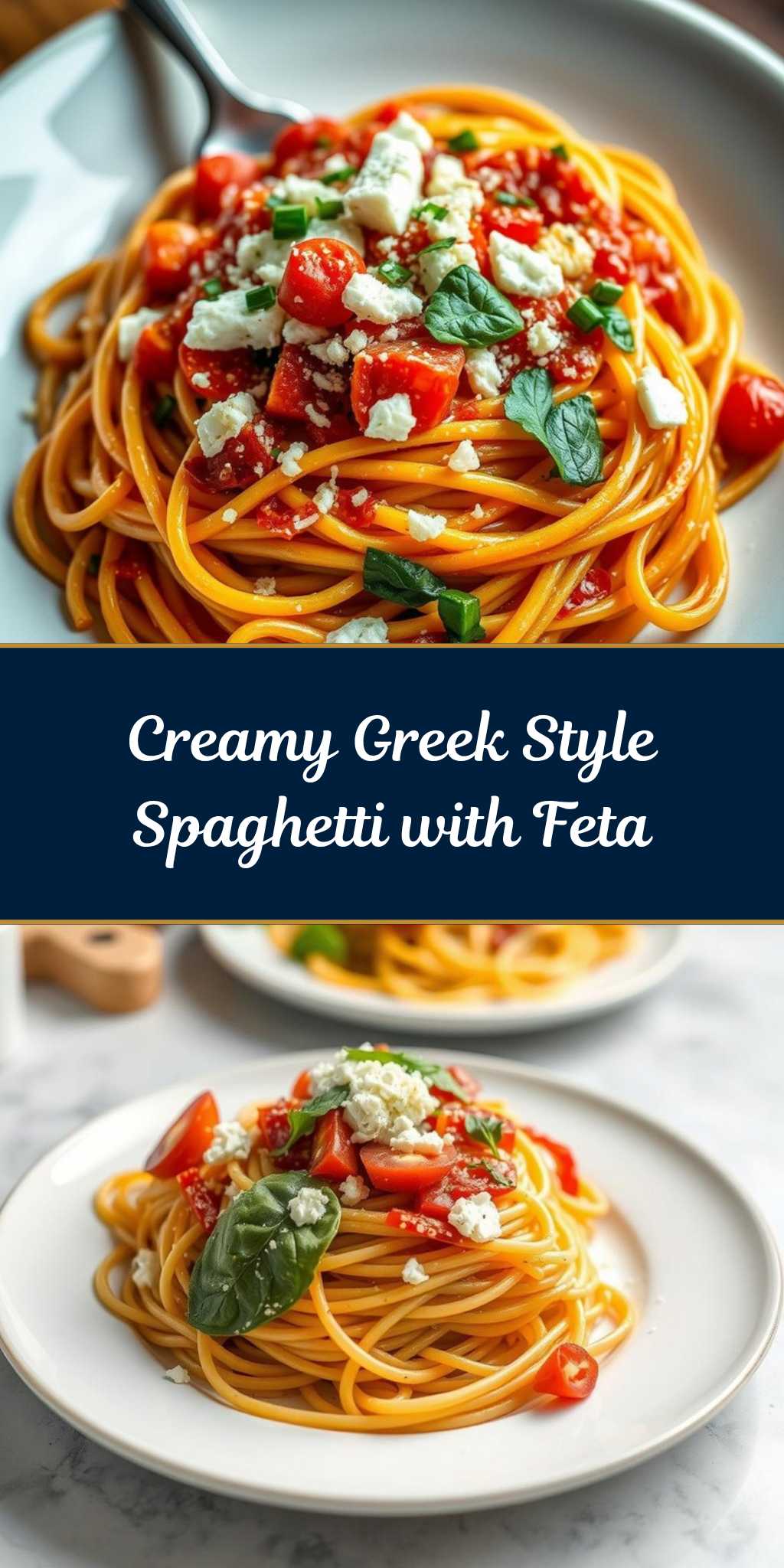
Craving a weeknight dinner that’s easy and delicious? Try this quick homemade Greek Style Spaghetti made with tender pasta, rich feta cheese, and juicy tomatoes, perfect for a family favorite meal, save for later
Greek Style Spaghetti
Introduction
Greek cuisine is renowned for its vibrant flavors, aromas, and the simplicity of its ingredients, which is what makes the Greek Style Spaghetti a standout dish. It’s a creative twist on traditional spaghetti, incorporating the rich flavors of Greece such as feta cheese, kalamata olives, and sun-dried tomatoes, all on a bed of perfectly cooked spaghetti. This dish is a testament to the idea that with everyday ingredients, you can create something truly extraordinary. The beauty of Greek Style Spaghetti lies in its ease of preparation, the balance of its flavors, and the impressive results it yields with minimal effort. Whether you’re a seasoned chef or a beginner in the kitchen, this recipe is sure to delight your senses and leave you wanting more.
Why This Works
- The balance of salty feta, tangy olives, and the slight sweetness of sun-dried tomatoes creates a flavor profile that is both complex and harmonious.
- The ease of preparation makes it an ideal dish for a quick dinner or a special occasion without requiring hours in the kitchen.
- Despite its simplicity, Greek Style Spaghetti presents impressively, making it perfect for entertaining guests or a family gathering.
Key Ingredients
The main ingredients in Greek Style Spaghetti include spaghetti, which provides the base of the dish; feta cheese, which adds a salty, tangy flavor; kalamata olives, contributing a deep, rich taste; sun-dried tomatoes, which bring a burst of concentrated tomato flavor; fresh parsley, adding freshness and color; garlic, for an aromatic depth; and olive oil, the backbone of Greek cuisine, tying all the flavors together. For practical substitutions, you can use other types of cheese like parmesan or ricotta salata if feta is not available, and green olives as an alternative to kalamata. Sun-dried tomatoes can be replaced with fresh tomatoes, though the flavor and texture will be slightly different.
Instructions
- Step 1: Begin by preparing your ingredients. Chop the sun-dried tomatoes, olives, and fresh parsley. Mince the garlic and crumble the feta cheese. Measure out your spaghetti and have your olive oil ready.
- Step 2: Cook your spaghetti in boiling, salted water until it’s al dente. Reserve a cup of pasta water before draining the spaghetti. This water can be used later to adjust the consistency of the sauce.
- Step 3: In a large skillet, heat the olive oil over medium heat. Add the minced garlic and cook for about a minute, until fragrant. Then, add the chopped sun-dried tomatoes and cook for another 2-3 minutes, stirring occasionally. Add the chopped olives and cook for an additional minute.
- Step 4: Add the cooked spaghetti to the skillet with the tomato and olive mixture. Toss everything together, adding some reserved pasta water if the mixture seems too dry. Finally, stir in the crumbled feta cheese and chopped parsley. Season with salt and pepper to taste.
Handy Tips
- Always use high-quality ingredients, especially the olive oil and feta cheese, as they greatly impact the flavor of the dish.
- Don’t overcook the spaghetti; al dente texture is crucial for the dish to hold the flavors well.
- If using fresh tomatoes instead of sun-dried, make sure to cook them down until they’re soft and the liquid has evaporated to avoid a soggy dish.
Heat Control
When cooking the spaghetti, ensure the water is at a rolling boil. For the skillet with garlic, sun-dried tomatoes, and olives, medium heat is ideal to prevent burning. The dish is ready when the spaghetti is al dente, and the flavors in the skillet are well combined and slightly caramelized.
Crunch Factor
The crunch in Greek Style Spaghetti comes from the fresh parsley and the slight crunch of the sun-dried tomatoes. To maintain this texture, don’t overcook the parsley, and use high-quality sun-dried tomatoes that still retain some of their chewiness.
Pro Kitchen Tricks
- Adding a tablespoon of olive oil to the boiling water for the spaghetti can help prevent it from sticking together.
- Using a mixture of grated parmesan and feta can add depth to the cheese flavor.
- Cooking the garlic for just a minute prevents it from becoming overpowering and bitter.
Storage Tips
- Leftovers can be stored in an airtight container in the refrigerator for up to 3 days. Reheat gently in the microwave or on the stovetop, adding a bit of water if necessary to revive the sauce.
- The dish can be frozen after cooking, though it’s best to freeze the components separately (spaghetti, sauce) for easier reheating and to prevent sogginess.
- When reheating, add the feta cheese just before serving to preserve its texture and flavor.
Gift Packaging Ideas
Greek Style Spaghetti can be a thoughtful gift, especially when packaged in a decorative jar or container with a personalized label. Consider including a side of garlic bread or a small bag of olives for a complete gift. Wrap the container in a checkered cloth and tie with a ribbon for a rustic, charming presentation.
Flavor Variations
- Adding different spices like paprika or cumin can give the dish a unique twist.
- Creative toppings such as grilled chicken, roasted vegetables, or a dollop of tzatziki sauce can enhance the flavor and texture.
- Swapping ingredients like using gluten-free spaghetti or vegan feta can make the dish more inclusive for guests with dietary restrictions.
Troubleshooting
- If the spaghetti becomes too sticky, try adding a bit more olive oil or reserved pasta water to loosen it up.
- For a too salty flavor, balance it with a squeeze of fresh lemon juice or a bit of honey.
- Overcooking can be avoided by checking the spaghetti frequently during its last minutes of cooking and removing it from the heat as soon as it reaches the al dente stage.
FAQs
- Can I freeze it? Yes, though it’s best to freeze the components separately for easier reheating.
- Is it gluten-free? Not in its traditional form, but you can make it gluten-free by using gluten-free spaghetti.
- Can I double the recipe? Yes, simply multiply all the ingredients by two. Keep an eye on the cooking time and adjust as necessary.
Conclusion
Greek Style Spaghetti is a dish that embodies the heart of Greek cuisine: simplicity, freshness, and a deep appreciation for good ingredients. It’s a recipe that encourages creativity and experimentation, whether through different toppings, ingredient swaps, or serving styles. As you explore the world of Greek cuisine through this dish, remember that the joy of cooking lies not just in the eating, but in the sharing and the love that goes into every step of the process. So, don’t be afraid to adapt, to share, and to make Greek Style Spaghetti your own. With its rich flavors and ease of preparation, it’s sure to become a favorite in your household, and a dish you’ll look forward to making and enjoying time and time again.