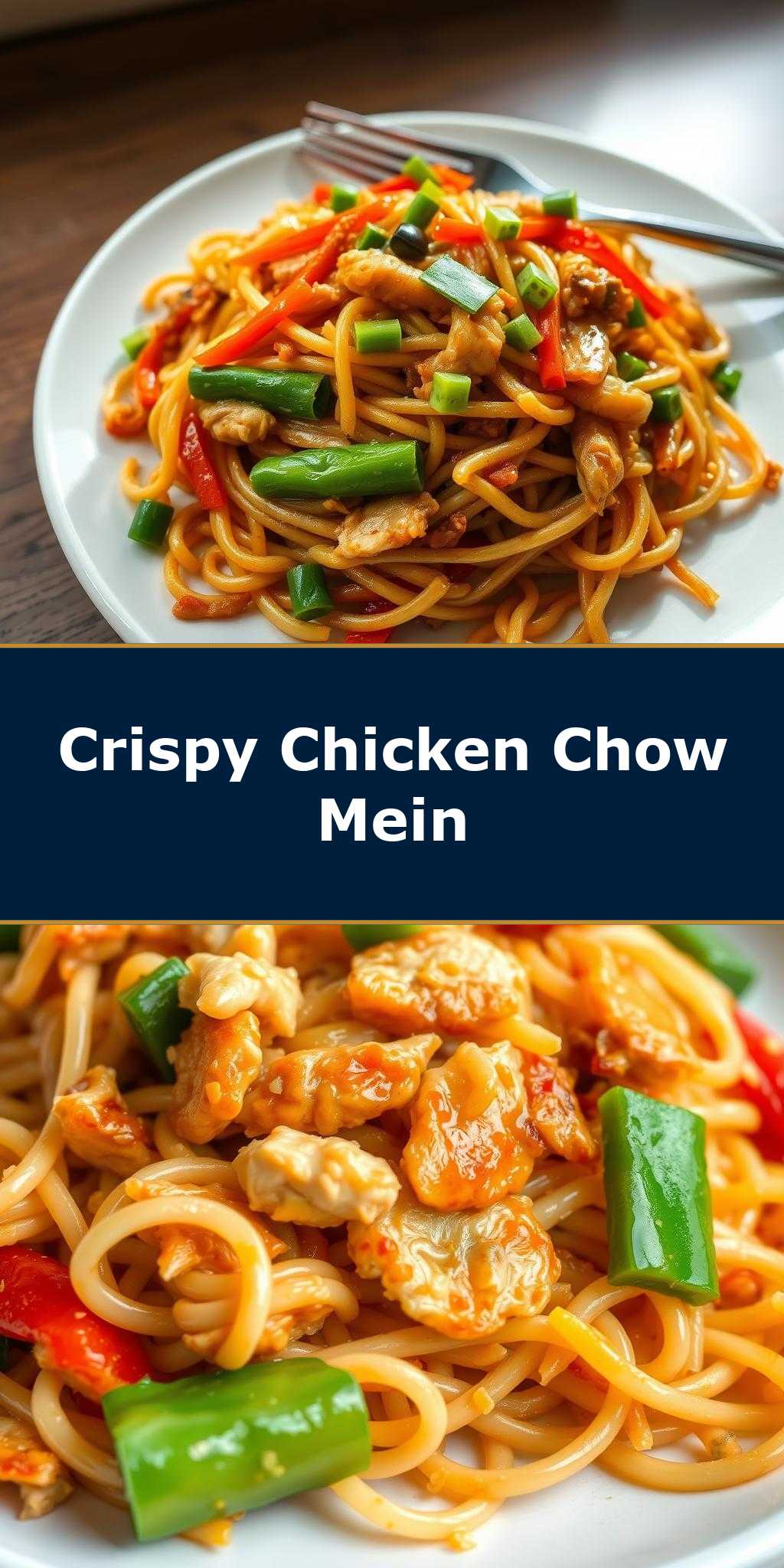
What makes a great weeknight dinner in your book – is it a quick and easy homemade meal that everyone loves? This flavorful chicken chow mein recipe hits all the right notes with its savory stir-fry of chicken, vegetables, and noodles. Try making it with your favorite stir-fry sauce and save this idea for a delicious family favorite dinner.
Flavorful Chicken Chow Mein Recipe
Introduction
This Flavorful Chicken Chow Mein Recipe is a perfect blend of ease, flavor, and creativity, using everyday ingredients to bring a delicious dish to your table. Imagine a stir-fry packed with tender chicken, crunchy vegetables, and savory noodles, all wrapped up in a flavorful sauce that will leave you wanting more. The best part? It’s incredibly easy to make and can be customized to your taste preferences, making it a great option for a quick dinner or a special occasion. Whether you’re a seasoned cook or just starting out, this recipe is sure to become a favorite.
Why This Works
- Flavor balance and ingredient accessibility: This recipe strikes a perfect balance between sweet, sour, salty, and umami flavors, using ingredients that are easily found in most supermarkets.
- Ease of preparation: With a simple and straightforward preparation process, you can have this dish ready in no time, making it perfect for busy weeknights or lazy weekends.
- Impressive results with minimal effort: Despite its simplicity, this recipe yields impressive results, with a dish that looks and tastes like it was made in a professional kitchen.
Key Ingredients
The key ingredients in this Flavorful Chicken Chow Mein Recipe include tender chicken breasts, crunchy bell peppers, onions, and snow peas, which provide a nice texture contrast. The sauce is made with a combination of soy sauce, oyster sauce (optional), and hoisin sauce, which gives the dish its distinctive flavor. You’ll also need some vegetable oil, garlic, and ginger for added depth of flavor. For the noodles, you can use traditional chow mein noodles or substitute with rice noodles or even zucchini noodles for a low-carb option. Practical substitutions include using chicken thighs instead of breasts, or swapping out the bell peppers for other colorful peppers like red or yellow.
Instructions
- Step 1: Begin by preparing your ingredients. Chop the chicken into bite-sized pieces and season with salt and pepper. Slice the bell peppers, onions, and snow peas into thin strips. Mince the garlic and ginger. Cook the noodles according to the package instructions and set aside.
- Step 2: Heat 1 tablespoon of vegetable oil in a large skillet or wok over medium-high heat. Add the chicken and cook until browned and cooked through, about 5-7 minutes. Remove the chicken from the skillet and set aside.
- Step 3: In the same skillet, add another tablespoon of vegetable oil if necessary, then add the sliced bell peppers, onions, and snow peas. Cook until the vegetables are tender-crisp, about 3-5 minutes. Add the minced garlic and ginger and cook for an additional minute, until fragrant.
- Step 4: In a small bowl, whisk together the soy sauce, oyster sauce (if using), and hoisin sauce. Pour the sauce into the skillet and stir to combine. Add the cooked chicken back into the skillet and stir to coat with the sauce. Finally, add the cooked noodles to the skillet and stir to combine everything. Cook for an additional 1-2 minutes, until the noodles are well coated with the sauce.
Handy Tips
- Use a wok or large skillet with a non-stick surface to prevent the noodles and vegetables from sticking and to make cleanup easier.
- Don’t overcook the vegetables – they should retain some crunch to provide texture contrast in the dish.
- Customize the sauce to your taste by adding more or less of any ingredient. You can also add other ingredients like sesame oil or chili flakes to give the dish an extra boost of flavor.
Heat Control
When cooking the chicken and vegetables, it’s essential to control the heat to prevent burning or undercooking. Start with medium-high heat to get a good sear on the chicken, then reduce the heat to medium or medium-low to cook the vegetables and noodles. The ideal temperature for cooking the noodles and sauce is around 180°F to 200°F (82°C to 93°C), which will help to prevent the sauce from breaking or the noodles from becoming mushy.
Crunch Factor
The crunch factor in this dish comes from the vegetables, particularly the bell peppers and snow peas. To achieve the perfect crunch, cook the vegetables until they are tender-crisp, but still retain some of their crunch. You can also add other crunchy ingredients like chopped nuts or seeds to the dish for added texture.
Pro Kitchen Tricks
- Use a mixture of soy sauce and oyster sauce (if using) to give the dish a deep, umami flavor.
- Add a splash of vinegar or lemon juice to the sauce to balance out the sweetness and add brightness to the dish.
- Use a variety of colorful vegetables to make the dish visually appealing and add different textures and flavors.
Storage Tips
- Store leftover chow mein in an airtight container in the refrigerator for up to 3 days.
- Reheat the chow mein in a skillet or wok over medium heat, adding a splash of water or sauce if necessary to prevent drying out.
- Freeze the chow mein for up to 2 months, then reheat in a skillet or wok as needed.
Gift Packaging Ideas
If you want to give this Flavorful Chicken Chow Mein Recipe as a gift, consider packaging it in a decorative container or jar, garnished with chopped scallions or sesame seeds. You could also include a packet of noodles or a bottle of sauce to make it a complete gift. Alternatively, you could package the ingredients in a gift basket or bag, along with a recipe card and instructions for cooking.
Flavor Variations
- Different spices: Try adding different spices or seasonings to the sauce, such as chili flakes, ground cumin, or smoked paprika, to give the dish a unique flavor.
- Creative toppings: Consider adding creative toppings to the dish, such as diced pineapple, chopped nuts, or pickled ginger, to add texture and flavor.
- Ingredient swaps: Swap out the chicken for other protein sources, such as tofu, shrimp, or beef, to change up the flavor and texture of the dish.
Troubleshooting
- Texture problems: If the noodles become mushy or overcooked, try cooking them for a shorter amount of time or using a different type of noodle. If the vegetables are undercooked or overcooked, adjust the cooking time accordingly.
- Ingredient replacements: If you don’t have a particular ingredient, try substituting it with something similar. For example, you could use chicken broth instead of soy sauce, or swap out the bell peppers for other colorful peppers.
- Over/undercooking signs: Keep an eye on the dish while it’s cooking, and adjust the heat or cooking time as needed. If the chicken is undercooked, it will be pink or raw in the center. If the vegetables are overcooked, they will be soft and mushy.
FAQs
- Can I freeze it? Yes, you can freeze the chow mein for up to 2 months, then reheat in a skillet or wok as needed.
- Is it gluten-free? This recipe can be gluten-free if you use gluten-free soy sauce and noodles. Be sure to check the ingredient labels to ensure that all the ingredients are gluten-free.
- Can I double the recipe? Yes, you can double the recipe to feed a larger crowd. Just be sure to adjust the cooking time and heat as needed to prevent overcrowding the skillet or wok.
Conclusion
In conclusion, this Flavorful Chicken Chow Mein Recipe is a delicious and easy-to-make dish that’s perfect for any occasion. With its balance of flavors, textures, and colors, it’s sure to become a favorite in your household. Don’t be afraid to experiment with different ingredients and flavors to make the dish your own, and be sure to share it with friends and family to spread the love. Happy cooking!