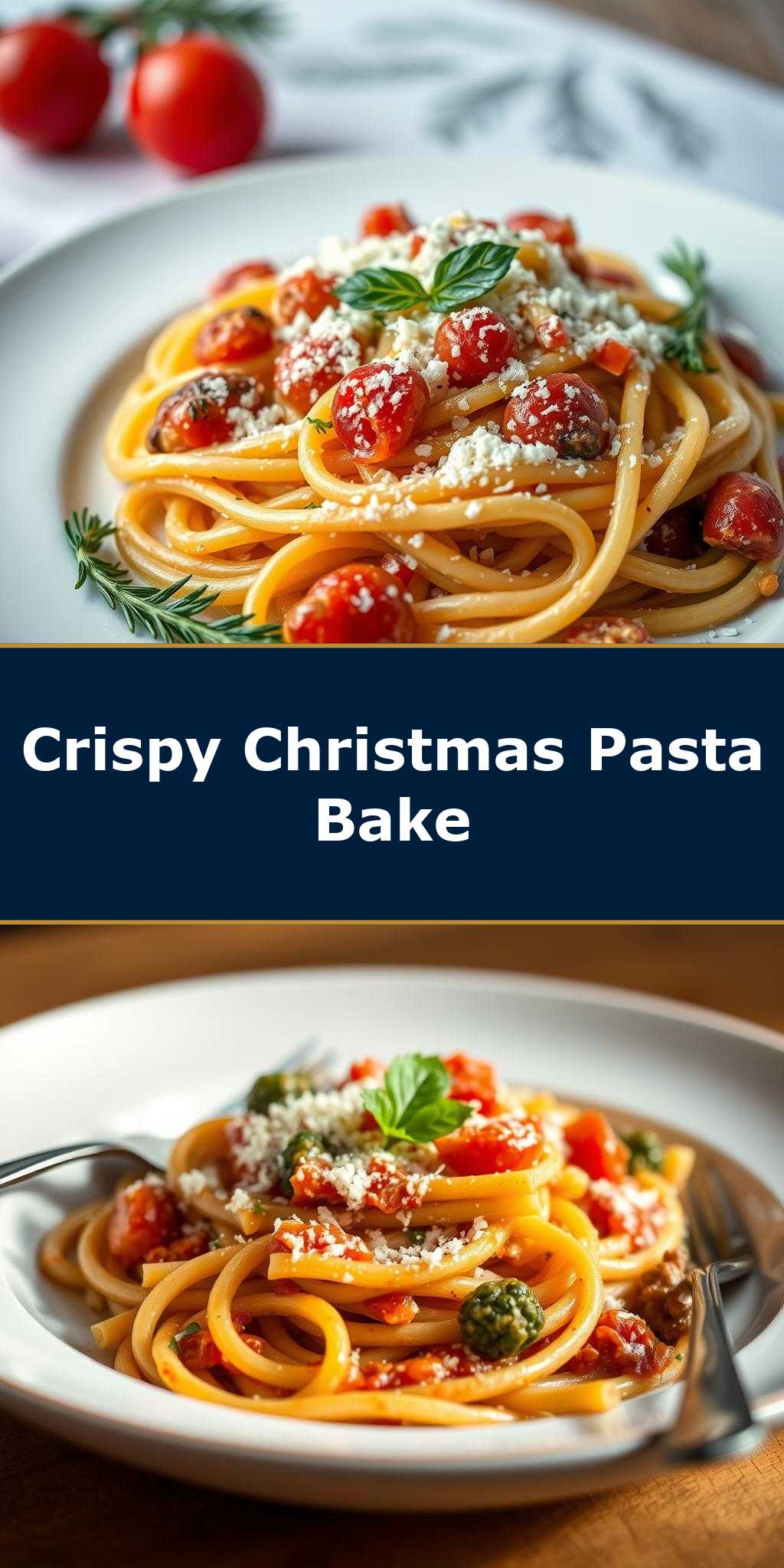
What makes a Christmas dinner truly special is a delicious homemade pasta dish that’s surprisingly easy to prepare. This quick weeknight dinner idea features tender noodles tossed with rich garlic and savory parmesan. Save this idea for a stress-free family favorite meal.
Christmas Pasta
Introduction
Welcome to the festive world of Christmas Pasta, a dish that embodies the spirit of the season with its vibrant colors, rich flavors, and the warmth of sharing a delicious meal with loved ones. This recipe is designed to be easy to follow, using everyday ingredients that you might already have in your pantry, making it accessible to cooks of all levels. The beauty of Christmas Pasta lies in its balance of flavors and textures, from the tender pasta to the savory sauce and the pop of color from fresh vegetables. It’s a dish that’s both creative and comforting, perfect for holiday gatherings or a cozy night in with the family.
Why This Works
- Flavor balance and ingredient accessibility: This recipe strikes a perfect balance between flavors, ensuring that each component complements the others without overpowering them. The use of common ingredients makes it easy to prepare without needing a special trip to the store.
- Ease of preparation: Despite its impressive presentation, Christmas Pasta is surprisingly easy to prepare. The steps are straightforward, and the cooking time is relatively short, making it ideal for busy holiday schedules.
- Impressive results with minimal effort: The dish looks and tastes like it was prepared by a professional chef, thanks to the combination of colorful vegetables, perfectly cooked pasta, and a rich, flavorful sauce. This makes it perfect for entertaining guests during the holidays.
Key Ingredients
The main ingredients for Christmas Pasta include pasta of your choice (though penne or fusilli work particularly well for this recipe), a mix of colorful bell peppers (green, red, and yellow), onions, garlic, cherry tomatoes, olive oil, grated Parmesan cheese, fresh basil, and your choice of protein (chicken, sausage, or tofu for a vegetarian option). For the sauce, you’ll need canned diced tomatoes, tomato paste, and chicken or vegetable broth. Practical substitutions can be made based on dietary preferences or ingredient availability. For example, gluten-free pasta can be used for those with gluten intolerance, and vegetable broth can replace chicken broth for a vegetarian version.
Instructions
- Step 1: Begin by preparing your ingredients. Chop the onions, garlic, and bell peppers into small pieces. Cherry tomatoes can be halved or left whole depending on your preference. Measure out your olive oil, broth, and grated cheese.
- Step 2: Cook your pasta according to the package instructions until it’s al dente. Drain and set aside. In a large skillet, heat the olive oil over medium heat. Add the chopped onions and cook until they’re translucent, then add the garlic and cook for another minute, stirring constantly to prevent burning.
- Step 3: Add the sliced bell peppers to the skillet and continue cooking until they start to soften. Then, add the cherry tomatoes and cook for a few more minutes, allowing the vegetables to meld together. If using protein, cook it according to your preference (grilled, baked, or sautéed) and set aside.
- Step 4: For the sauce, combine the diced tomatoes, tomato paste, and broth in a blender or food processor. Blend until smooth, then add the sauce to the skillet with the vegetables. Stir well to combine and let simmer for a few minutes to allow the flavors to meld. Finally, add the cooked pasta to the skillet, tossing everything together until the pasta is! well coated with the sauce. Top with grated Parmesan cheese and fresh basil.
Handy Tips
- When cooking pasta, always add a bit of salt to the boiling water to enhance the flavor. Also, reserve a cup of pasta water before draining, as it can be added to the sauce if it becomes too thick.
- For an extra burst of flavor, roast the vegetables in the oven with some olive oil, salt, and pepper before adding them to the sauce. This step can be skipped if you’re short on time but adds a depth of flavor that’s well worth the extra effort.
- Consider making the sauce ahead of time and refrigerating or freezing it for later use. This can save time during the holidays when schedules are tight.
Heat Control
Heat control is crucial when cooking Christmas Pasta. For the sauce, medium heat is ideal, as it allows the flavors to simmer together without burning. When cooking the pasta, follow the package instructions for the correct boiling time. Generally, pasta is done when it’s al dente, meaning it still has a bit of bite or chew to it. Overcooking can result in mushy, unappetizing pasta.
Crunch Factor
The crunch factor in Christmas Pasta comes from the fresh vegetables and the texture of the pasta itself. To maintain this texture, avoid overcooking the pasta and vegetables. If you’re roasting the vegetables, they’ll develop a nice caramelized exterior that adds to the dish’s texture. Additionally, topping the pasta with toasted pine nuts or chopped fresh parsley can add an extra crunchy element.
Pro Kitchen Tricks
- One of the best shortcuts for this recipe is preparing components ahead of time. The sauce can be made a day or two in advance, and the vegetables can be chopped and stored in the refrigerator until needed.
- For easier cleanup, consider cooking the pasta and sauce in large, deep skillets. This allows for one-pot cooking, reducing the number of dishes to wash afterwards.
- To enhance the presentation, serve the Christmas Pasta in a large, festive bowl or individual plates garnished with additional basil leaves and Parmesan cheese shavings.
Storage Tips
- Leftover Christmas Pasta can be stored in an airtight container in the refrigerator for up to 3 days. Reheat gently in the microwave or on the stovetop, adding a bit of water or broth if the pasta seems dry.
- For longer storage, consider freezing the cooked pasta and sauce separately. Frozen pasta and sauce can be stored for up to 3 months. When reheating, combine the pasta and sauce in a skillet over low heat, stirring occasionally until warmed through.
- The best containers for storing Christmas Pasta are airtight, microwave-safe containers to prevent drying out and to make reheating easy.
Gift Packaging Ideas
While Christmas Pasta is primarily a dish to be enjoyed fresh, elements of it can be packaged as gifts, such as jars of homemade pasta sauce or boxes of gourmet pasta. Consider packaging these items in decorative jars or boxes, tied with a ribbon and accompanied by a recipe card for Christmas Pasta. For a more substantial gift, prepare the dish ahead of time, portion it into individual servings, and freeze. These can then be given to friends or family with reheating instructions, making for a thoughtful and practical gift during the busy holiday season.
Flavor Variations
- Different spices: Experiment with various herbs and spices to give your Christmas Pasta a unique twist. Basil and oregano are classics, but consider adding some red pepper flakes for a spicy kick or some dried thyme for an earthy flavor.
- Creative toppings: In addition to Parmesan cheese, consider other toppings such as toasted pine nuts, chopped fresh parsley, or even some crumbled bacon for added smokiness.
- Ingredient swaps: For a vegetarian or vegan version, swap out the chicken broth for vegetable broth and omit the Parmesan cheese or replace it with a vegan alternative. You can also add other proteins like grilled shrimp or tofu for variety.
Troubleshooting
- Texture problems: If the pasta becomes too mushy, it’s likely been overcooked. To prevent this, always check the pasta a minute or two before the recommended cooking time is up. If the sauce is too thick, add a bit of the reserved pasta water.
- Ingredient replacements: If you’re missing an ingredient, don’t hesitate to substitute. For example, if you don’t have cherry tomatoes, diced regular tomatoes can work in a pinch. Just be mindful of the flavor and texture differences substitutions might make.
- Over/undercooking signs: Pasta that’s al dente should still have a bit of resistance when bitten into. If it’s too soft, it’s overcooked. Vegetables should be tender but still crisp; if they’re mushy, they’ve been overcooked.
FAQs
- Can I freeze it? Yes, Christmas Pasta can be frozen, but it’s best to freeze the sauce and cooked pasta separately for the best results. When reheating, combine the two and add a bit of water if necessary to achieve the desired consistency.
- Is it gluten-free? The pasta itself can be gluten-free if you use gluten-free pasta. However, be sure to check the ingredients of the broth and any store-bought sauces for gluten. Many broths and sauces can be made gluten-free with simple substitutions.
- Can I double the recipe? Absolutely, Christmas Pasta can be easily doubled or even tripled if you’re serving a large crowd. Just be sure to use a large enough pot for the pasta and skillet for the sauce to accommodate the increased volume.
Conclusion
Christmas Pasta is a dish that embodies the joy and warmth of the holiday season. With its colorful presentation, rich flavors, and ease of preparation, it’s perfect for family gatherings, holiday parties, or a cozy night in. Don’t be afraid to experiment with different ingredients and toppings to make the recipe your own, and consider sharing it with friends and family as a thoughtful gift. Whether you’re a seasoned cook or just starting out, Christmas Pasta is sure to become a new holiday tradition. So go ahead, get creative, and make this holiday season one to remember, filled with delicious food, love, and laughter.