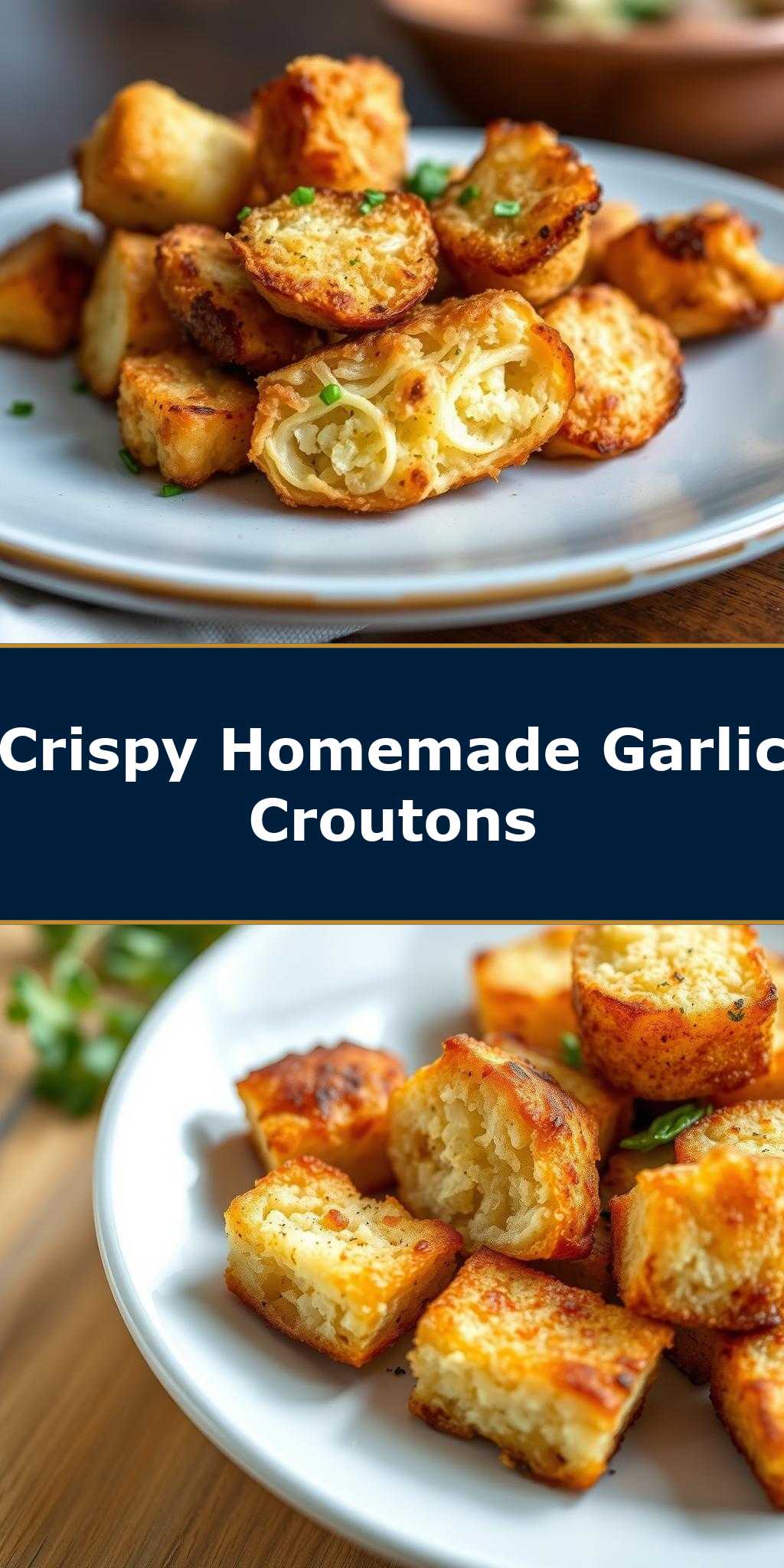
What makes a great salad truly unforgettable – is it the fresh greens or the crunchy topping. This homemade croutons recipe uses freshly baked bread and olive oil to create the perfect weeknight dinner addition. With just a few easy steps you can elevate your family favorite salads. Save this idea for a quick and delicious meal solution
Homemade Croutons Recipe
Introduction
Making your own homemade croutons is a simple yet incredibly rewarding process that elevates any salad, soup, or snack to a whole new level. With just a few basic ingredients and some easy steps, you can create crunchy, flavorful bites that are tailored to your taste preferences. Unlike store-bought croutons, homemade croutons offer the advantage of using fresh, everyday ingredients, allowing for endless creativity and ensuring that you avoid any unwanted preservatives. Whether you’re looking to add a satisfying crunch to your lunch, enhance the flavor of your dinner salad, or simply enjoy a delicious snack, this homemade croutons recipe is your perfect companion.
Why This Works
- Flavor balance and ingredient accessibility: This recipe strikes a perfect balance between simplicity and flavor depth, using ingredients that are readily available in most kitchens.
- Ease of preparation: The process of making homemade croutons is surprisingly straightforward, requiring minimal effort and time, making it an ideal addition to your meal prep routine.
- Impressive results with minimal effort: Despite the simplicity of the ingredients and the preparation process, the end result is remarkably impressive, both in terms of texture and flavor, making it perfect for special occasions or everyday meals.
Key Ingredients
The foundation of delicious homemade croutons lies in the quality and freshness of the ingredients. The main components include bread (preferably day-old bread for better texture), olive oil, salt, and any additional seasonings or herbs you desire to add extra flavor. Practical substitutions can include using different types of bread, such as whole wheat, sourdough, or even gluten-free options, and experimenting with various oils like avocado or grapeseed oil for a distinct flavor profile. Furthermore, you can customize your croutons with a wide array of seasonings, from classic garlic and rosemary to more adventurous options like smoked paprika or dried thyme.
Instructions
- Step 1: Begin by prepping your bread. Cut it into small, uniform cubes to ensure even cooking. The size of your croutons can vary based on personal preference, but generally, smaller cubes yield a better texture.
- Step 2: In a large bowl, drizzle the olive oil over the bread cubes and toss until they are evenly coated. Then, sprinkle salt and any additional seasonings you’re using over the bread, tossing again to distribute the flavors evenly.
- Step 3: Spread the bread cubes out in a single layer on a baking sheet. This step is crucial for achieving the perfect crunch, as overcrowding can lead to steaming instead of browning. If necessary, use multiple baking sheets to accommodate all the bread cubes.
- Step 4: Bake the croutons in a preheated oven at 350°F (175°C) for about 10-15 minutes, or until they are golden brown and crispy. Keep an eye on them, as the baking time can vary depending on the size of your croutons and your oven’s performance. Once done, remove them from the oven and let them cool completely on the baking sheet before transferring them to an airtight container for storage.
Handy Tips
- For an extra crispy texture, try baking the croutons for an additional 2-3 minutes after they’ve cooled slightly on the baking sheet. This step, known as “double baking,” can significantly enhance the crunchiness of your homemade croutons.
- Avoid over-seasoning, as this can overpower the natural flavors of the bread and other ingredients. Start with a light hand and adjust to taste after the croutons have cooled.
- Experiment with different types of bread and seasonings to find your favorite combinations. This recipe is highly versatile, allowing you to match your croutons to any meal or occasion.
Heat Control
When baking your croutons, maintaining the right temperature is key. An oven temperature of 350°F (175°C) is ideal, as it provides a gentle heat that browns the bread evenly without burning it. The timing will depend on the size of your croutons and the specific characteristics of your oven, so it’s essential to check on them periodically to avoid overcooking. Signs of doneness include a golden brown color and a crispy texture. If you prefer a lighter crouton, you can remove them from the oven a bit sooner; for a crisper crouton, leave them in for a few minutes longer, keeping a close eye to prevent burning.
Crunch Factor
Achieving the perfect crunch is what sets great homemade croutons apart from merely good ones. The crunch factor is largely dependent on the baking process. Ensuring that the croutons are spread out in a single layer and not overcrowded on the baking sheet allows for even browning and crisping. Additionally, the choice of bread can impact the crunch; denser breads like baguette or ciabatta tend to yield croutons with a more satisfying crunch compared to softer breads. Finally, the double baking technique mentioned earlier can significantly enhance the crunchiness of your croutons.
Pro Kitchen Tricks
- For an added layer of flavor, try tossing your croutons with grated cheese, such as parmesan or cheddar, before baking. The heat from the oven will melt the cheese, adhering it to the croutons and creating a delicious, cheesy crust.
- Use leftover bread to make croutons. This not only reduces food waste but also utilizes bread that might otherwise go stale, making it a very eco-friendly and budget-conscious choice.
- Consider making croutons in large batches and freezing them for later use. Simply spread the cooled croutons on a baking sheet, place it in the freezer until they’re frozen solid, then transfer them to airtight containers or freezer bags for storage. Frozen croutons can be baked in the oven directly from the freezer, adding a couple of minutes to the baking time.
Storage Tips
- Store your homemade croutons in an airtight container to maintain their crunchiness. Glass jars with tight-fitting lids or plastic containers with snap-on lids work well.
- Avoid storing croutons in humid environments, as moisture can cause them to become soggy. If you live in a particularly humid climate, consider storing your croutons in the refrigerator to keep them fresh for longer.
- For longer-term storage, freezing is an excellent option. Frozen croutons can be stored for several months. Simply bake them in the oven when you’re ready to use them, adding a few extra minutes to the baking time as needed.
Gift Packaging Ideas
Homemade croutons can make a thoughtful and unique gift, especially when packaged with flair. Consider filling decorative glass jars with your freshly baked croutons and topping them with a ribbon or a gift tag. For a more rustic touch, you can place the croutons in paper bags, seal them with a twist tie, and attach a handmade label or a sprig of fresh herbs. If you’re gifting the croutons as part of a larger gift basket, pair them with other homemade goodies like jams, chutneys, or artisanal cheeses for a truly personalized present.
Flavor Variations
- Different spices: Try adding a pinch of cumin for a smoky flavor, some dried oregano for a Mediterranean twist, or a bit of smoked paprika for a deep, barbecue-like flavor.
- Creative toppings: Before baking, sprinkle your croutons with grated cheese, chopped fresh herbs like parsley or thyme, or even some toasted sesame seeds for added texture and flavor.
- Ingredient swaps: Experiment with different types of oil, such as truffle oil for a luxurious flavor or chili oil for a spicy kick. You can also use various vinegars, like balsamic or apple cider vinegar, to add a tangy flavor to your croutons.
Troubleshooting
- Texture problems: If your croutons turn out too hard, it may be due to overbaking. Conversely, if they’re too soft, they might not have been baked long enough or were stored in a humid environment. Adjusting the baking time and ensuring proper storage can help achieve the perfect texture.
- Ingredient replacements: If you’re looking to make gluten-free croutons, consider using gluten-free bread or even making your own gluten-free bread from scratch. For vegan croutons, you can replace any cheese or animal-derived ingredients with vegan alternatives.
- Over/undercooking signs: Keep an eye out for signs of overcooking, such as a dark brown color or a burnt smell. Undercooked croutons might appear pale and soft. Adjust your baking time accordingly to achieve the perfect golden brown color and crispy texture.
FAQs
- Can I freeze it? Yes, homemade croutons can be frozen for up to several months. Simply bake them frozen, adding a few minutes to the baking time as needed.
- Is it gluten-free? This depends on the type of bread used. For gluten-free croutons, use gluten-free bread or make your own from gluten-free flours.
- Can I double the recipe? Absolutely. Simply multiply all the ingredients by two and proceed with the recipe as instructed. You might need to use multiple baking sheets to accommodate the increased amount of bread cubes.
Conclusion
Making homemade croutons is a simple, rewarding process that can elevate any meal with its crunchy texture and customizable flavors. With the ability to use leftover bread, reduce food waste, and create a delicious snack or salad topping, this recipe is not only delicious but also eco-friendly and budget-conscious. Feel encouraged to experiment with different seasonings, types of bread, and baking times to find your perfect crouton. Whether you’re a seasoned chef or a beginner in the kitchen, this homemade croutons recipe is sure to become a staple in your culinary repertoire. So go ahead, get creative, and enjoy the satisfaction of making something truly special from scratch.