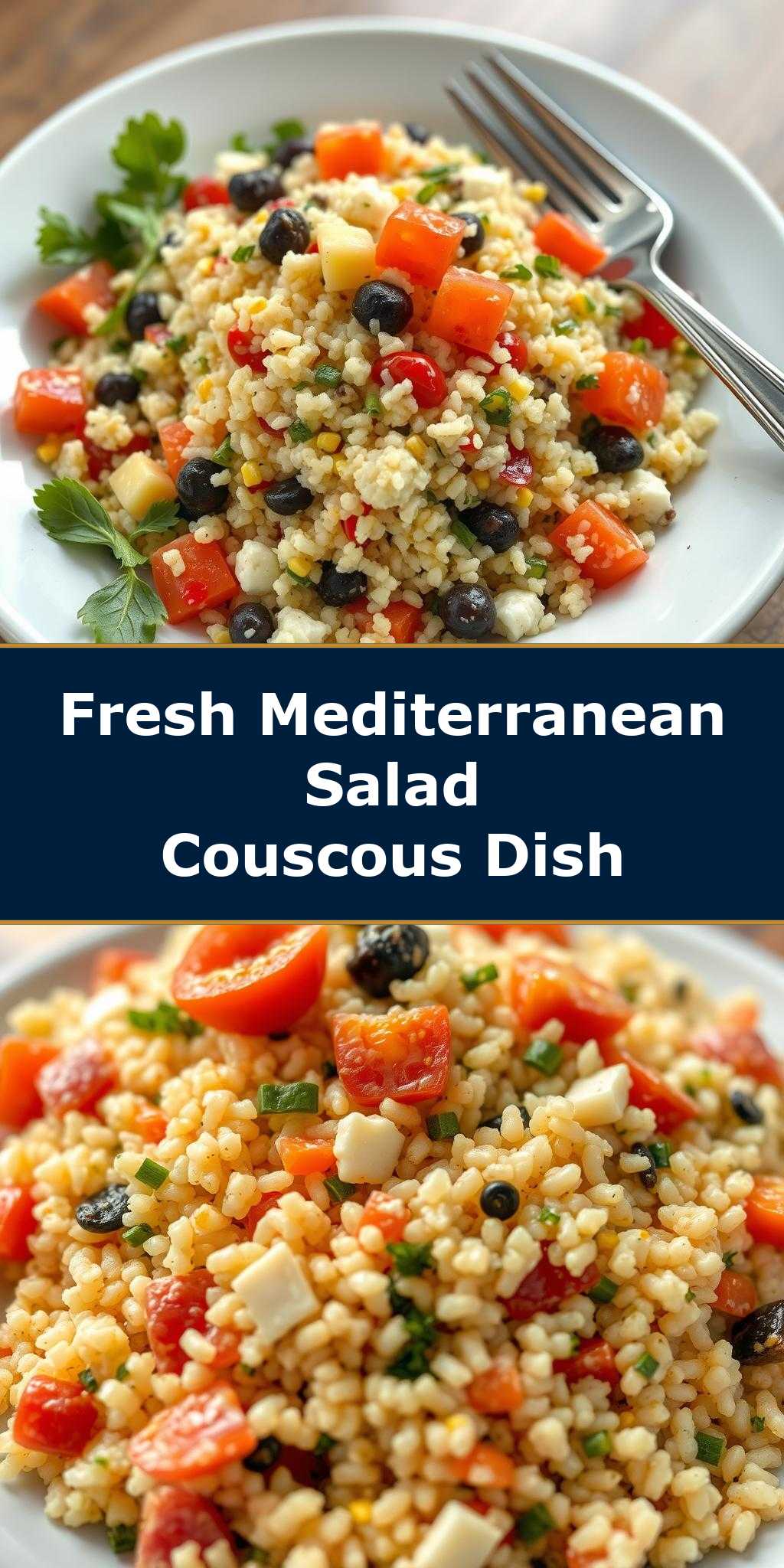
What’s the secret to a perfect weeknight dinner? A fresh Mediterranean couscous salad made with juicy tomatoes and flavorful feta, all in one easy homemade bowl. Save this idea for a quick and delicious family favorite meal to try soon.
Fresh Mediterranean Couscous Salad
Introduction
Welcome to the vibrant world of Mediterranean cuisine, where fresh flavors and colorful ingredients come together in perfect harmony. The Fresh Mediterranean Couscous Salad is a masterpiece of simplicity and elegance, combining the light, fluffy texture of couscous with an array of vegetables, herbs, and a tangy dressing that will leave your taste buds dancing. This salad is not just a meal; it’s an experience that will transport you to the sun-kissed Mediterranean coast with every bite. The best part? It’s incredibly easy to make and requires minimal effort, making it perfect for a quick lunch, a light dinner, or even as a side dish for your next outdoor gathering. So, let’s dive into the world of flavors and explore how to create this culinary gem.
Why This Works
- Flavor balance and ingredient accessibility: The beauty of this salad lies in its balance of flavors, from the sweetness of cherry tomatoes to the tanginess of feta cheese, all of which are easily found in most supermarkets.
- Ease of preparation: With a cooking time of just 10 minutes for the couscous and no cooking required for the rest of the ingredients, this salad is quicker to prepare than a trip to the grocery store.
- Impressive results with minimal effort: Despite its simplicity, the Fresh Mediterranean Couscous Salad presents beautifully, with its vibrant colors and varied textures making it a stunning centerpiece for any meal or gathering.
Key Ingredients
The Fresh Mediterranean Couscous Salad is built around a few key ingredients that provide its core flavor and texture. These include:
- Couscous: The base of the salad, couscous is a North African staple made from crushed durum wheat semolina. It’s light, fluffy, and absorbs flavors beautifully.
- Cherry Tomatoes: Halved or quartered, cherry tomatoes add natural sweetness and bursts of juicy flavor.
- Cucumber: Sliced or diced, cucumber contributes a refreshing coolness and crunch.
- Kalamata Olives: These Greek olives are known for their deep purple color and rich, fruity flavor, adding a savory depth to the salad.
- Feta Cheese: Crumbly feta brings a tangy, salty flavor that complements the other ingredients perfectly.
- Fresh Parsley and Mint: Chopped fresh herbs add a bright, fresh flavor and a pop of color.
- Lemon Juice and Olive Oil: These form the basis of the dressing, with lemon juice providing acidity and olive oil adding richness.
For those looking for substitutions, quinoa or bulgur can replace couscous for a different nutritional profile, and other types of olives or cheese can be used based on personal preference.
Instructions
- Step 1: Preparation – Begin by preparing your ingredients. Chop the cucumber, cherry tomatoes, olives, parsley, and mint. Crumble the feta cheese into small pieces.
- Step 2: Cooking the Couscous – Cook the couscous according to the package instructions, typically involving boiling water, adding the couscous, covering, and letting it steam for about 5 minutes. Fluff the cooked couscous with a fork to separate the grains.
- Step 3: Assembling the Salad – In a large bowl, combine the cooked couscous, chopped cucumber, cherry tomatoes, olives, parsley, mint, and crumbled feta cheese. Mix well to combine.
- Step 4: Dressing and Serving – Drizzle the salad with lemon juice and olive oil. Season with salt and pepper to taste. Mix gently to ensure all ingredients are well coated with the dressing. Serve immediately, garnished with additional parsley or mint if desired.
Handy Tips
- For the best flavor, use high-quality ingredients, especially the olive oil and lemon juice, as they greatly impact the salad’s taste.
- Avoid over-dressing the salad, as it can become soggy. Instead, dress it just before serving.
- Consider adding some sliced red onion or bell pepper for extra flavor and texture.
Heat Control
The only cooking involved in this recipe is the preparation of the couscous, which typically requires boiling water. The ideal temperature for cooking couscous is 100°C (212°F), the boiling point of water. The timing is crucial; usually, it takes about 5-10 minutes for the couscous to cook and absorb the water. A sign of doneness is when the couscous is light and fluffy, separating easily with a fork.
Crunch Factor
The crunch in this salad comes from the fresh vegetables like cucumber and cherry tomatoes, and the texture from the couscous. To maintain the crunch, it’s essential to prepare the vegetables just before assembling the salad and to not overcook the couscous, which can make it mushy. The freshness of the herbs also adds to the overall texture and flavor experience.
Pro Kitchen Tricks
- Use a fine-mesh sieve to rinse the couscous before cooking to remove any impurities and excess starch, resulting in a cleaner, more separated grain texture.
- Let the salad sit at room temperature for about 30 minutes before serving to allow the flavors to meld together.
- For a more intense flavor, marinate the vegetables and cheese in the dressing for a few hours before adding the couscous.
Storage Tips
- The salad can be prepared ahead of time, but it’s best to dress it just before serving to prevent sogginess.
- Store any leftovers in an airtight container in the refrigerator for up to 24 hours.
- Consider using glass containers, as they preserve the flavors and textures better than plastic.
Gift Packaging Ideas
If you’re considering gifting this salad, perhaps for a potluck or as a healthy option for a friend, it can be beautifully packaged in a large glass jar or a wooden bowl, covered with a decorative cloth or plastic wrap. Adding a ribbon around the lid or a handwritten note with the ingredients used can make it a thoughtful and personalized gift.
Flavor Variations
- Different spices: Adding a pinch of sumac or paprika can give the salad a unique twist.
- Creative toppings: Grilled chicken, toasted pine nuts, or diced avocado can add interesting textures and flavors.
- Ingredient swaps: Using quinoa instead of couscous or substituting feta with goat cheese can offer a different nutritional profile and taste experience.
Troubleshooting
- Texture problems: If the couscous becomes mushy, it might be overcooked. For the next batch, try reducing the cooking time.
- Ingredient replacements: If an ingredient is not available, consider substitutes like using basil instead of parsley or mint.
- Over/undercooking signs: Undercooked couscous will be hard and crunchy, while overcooked couscous is mushy. Aim for a light, fluffy texture.
FAQs
- Can I freeze it? – While it’s possible to freeze cooked couscous, the salad is best consumed fresh to preserve the texture and flavor of the vegetables and herbs.
- Is it gluten-free? – Traditional couscous is made from wheat and contains gluten. However, there are gluten-free alternatives made from rice, corn, or quinoa.
- Can I double the recipe? – Yes, the recipe can be easily doubled or tripled for larger gatherings. Just ensure you have a large enough bowl to mix all the ingredients together.
Conclusion
The Fresh Mediterranean Couscous Salad is a versatile, flavorful, and healthy meal option that can be adapted to suit various tastes and dietary needs. With its ease of preparation, impressive presentation, and the potential for countless variations, it’s a recipe that will become a staple in your kitchen. Whether you’re a seasoned chef or a beginner in the culinary world, this salad offers a delicious journey through the Mediterranean, bringing together the best of what nature has to offer in a simple, yet extraordinary dish. So, go ahead, experiment with the ingredients, share it with friends and family, and enjoy the delightful experience of savoring the freshness of the Mediterranean in every bite.