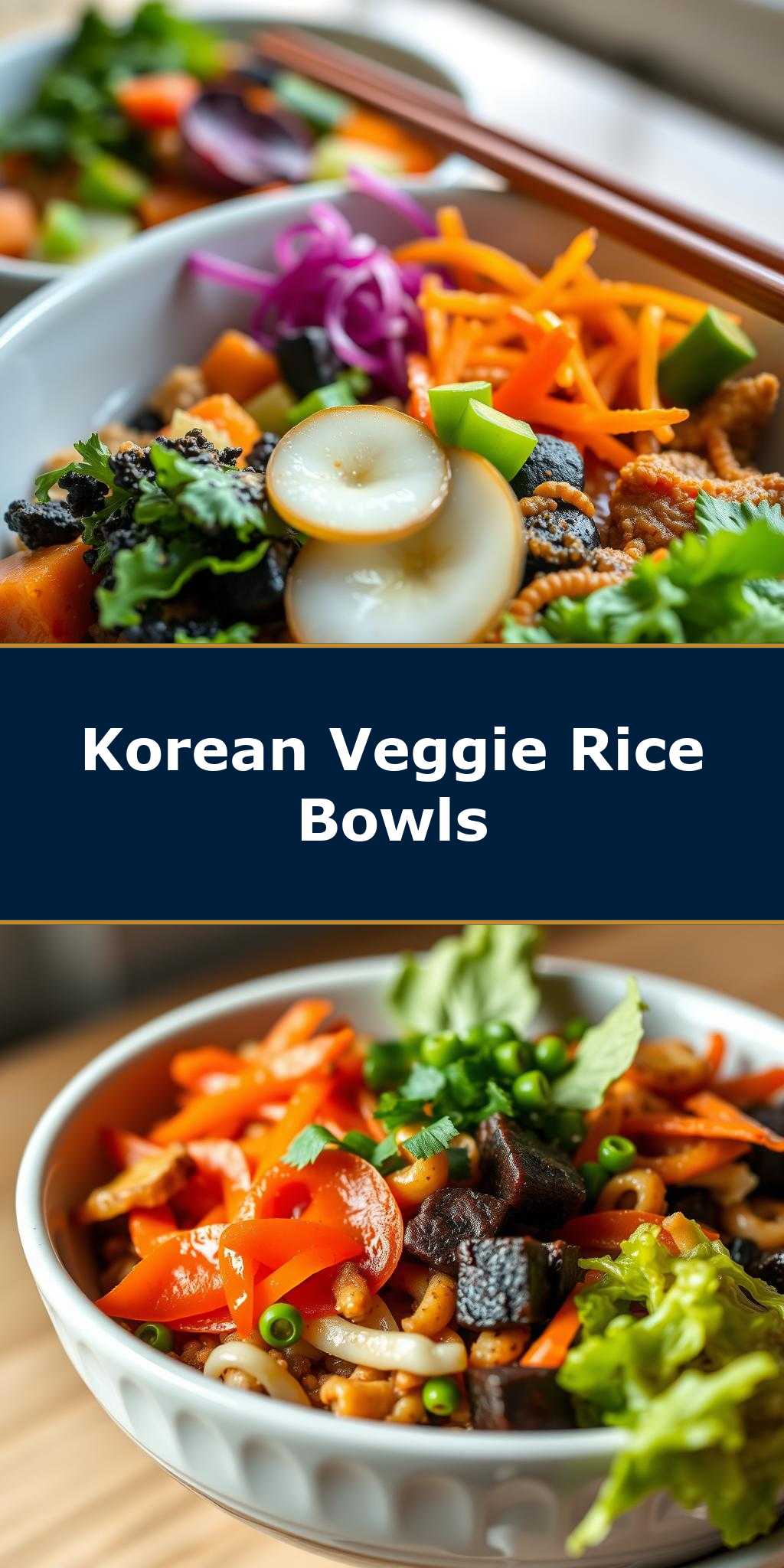
What makes the perfect weeknight dinner? For me, it’s a quick and easy homemade bowl like Korean Veggie Bibimbap, loaded with roasted vegetables and fried eggs. Try making this family favorite using simple stir-fry methods and savory soy sauce. Save this idea for a delicious and easy meal solution.
Korean Veggie Bibimbap Bowls
Introduction
Embark on a culinary journey to Korea with the vibrant and nutritious Korean Veggie Bibimbap Bowls. This recipe is a masterclass in ease, flavor, and creativity, utilizing everyday ingredients to craft a dish that is not only visually stunning but also packed with nutrients and delicious flavors. The beauty of Bibimbap lies in its customization, allowing each diner to create their perfect bowl by selecting from an array of colorful vegetables, savory sauces, and a variety of textures, all atop a bed of fluffy rice. Whether you’re a seasoned foodie or a beginner in the kitchen, this recipe promises to impress with its simplicity and the impressive results it yields with minimal effort.
Why This Works
- Flavor balance and ingredient accessibility: The combination of fresh vegetables, fermented sauces, and the crunch of toasted sesame seeds and nuts creates a flavor profile that is both balanced and exciting. Most ingredients are readily available in local markets or can be easily substituted with alternatives, making this dish accessible to cooks worldwide.
- Ease of preparation: The preparation of Korean Veggie Bibimbap Bowls is remarkably straightforward. It involves simple steps like chopping vegetables, cooking rice, and frying an egg, making it an ideal meal for busy days or for those new to cooking.
- Impressive results with minimal effort: Despite its simplicity, the presentation and variety of Bibimbap are sure to impress. The dish is a feast for the eyes as much as the palate, with its colorful arrangement of vegetables, the golden yolk of a fried egg, and the artistic drizzle of sauces.
Key Ingredients
The main ingredients in Korean Veggie Bibimbap Bowls include a variety of vegetables such as zucchini, carrots, mushrooms, and bean sprouts, which provide a delightful mix of textures and flavors. Other crucial components are cooked white or brown rice, which serves as the base of the dish, and a fried egg, whose runny yolk acts as a sauce, binding all the flavors together. For added depth, Korean chili paste (gochujang) and soy sauce are used, along with sesame oil and seeds for nutty flavors and crunch. Practical substitutions can be made with the vegetables based on seasonal availability and personal preference, and for those who are vegan, the egg can be replaced with a tofu scramble or omitted altogether.
Instructions
- Step 1: Begin by preparing all your ingredients. This includes washing and chopping the vegetables, cooking the rice according to the package instructions, and mixing the sauces. For the sauces, combine gochujang, soy sauce, sesame oil, and a squeeze of fresh lime juice in a bowl and whisk until smooth.
- Step 2: Cook the vegetables in a large skillet or wok with a little oil over medium heat. Start with the harder vegetables like carrots and zucchini, then add the softer ones like mushrooms and bean sprouts. Season with a bit of salt and pepper to taste. In a separate pan, fry an egg sunny-side up for each serving.
- Step 3: Layer the flavors and textures in a bowl. Start with a scoop of warm rice, followed by an arrangement of the cooked vegetables. Place a fried egg on top of the vegetables and drizzle the prepared sauce over the dish. Sprinkle toasted sesame seeds and chopped green onions for added flavor and aesthetics.
- Step 4: For the final touches, consider adding other toppings such as diced kimchi for an extra spicy kick, sliced cucumbers for coolness, or pickled ginger for a tangy flavor. Serve immediately and let each person mix their bowl to their liking, breaking the yolk of the egg to meld all the flavors together.
Handy Tips
- When cooking the rice, use a ratio of 1 cup of rice to 1 3/4 cups of water for perfect fluffiness. Also, letting the rice cool down a bit before serving can help prevent it from becoming mushy.
- For the fried egg, use a non-stick pan to prevent the egg from sticking and to achieve a perfectly rounded shape. Cooking the egg over low-medium heat can also help in getting a runny yolk without overcooking the whites.
- Experiment with different vegetables and sauces to keep the dish interesting and tailored to your taste preferences. Consider adding proteins like cooked chicken or tofu for added nutrition.
Heat Control
Heat control is crucial when cooking the vegetables and the egg. For the vegetables, medium heat allows for a gentle sauté that preserves their colors and textures. The egg should be cooked over low-medium heat to achieve a runny yolk. Signs of doneness include the whites being set and the yolks still moist and golden. For the rice, following the package instructions typically results in perfectly cooked rice, but generally, it’s cooked over high heat until the water boils, then reduced to low heat, covered, and simmered until the water is absorbed and the rice is fluffy.
Crunch Factor
Achieving the right crunch factor in Korean Veggie Bibimbap Bowls is key to its appeal. This can be accomplished through the addition of toasted sesame seeds, chopped nuts, or crispy fried shallots on top of the dish. The crunch provides a satisfying textural contrast to the softness of the rice and the vegetables. To toast sesame seeds, simply heat a small pan over medium heat and stir the seeds constantly until they are lightly browned and fragrant.
Pro Kitchen Tricks
- Use a variety of colored vegetables to make the dish visually appealing. Arranging them in a pattern or a mound in the center of the bowl adds to the presentation.
- Prepare components of the dish ahead of time. The rice and sauces can be made a day in advance, and the vegetables can be chopped and stored in the refrigerator until ready to cook.
- For an extra crispy fried egg, add a small amount of water to the pan after cracking in the egg and cover it with a lid. The steam helps cook the whites while keeping the yolk runny.
Storage Tips
- Leftover Bibimbap can be stored in the refrigerator for up to 2 days. It’s best to store the components separately (rice, vegetables, sauces) to maintain their textures and flavors. Reheat the rice and vegetables gently before assembling the bowls.
- For longer storage, consider freezing the cooked rice and vegetables. They can be thawed and reheated as needed. However, it’s best to prepare the sauces fresh for the best flavor.
- Use airtight containers to store leftovers and keep them fresh. Glass containers are ideal as they can be reheated safely in the microwave or oven.
Gift Packaging Ideas
Korean Veggie Bibimbap Bowls can be beautifully packaged as a gift, especially for occasions like potlucks or as a care package. Consider using eco-friendly bowls or containers that can be microwaved for reheating. Add a small jar of homemade gochujang sauce, a packet of sesame seeds, and a handwritten recipe card for a personal touch. Wrap the bowl in a colorful towel or place it in a reusable bag for a charming presentation.
Flavor Variations
- Different spices: Experiment with Korean chili flakes (gochugaru) for added heat or use ground cumin for a smoky flavor.
- Creative toppings: Add diced bulgogi beef for a meaty twist, or use roasted vegetables like sweet potatoes and Brussels sprouts for added depth of flavor.
- Ingredient swaps: Replace rice with cauliflower rice for a low-carb version or use quinoa for a protein-packed twist. Swap the fried egg with a poached egg for a lighter option.
Troubleshooting
- Texture problems: If the rice becomes mushy, it might be due to overcooking. For the next batch, try reducing the water ratio or cooking time. If the vegetables are too soft, cook them for a shorter time or add them towards the end of the cooking process.
- Ingredient replacements: If a specific ingredient is not available, look for substitutes or omit it altogether. For example, if gochujang is not found, a combination of soy sauce and sriracha can provide a similar spicy and savory flavor.
- Over/undercooking signs: Pay attention to the colors and textures of the ingredients. Undercooked rice will be hard and dry, while overcooked rice is mushy. Vegetables should retain some crunch but be tender enough to bite through easily.
FAQs
- Can I freeze it? Yes, components of the dish like cooked rice and vegetables can be.freeze for up to 3 months. However, it’s best to prepare the sauces fresh for optimal flavor.
- Is it gluten-free? The dish can be made gluten-free by ensuring that the soy sauce used is gluten-free and by checking the ingredients of the gochujang. Some brands may contain gluten due to the fermentation process.
- Can I double the recipe? Absolutely, all ingredients can be doubled or even tripled to serve a larger crowd. Just ensure that you have enough pans and utensils to cook the ingredients efficiently without overcrowding.
Conclusion
Korean Veggie Bibimbap Bowls are a true delight for the senses, offering a harmonious balance of flavors, textures, and colors in each bowl. With its ease of preparation, versatility, and the potential for endless customization, this dish is perfect for any occasion, from a quick weeknight dinner to a special gathering with friends and family. Feel free to experiment and make this recipe your own, and don’t hesitate to share your creations and adaptations with others. The joy of cooking lies not just in the eating, but in the sharing and the love that goes into preparing each meal. Happy cooking!