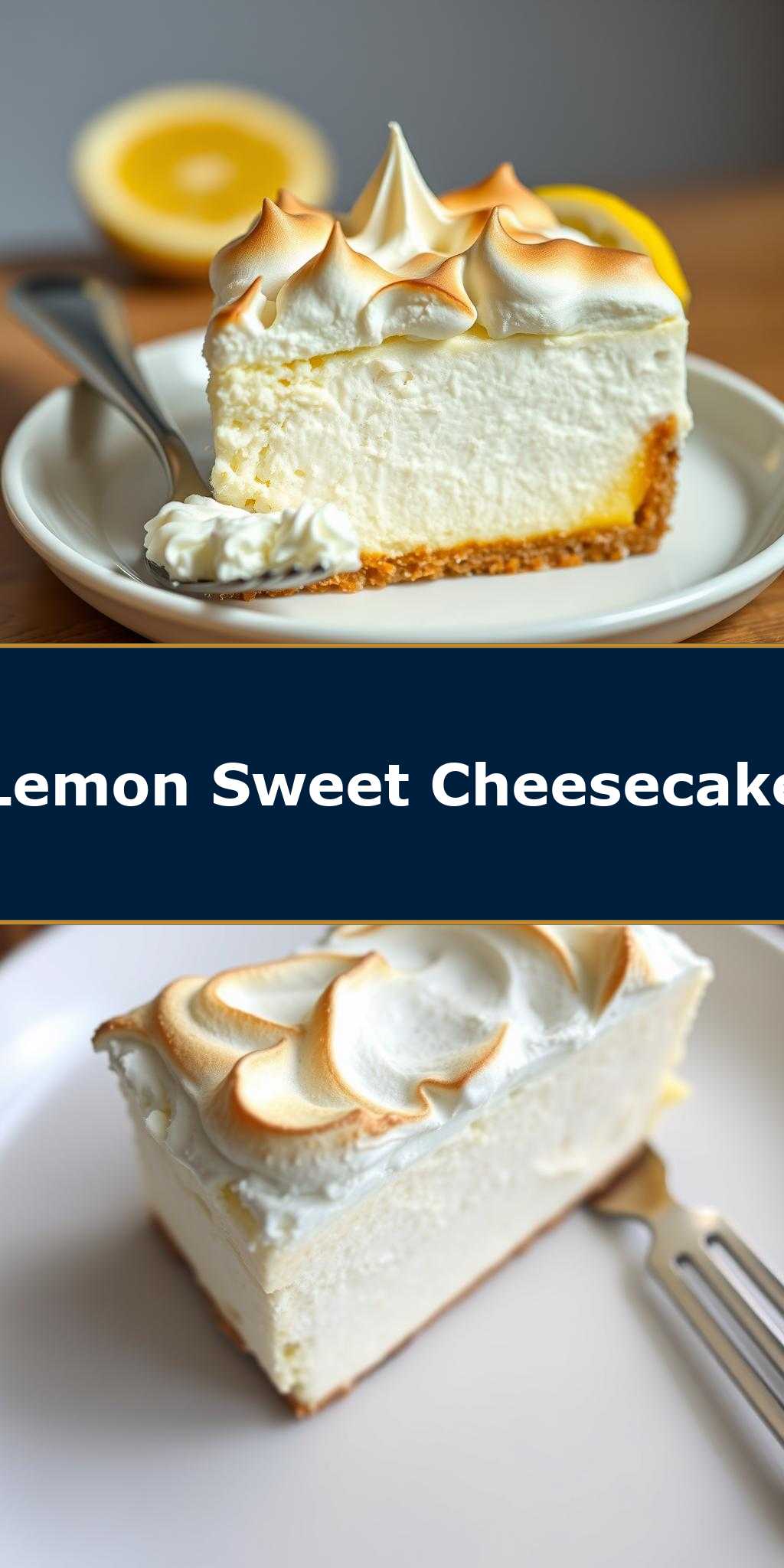
What happens when lemon meringue meets creamy cheesecake? A match made in heaven, that’s what. This easy homemade dessert combines a silky lemon filling with a layer of toasted meringue, all on a buttery shortbread crust. Save this idea for your next family gathering and get ready for rave reviews, try it soon.
Lemon Meringue Cheesecake
Introduction
The Lemon Meringue Cheesecake is a masterpiece of flavors and textures, combining the tanginess of lemon, the richness of cheesecake, and the airy sweetness of meringue. This dessert is a perfect example of how everyday ingredients can be transformed into an extraordinary treat with a bit of creativity and ease. The balance of citrus and sweetness, along with the contrasting textures, makes this cheesecake a standout at any gathering. Whether you’re a seasoned baker or just starting out, this recipe is designed to guide you through the process with clarity and simplicity, ensuring an impressive outcome with minimal effort.
Why This Works
- Flavor balance and ingredient accessibility: The combination of lemon zest, lemon juice, and vanilla provides a well-rounded flavor profile that is both refreshing and comforting. The ingredients are readily available in most supermarkets, making this recipe accessible to everyone.
- Ease of preparation: Despite its impressive appearance, the Lemon Meringue Cheesecake is relatively easy to prepare. The steps are straightforward, and each component can be made ahead of time, making it a great option for busy schedules.
- Impressive results with minimal effort: The layering of the cheesecake, lemon curd, and meringue creates a visually stunning dessert that is sure to impress. The meringue topping, in particular, adds a professional touch that belies the simplicity of the preparation process.
Key Ingredients
The main ingredients in this recipe include graham cracker crumbs for the crust, cream cheese, eggs, sugar, lemon zest, lemon juice, and vanilla extract for the cheesecake, lemon curd made with lemon juice, sugar, eggs, and butter, and a meringue topping made with egg whites and sugar. For practical substitutions, you can use other types of crackers for the crust or replace some of the sugar with honey in the cheesecake and lemon curd. It’s also possible to use pre-made lemon curd for a quicker preparation time.
Instructions
- Step 1: Begin by preheating your oven to 350°F (175°C). Prepare the crust by mixing graham cracker crumbs with sugar and melted butter, then press the mixture into the bottom of a 9-inch springform pan. Bake the crust for 10 minutes and let it cool completely.
- Step 2: Prepare the cheesecake batter by beating cream cheese until smooth, then adding eggs one at a time, followed by sugar, lemon zest, lemon juice, and vanilla extract. Pour the batter into the prepared pan over the crust and bake for 50 minutes or until the edges are set and the center is slightly jiggly.
- Step 3: While the cheesecake is baking, prepare the lemon curd. In a saucepan, whisk together lemon juice, sugar, eggs, and butter. Cook over medium heat, stirring constantly, until the mixture thickens. Let it cool to room temperature. Once the cheesecake has cooled slightly, pour the lemon curd over the top.
- Step 4: For the meringue topping, beat egg whites and sugar until stiff peaks form. Spread the meringue over the lemon curd, making sure to seal the edges of the meringue to the crust to prevent filling from escaping during baking. Bake the cheesecake for an additional 10-15 minutes or until the meringue is golden brown.
Handy Tips
- Ensure that all ingredients are at room temperature before starting to mix the cheesecake batter for a smoother and more even texture.
- Don’t overmix the batter or the meringue, as this can lead to a dense cheesecake or a meringue that weeps or shrinks excessively.
- Use a water bath for baking the cheesecake to prevent cracking and ensure even cooking.
Heat Control
Heat control is crucial in this recipe, especially when baking the cheesecake and the meringue. The ideal temperature for baking the cheesecake is 350°F (175°C), and it should be baked for about 50 minutes or until the edges are set and the center is slightly jiggly. The meringue should be baked at the same temperature for an additional !0-15 minutes or until it’s golden brown. It’s essential to keep an eye on the cheesecake and meringue during the baking time, as oven temperatures can vary.
Crunch Factor
The crunch factor in this dessert comes from the graham cracker crust and the toasted meringue topping. To achieve a crunchy crust, ensure that it’s baked until lightly browned and set. For the meringue, baking it until golden brown will give it a crunchy exterior while maintaining a soft interior. Avoid overbaking, as this can make the meringue too crunchy or even burnt.
Pro Kitchen Tricks
- To ensure the meringue doesn’t weep or shrink, make sure the cheesecake has cooled slightly before topping it with meringue, and seal the edges of the meringue to the crust.
- For a perfectly golden meringue, use a kitchen torch to brown the peaks after baking, adding a professional touch to the dessert.
- To prevent the cheesecake from cracking, avoid sudden temperature changes and ensure it cools slowly and evenly.
Storage Tips
- The Lemon Meringue Cheesecake can be stored in the refrigerator for up to 3 days. It’s best to store it in an airtight container to maintain freshness.
- For longer storage, the cheesecake (without the meringue topping) can be frozen for up to 2 months. Thaw frozen cheesecake in the refrigerator overnight.
- Reheating is not recommended for this dessert, as it can cause the meringue to become soggy. Serve chilled for the best experience.
Gift Packaging Ideas
The Lemon Meringue Cheesecake makes a wonderful gift, especially when packaged attractively. Consider placing the cheesecake on a decorative plate or cake stand, then wrapping it in clear plastic wrap or a large cellophane bag. Add a ribbon around the plate or a gift tag with a personal message for a touching gesture. If you’re gifting slices, individual servings can be packaged in small containers or jars, sealed with a ribbon or a gift label.
Flavor Variations
- Different spices: Adding a pinch of cinnamon or nutmeg to the cheesecake batter can provide a unique twist on the traditional recipe.
- Creative toppings: Instead of meringue, consider topping the cheesecake with a fruit compote, whipped cream, or even caramel sauce for a different flavor and texture.
- Ingredient swaps: Replacing the lemon with lime or orange can give the cheesecake a completely different character. You can also experiment with different types of citrus zest for varied flavors.
Troubleshooting
- Texture problems: If the cheesecake is too dense, it may be due to overmixing the batter. If the meringue is too runny, it might not have been baked long enough.
- Ingredient replacements: When substituting ingredients, ensure that the replacements have similar properties to the originals to maintain the balance of the dessert.
- Over/undercooking signs: An overcooked cheesecake will be dry and cracked, while an undercooked one will be too jiggly in the center. The meringue should be lightly golden; if it’s too brown, it’s overcooked.
FAQs
- Can I freeze it? Yes, the cheesecake can be frozen without the meringue topping for up to 2 months. Thaw in the refrigerator overnight and top with meringue before serving.
- Is it gluten-free? The traditional recipe includes graham cracker crumbs, which contain gluten. However, you can make a gluten-free version by substituting the graham crackers with gluten-free alternatives.
- Can I double the recipe? Yes, you can double the recipe, but ensure you have a large enough pan and adjust the baking time accordingly. A larger cheesecake will require more baking time.
Conclusion
Making a Lemon Meringue Cheesecake is a rewarding experience that combines the joy of baking with the satisfaction of creating something truly special. With its balance of tangy lemon, rich cheesecake, and sweet meringue, this dessert is sure to become a favorite. Don’t be afraid to experiment with different flavors and toppings to make the recipe your own. Share your creations with friends and family, and enjoy the process of baking and giving. Happy baking, and I look forward to hearing about your culinary adventures!