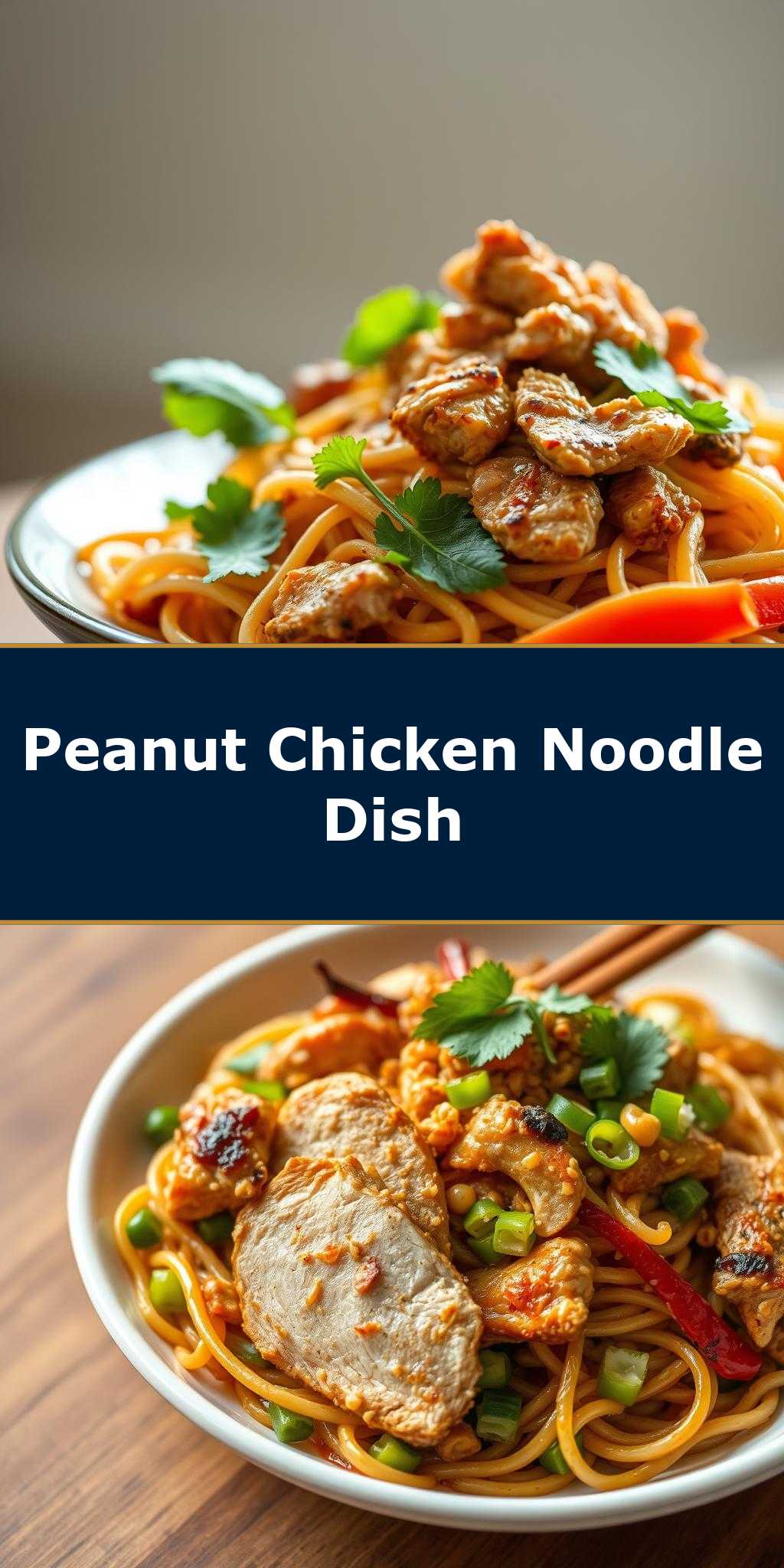
What’s the secret to a stress-free weeknight dinner? It starts with a flavorful dish like Thai Peanut Noodles with Rotisserie Chicken, a quick and easy homemade recipe that’s perfect for a family favorite meal. With creamy peanut sauce and tender chicken, this easy dinner idea is a must-try. Save this idea for a delicious homemade weeknight dinner solution.
Thai Peanut Noodles with Rotisserie Chicken
Introduction
Imagine a dish that combines the creamy richness of peanut sauce, the tender flavor of rotisserie chicken, and the satisfying crunch of fresh vegetables, all wrapped up in a bed of soft, fluffy noodles. This Thai Peanut Noodles with Rotisserie Chicken recipe is a culinary dream come true, offering an unbeatable blend of ease, flavor, and creativity using everyday ingredients. Whether you’re a busy professional looking for a quick and delicious meal or an adventurous foodie seeking to explore new flavors, this recipe is sure to become a staple in your kitchen. With its impressive balance of textures and tastes, it’s perfect for a weeknight dinner, a special occasion, or even as a gift for a friend or loved one.
Why This Works
- Flavor balance and ingredient accessibility: The combination of peanut sauce, rotisserie chicken, and mixed vegetables creates a harmonious balance of flavors that is both familiar and exciting. Plus, the ingredients are easily accessible in most supermarkets, making this dish a practical choice for anyone.
- Ease of preparation: One of the best things about this recipe is how easy it is to prepare. With the use of rotisserie chicken, you save time on cooking the protein, and the peanut sauce can be made in just a few minutes. This makes the dish perfect for those with limited time or cooking experience.
- Impressive results with minimal effort: Despite its simplicity, Thai Peanut Noodles with Rotisserie Chicken presents beautifully and tastes like a restaurant-quality meal. The combination of colors, textures, and the aromatic peanut sauce will impress your family and friends, making it an excellent choice for entertaining.
Key Ingredients
The main ingredients in this recipe include rotisserie chicken, peanut butter, soy sauce, rice vinegar, honey, garlic, ginger, noodles of your choice (rice noodles or soba noodles work well), and mixed vegetables such as bell peppers, carrots, and bean sprouts. For practical substitutions, you can use natural peanut butter for a healthier option, swap soy sauce with tamari for a gluten-free version, or choose your favorite mix of vegetables based on what’s in season or your personal preferences.
Instructions
- Step 1: Begin by preparing your ingredients. Chop the rotisserie chicken into bite-sized pieces, slice the bell peppers and carrots, and mince the garlic and ginger. Cook your noodles according to the package instructions and set them aside.
- Step 2: In a blender or food processor, combine peanut butter, soy sauce, rice vinegar, honey, garlic, and ginger. Blend until smooth and creamy, adding a little water if necessary to achieve the desired consistency for your peanut sauce.
- Step 3: In a large skillet or wok, heat a couple of tablespoons of oil over medium heat. Add the sliced bell peppers and carrots and sauté until they start to soften. Then, add the cooked noodles to the skillet, tossing them with the vegetables to combine. Pour the peanut sauce over the noodles and vegetables, and stir-fry until everything is well coated and heated through.
- Step 4: Finally, add the chopped rotisserie chicken to the skillet and stir to combine with the noodles and sauce. Season with salt and pepper to taste, then serve hot, garnished with bean sprouts, chopped peanuts, and a sprinkle of sesame seeds if desired.
Handy Tips
- For a spicier version, add some red pepper flakes to the peanut sauce. If you prefer a milder flavor, reduce or omit the ginger and garlic.
- Use leftovers creatively – you can turn this dish into a salad by serving it cold and adding more vegetables, or use the peanut sauce as a dip for vegetables or spring rolls.
- Avoid overcooking the noodles, as they can become mushy and unappetizing. Also, be mindful of the amount of sauce you add, as too much can make the dish overly rich and heavy.
Heat Control
When cooking the vegetables and noodles, it’s essential to control the heat to prevent burning or overcooking. Medium heat is usually ideal, allowing for a gentle sauté that preserves the crunch of the vegetables and the texture of the noodles. If using a wok, which can get very hot, be sure to stir constantly and adjust the heat as needed to maintain a consistent temperature.
Crunch Factor
Achieving the right crunch factor in this dish is key to its appeal. The bean sprouts and chopped peanuts provide a nice crunch, while the carrots and bell peppers add a satisfying crispness if cooked just right. To maintain the crunch, don’t overcook the vegetables, and consider adding them towards the end of the cooking time so they retain their texture.
Pro Kitchen Tricks
- For an extra creamy peanut sauce, add a tablespoon or two of coconut cream or plain Greek yogurt.
- Prep your ingredients in advance to save time during cooking. Chop the vegetables and cook the noodles ahead of time, and store them in separate containers in the refrigerator until ready to use.
- Clean as you go to avoid a big cleanup at the end. Wash and put away utensils and dishes as soon as you’re done using them, and wipe down the counters to prevent clutter and mess.
Storage Tips
- Leftovers can be stored in an airtight container in the refrigerator for up to 3 days. Reheat gently in the microwave or on the stovetop, adding a little water if the sauce has thickened.
- For longer storage, consider freezing the dish without the noodles and vegetables. The peanut sauce and chicken can be frozen together in airtight containers or freezer bags for up to 2 months. Thaw and reheat, then serve over freshly cooked noodles with your choice of vegetables.
- Use glass or plastic containers that are safe for microwave and freezer use to avoid the risk of chemical contamination or container damage.
Gift Packaging Ideas
If you’re considering gifting this dish, it can be beautifully packaged in a variety of ways. For a more rustic look, use a mason jar and fill it with the peanut sauce, topping it with a layer of chopped peanuts and a sprinkle of sesame seeds. Include a packet of noodles and a container of cooked chicken and vegetables on the side, along with instructions for heating and combining. For a more elegant presentation, use a decorative bowl or container and garnish with fresh herbs or edible flowers.
Flavor Variations
- Different spices: Add a teaspoon of curry powder or ground cumin to the peanut sauce for an Indian-inspired flavor, or use chili flakes for a spicy kick.
- Creative toppings: In addition to bean sprouts and peanuts, consider topping your noodles with diced mango, sliced almonds, or pickled ginger for added texture and flavor.
- Ingredient swaps: Use shrimp or tofu instead of chicken for a seafood or vegetarian version, or swap the peanut butter with almond or cashew butter for a different nutty flavor.
Troubleshooting
- Texture problems: If the peanut sauce is too thick, add a little water. If it’s too thin, simmer it for a few minutes to reduce. Overcooked noodles can be salvaged by rinsing them with cold water to stop the cooking process.
- Ingredient replacements: If you don’t have soy sauce, you can substitute it with tamari or coconut aminos. For a peanut-free version, use sunflower seed butter or another nut butter alternative.
- Over/undercooking signs: Noodles that are overcooked will be mushy and stick together. Undercooked noodles will be hard and crunchy. Adjust your cooking time based on the package instructions and check the noodles frequently to achieve the perfect doneness.
FAQs
- Can I freeze it? Yes, you can freeze the peanut sauce and cooked chicken separately for up to 2 months. Cooked noodles and vegetables are best consumed fresh but can be refrigerated for up to 3 days.
- Is it gluten-free? This recipe can be made gluten-free by substituting the soy sauce with tamari and ensuring that the noodles and other ingredients are gluten-free.
- Can I double the recipe? Yes, you can easily double or triple this recipe for larger crowds. Just be sure to adjust the cooking time and use larger pots and pans as needed to accommodate the increased quantity of ingredients.
Conclusion
Thai Peanut Noodles with Rotisserie Chicken is a versatile, delicious, and easy-to-make dish that is perfect for any occasion. With its rich peanut sauce, tender chicken, and crunchy vegetables, it’s a meal that will satisfy your cravings and leave you wanting more. Feel free to experiment with different ingredients and flavor combinations to make the recipe your own, and don’t hesitate to share it with friends and family. Whether you’re a seasoned chef or a beginner in the kitchen, this dish is sure to become a favorite, and with a little creativity, it can be adapted and enjoyed in countless ways.