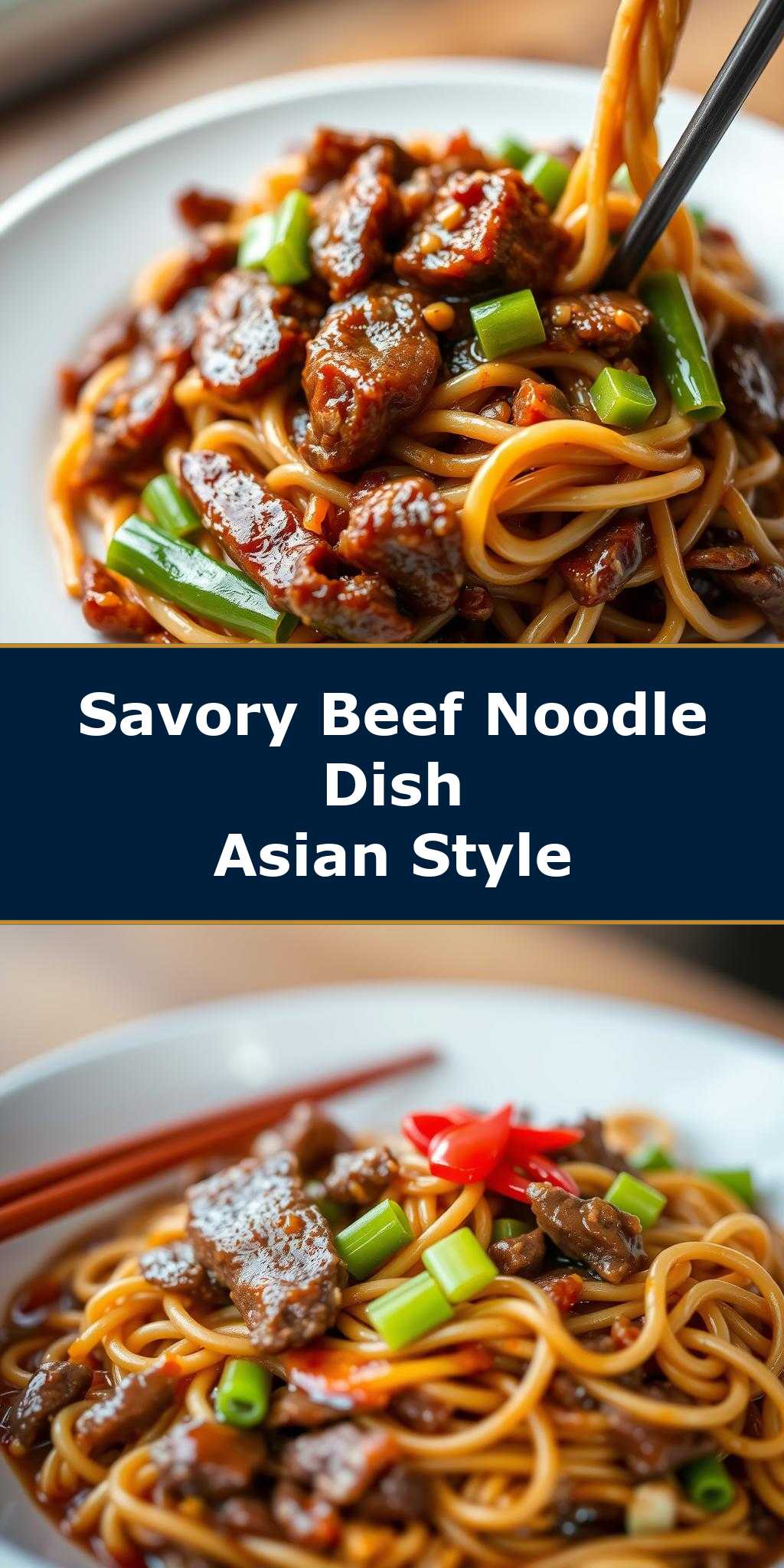
What makes a perfect weeknight dinner? For me, it’s a big bowl of homemade Hoisin Beef Noodles, loaded with tender beef and quick-cooked noodles. This easy recipe relies on a flavorful hoisin sauce and stir-frying to bring everything together in no time. Save this idea for a delicious family favorite to enjoy any night of the week.
Hoisin Beef Noodles
Introduction
Imagine a dish that combines the tender richness of beef, the savory depth of hoisin sauce, and the comforting warmth of noodles, all in one harmonious bowl. Hoisin Beef Noodles is not just a meal, it’s an experience that will transport your taste buds to the vibrant streets of Asia, where flavors are bold and every bite tells a story. The best part? It’s incredibly easy to make, requiring only everyday ingredients and a bit of creativity. Whether you’re a seasoned chef or a curious beginner, this recipe is sure to delight, offering a perfect balance of ease, flavor, and the opportunity to get creative in the kitchen.
Why This Works
- Flavor balance and ingredient accessibility: The combination of hoisin sauce, beef, and noodles creates a flavor profile that is both familiar and exotic, using ingredients that are readily available in most supermarkets.
- Ease of preparation: Despite its sophisticated taste, Hoisin Beef Noodles requires minimal preparation and cooking time, making it an ideal option for busy days or special occasions.
- Impressive results with minimal effort: The dish is not only delicious but also visually appealing, with the potential to impress both family and friends with its vibrant colors and appetizing aroma.
Key Ingredients
The magic of Hoisin Beef Noodles lies in its key ingredients. You’ll need thinly sliced beef ( ribeye or sirloin work well), a package of noodles suitable for stir-frying (rice noodles or soba noodles are excellent choices), hoisin sauce for the depth of flavor, soy sauce for added umami, garlic and ginger for a punch of freshness, and your choice of vegetables (bell peppers, carrots, and snap peas are colorful and tasty options). For practical substitutions, you can use chicken or tofu for a vegetarian version, and adjust the amount of hoisin and soy sauce according to your taste preferences. Don’t forget some green onions and sesame seeds for garnish to add a pop of color and crunch.
Instructions
- Step 1: Begin by preparing your ingredients. Slice the beef into thin strips and season with a bit of soy sauce. Chop the garlic and ginger, and slice your chosen vegetables. Cook the noodles according to the package instructions and set aside.
- Step 2: In a large skillet or wok, heat a couple of tablespoons of oil over medium-high heat. Add the beef and cook until browned, about 3-4 minutes. Remove the beef from the skillet and! set aside. In the same skillet, add a bit more oil if necessary, then add the chopped garlic and ginger and sauté until fragrant.
- Step 3: Add the sliced vegetables to the skillet and cook until they start to soften. Then, add the cooked noodles, hoisin sauce, and a bit more soy sauce to taste. Stir everything together, ensuring the noodles are well coated with the sauce and the vegetables are evenly distributed.
- Step 4: Return the beef to the skillet and stir to combine with the noodles and vegetables. Cook for an additional 2-3 minutes to ensure everything is heated through. Taste and adjust the seasoning as needed. Serve hot, garnished with green onions, sesame seeds, and any additional toppings you like.
Handy Tips
- For a crisper texture, make sure to not overcook the noodles or the vegetables. Quick cooking preserves their crunch and color.
- If using beef, choose a cut that is suitable for stir-frying, like ribeye or sirloin, and slice it against the grain for tenderness.
- Adjust the amount of hoisin and soy sauce to your taste. If you prefer a lighter sauce, start with a small amount and add more to taste.
Heat Control
Heat control is crucial in cooking Hoisin Beef Noodles. For the best results, cook over medium-high heat to achieve a quick sear on the beef and a vibrant color on the vegetables. When combining all the ingredients, reduce the heat to medium to prevent the sauce from burning or sticking to the pan. The ideal internal temperature for cooked beef is at least 145°F (63°C) for medium-rare, 160°F (71°C) for medium, and 170°F (77°C) for well done. Use a thermometer for accuracy, especially if you’re unsure.
Crunch Factor
Achieving the right texture is key to the dish’s appeal. For a satisfying crunch, ensure that your vegetables are not overcooked. Bell peppers should still have a bit of crunch, and carrots should be tender but not mushy. Adding some toasted nuts or seeds, like sesame seeds or chopped peanuts, can also enhance the crunch factor. If you prefer a softer texture, you can cook the vegetables for a few minutes longer, but be careful not to overcook them.
Pro Kitchen Tricks
- Use a wok if you have one, as it distributes heat evenly and is ideal for quick stir-frying. If not, a large skillet will work just as well.
- Prepare all your ingredients before you start cooking. This technique, known as “mise en place,” will make the cooking process smoother and less stressful.
- Cook the noodles just before you’re ready to add them to the dish. This ensures they stay fresh and don’t become mushy or stick together.
Storage Tips
- Leftovers can be stored in an airtight container in the refrigerator for up to 3 days. Reheat gently in a pan or in the microwave until warmed through.
- For longer storage, consider freezing the dish. Place the cooled noodles and beef mixture in a freezer-safe bag or container and store for up to 2 months. Reheat from frozen, adding a bit of water if the sauce seems too thick.
- Use glass or plastic containers that are airtight to prevent moisture and other flavors from affecting the dish.
Gift Packaging Ideas
If you’re considering gifting Hoisin Beef Noodles, perhaps for a potluck or as a meal for a friend, consider packaging it in a decorative Chinese takeout box or a microwave-safe container with a clear lid. Add some garnishes like green onions, sesame seeds, or a sprinkle of toasted nuts on top for visual appeal. You could also include a small packet of soy sauce or chili flakes on the side for added flavor. Wrap the container in a decorative paper or bag and tie with a ribbon for a beautiful and thoughtful gift.
Flavor Variations
- Different spices: Experiment with adding a pinch of cumin for a smoky flavor, some red pepper flakes for heat, or a sprinkle of five-spice powder for a traditional Chinese flavor.
- Creative toppings: Add some diced green chilies, sliced almonds, or pickled ginger on top for extra flavor and texture.
- Ingredient swaps: Use chicken or pork instead of beef, or try with tofu or tempeh for a vegetarian or vegan version. Swap soba noodles with rice noodles or udon for a different texture.
Troubleshooting
- Texture problems: If your noodles are too sticky, rinse them with cold water after cooking. If your vegetables are too soft, reduce the cooking time.
- Ingredient replacements: If you don’t have hoisin sauce, you can make a substitute by mixing soy sauce, honey, garlic, and ginger. For soy sauce, you can use tamari or coconut aminos as alternatives.
- Over/undercooking signs: Check your beef for doneness by cutting into one of the pieces; it should be cooked to your desired level of doneness. For noodles and vegetables, taste them periodically during cooking to avoid overcooking.
FAQs
- Can I freeze it? Yes, you can freeze Hoisin Beef Noodles for up to 2 months. Cool the dish completely before freezing to prevent the formation of ice crystals.
- Is it gluten-free? Depending on the brand of hoisin sauce and soy sauce you use, the dish may contain gluten. Look for gluten-free alternatives to make the dish suitable for those with gluten intolerance.
- Can I double the recipe? Absolutely, you can double or even triple the recipe if you’re serving a larger crowd. Just ensure you have a large enough skillet or wok to accommodate all the ingredients.
Conclusion
Hoisin Beef Noodles is more than just a recipe; it’s a culinary journey that brings people together. With its blend of savory, sweet, and umami flavors, combined with the ease of preparation and the flexibility to adapt to various tastes and dietary needs, it’s a dish that will quickly become a favorite. Whether you’re cooking for yourself, your family, or a crowd, remember to have fun with the recipe, experiment with different ingredients, and don’t hesitate to reach out if you have any questions. Happy cooking, and enjoy the delightful flavors of Hoisin Beef Noodles!