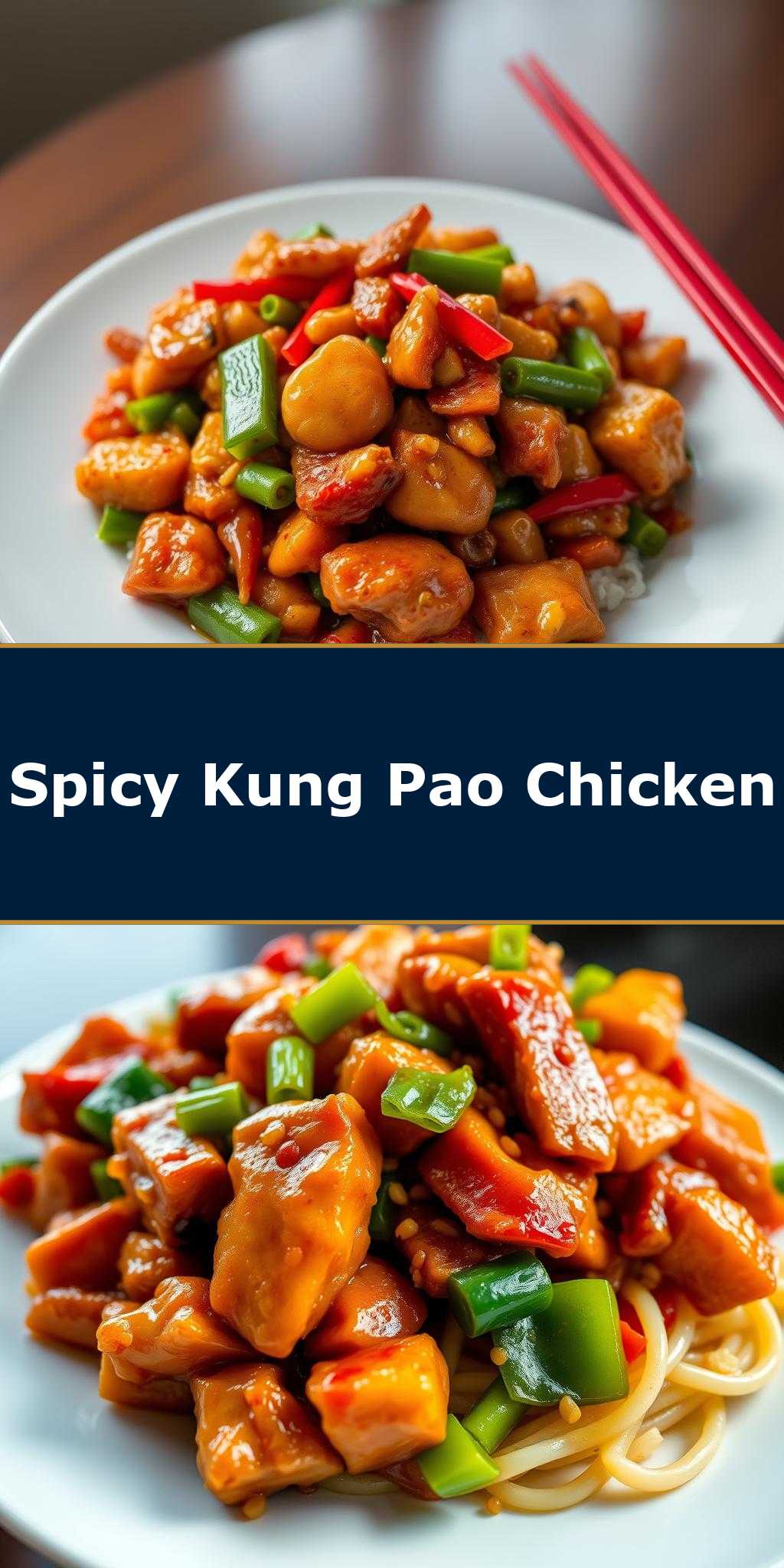
What makes the perfect weeknight dinner? For me, it’s a spicy kick like this Kung Pao chicken, made easy with homemade stir-fry sauce and crunchy peanuts. Save this idea for a quick family favorite recipe to try soon
Spicy Kung Pao Chicken Delight
Introduction
The Spicy Kung Pao Chicken Delight is a dish that embodies the perfect blend of ease, flavor, and creativity, utilizing everyday ingredients to craft a culinary masterpiece. This recipe is designed to guide you through a simple yet impressive journey of preparing a mouth-watering, spicy Kung Pao chicken dish that will leave you and your guests craving for more. With its origins in Sichuan cuisine, Kung Pao chicken is renowned for its bold flavors and spicy kick, making it a favorite among those who enjoy a little heat in their meals. The beauty of this recipe lies in its accessibility and flexibility, allowing you to adjust the spice level and ingredients according to your taste preferences, making it suitable for a wide range of palates.
Why This Works
- Flavor balance and ingredient accessibility: The recipe strikes a perfect balance between spicy, sour, sweet, and salty flavors, using ingredients that are readily available in most supermarkets.
- Ease of preparation: Despite its complex flavor profile, the Spicy Kung Pao Chicken Delight is surprisingly easy to prepare, requiring minimal cooking time and effort.
- Impressive results with minimal effort: This dish is perfect for those looking to impress their guests without spending hours in the kitchen, as it yields a restaurant-quality meal with remarkably little effort.
Key Ingredients
The main ingredients used in the Spicy Kung Pao Chicken Delight include boneless, skinless chicken breasts, roasted peanuts or cashews, scallions, garlic, ginger, soy sauce, Shaoxing wine (or dry sherry), cornstarch, vegetable oil, Sichuan peppercorns, and red pepper flakes. For those who prefer a milder dish, the Sichuan peppercorns and red pepper flakes can be adjusted or omitted. Additionally, you can substitute chicken with tofu or tempeh for a vegetarian version, making this recipe highly versatile and adaptable to different dietary needs and preferences.
Instructions
- Step 1: Begin by preparing all the ingredients. Chop the scallions, mince the garlic and ginger, and slice the chicken into bite-sized pieces. Roast the peanuts or cashews in a 350°F oven for about 5 minutes, or until fragrant and lightly browned.
- Step 2: In a small bowl, whisk together soy sauce, Shaoxing wine (or dry sherry), and cornstarch to make the marinade. Add the sliced chicken to the marinade and mix well to coat. Let it marinate for at least 10 minutes.
- Step 3: Heat 2 tablespoons of vegetable oil in a wok or large skillet over high heat. Add the marinated chicken and cook until browned and cooked through, about 5-7 minutes. Remove the chicken from the wok and set aside. In the same wok, add another tablespoon of oil if necessary, then add the minced garlic and ginger and stir-fry until fragrant, about 30 seconds.
- Step 4: Add the roasted peanuts or cashews, Sichuan peppercorns, and red pepper flakes to the wok. Stir-fry for about 1 minute, until the peanuts are lightly browned. Then, add the chopped scallions and cooked chicken back into the wok. Stir in soy sauce and Shaoxing wine (if using) and cook for an additional 2 minutes, until everything is well combined and heated through. Serve immediately over steamed rice.
Handy Tips
- To avoid overcooking the chicken, make sure to cook it in batches if necessary, and always cut into one of the pieces to check for doneness.
- For an extra crispy texture, you can coat the marinated chicken with a little cornstarch before cooking.
- Be cautious when handling Sichuan peppercorns and red pepper flakes, as they can cause skin irritation in some individuals.
Heat Control
When cooking the Spicy Kung Pao Chicken Delight, it’s crucial to control the heat to achieve the perfect balance of flavors and textures. Start with high heat to brown the chicken and peanuts, then adjust the heat to medium or low to prevent burning the garlic, ginger, and scallions. The ideal internal temperature for cooked chicken is 165°F. Always use a thermometer to ensure the chicken is cooked through and safe to eat.
Crunch Factor
Achieving the right crunch factor is essential in the Spicy Kung Pao Chicken Delight. This is primarily accomplished by roasting the peanuts or cashews and cooking the chicken and vegetables quickly over high heat. To enhance the crunch, ensure that you don’t overcook the ingredients, as this can lead to a soft and unappealing texture. Additionally, adding crispy elements like fried wonton strips or toasted sesame seeds on top can elevate the dish’s textural appeal.
Pro Kitchen Tricks
- Preparation is key: Having all ingredients ready before you start cooking will make the process much smoother and faster.
- Use the right cookware: A wok is ideal for stir-frying due to its large capacity and even heat distribution, but a large skillet can also work well.
- Clean as you go: To avoid a big cleanup at the end, try to wash and put away utensils and ingredients as you finish using them.
Storage Tips
- Leftover storage: Cool the dish to room temperature, then store it in an airtight container in the refrigerator for up to 3 days.
- Reheating tips: Reheat the dish in a wok or skillet over medium heat, adding a little water if necessary to prevent drying out.
- Shelf life: Cooked Kung Pao chicken can be frozen for up to 2 months. When freezing, it’s best to portion the dish into individual servings or freezer bags for easy reheating.
Gift Packaging Ideas
If you’re considering gifting the Spicy Kung Pao Chicken Delight, especially the components like the roasted peanuts or the sauce, you can package them in decorative jars or containers. Wrap the jars in a ribbon or place them in a gift basket filled with Asian-inspired goodies like fortune cookies, teas, or sauces. For a more personalized touch, include a handwritten recipe card or a set of chopsticks with the gift.
Flavor Variations
- Different spices: Experiment with various types of chili peppers or spices like cumin or coriander to give the dish a unique twist.
- Creative toppings: Add some freshness with cilantro, basil, or scallions, or crunch with toasted nuts or seeds.
- Ingredient swaps: Substitute chicken with tofu, shrimp, or beef for a different protein option, or use different types of nuts like almonds or walnuts.
Troubleshooting
- Texture problems: If the chicken becomes too dry, it may be overcooked. Try adjusting the cooking time or adding a little more oil or sauce to keep it moist.
- Ingredient replacements: If you can’t find Sichuan peppercorns, you can substitute them with a combination of black pepper and coriander for a similar numbing effect.
- Over/undercooking signs: Check the chicken regularly to avoid overcooking. Undercooked chicken will be pink and soft, while overcooked chicken will be dry and hard.
FAQs
- Can I freeze it? Yes, you can freeze the cooked Kung Pao chicken for up to 2 months. It’s best to freeze it in portions or airtight containers for easy reheating.
- Is it gluten-free? The traditional recipe includes soy sauce, which contains gluten. However, you can substitute it with gluten-free soy sauce or tamari to make the dish gluten-free.
- Can I double the recipe? Yes, you can easily double or triple the recipe for larger gatherings. Just ensure you have a large enough wok or skillet to accommodate all the ingredients.
Conclusion
Embarking on the culinary journey of creating the Spicy Kung Pao Chicken Delight is a thrilling adventure that promises to delight your senses and satisfy your appetite. With its rich, bold flavors and the ease of preparation, this dish is perfect for both beginners and seasoned cooks looking to spice up their meal routine. Feel free to experiment with the recipe, adjusting the spice level and ingredients to suit your taste. Whether you’re cooking for yourself or planning a dinner party, the Spicy Kung Pao Chicken Delight is sure to impress. So, don’t hesitate to get creative, share your variations, and enjoy the process of crafting this delightful dish.