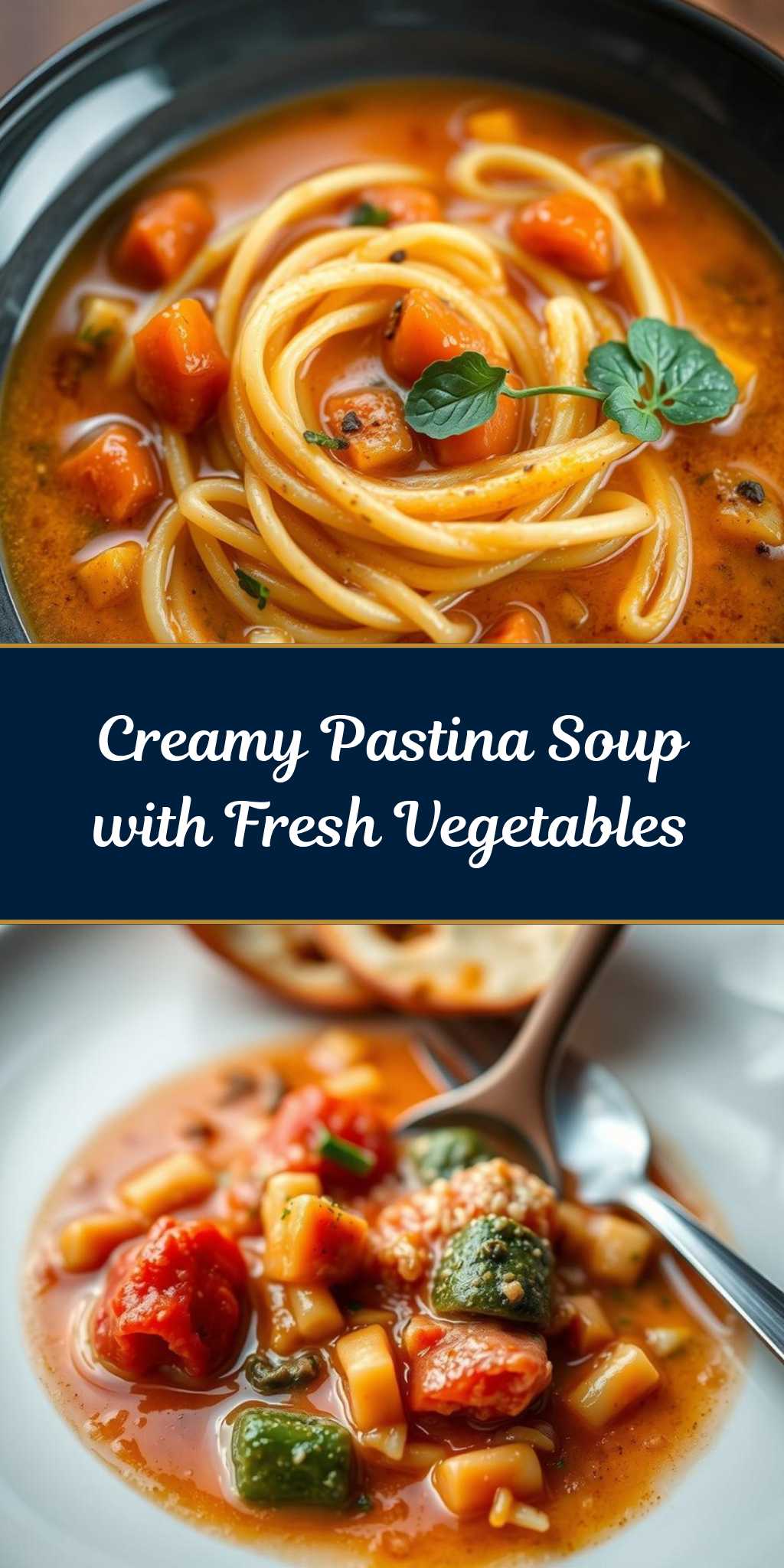
Need a comforting weeknight dinner idea? Try this easy pastina soup made with homemade chicken broth and tender pasta for a quick family favorite meal, save for later
Pastina Soup
Introduction
Pastina soup, a classic Italian comfort food, is a dish that embodies simplicity, flavor, and the essence of home cooking. This tiny star-shaped pasta, known as pastina, is cooked in a light and flavorful chicken broth, making it an ideal meal for any time of the year. The beauty of pastina soup lies in its ease of preparation, its versatility in accepting a variety of ingredients, and its ability to warm the heart with its comforting taste. By using everyday ingredients, you can create a culinary masterpiece that is both nourishing and delicious, perfect for a family dinner or a cozy night in.
Why This Works
- Flavor balance and ingredient accessibility: The combination of chicken broth, vegetables, and pastina creates a perfectly balanced flavor profile that is easy to achieve with commonly found ingredients.
- Ease of preparation: The simplicity of boiling pasta and preparing a broth makes this dish accessible to cooks of all levels, requiring minimal effort for impressive results.
- Impressive results with minimal effort: Despite its simplicity, pastina soup presents well and can be customized with various toppings or additional ingredients, making it suitable for both casual and more formal dining occasions.
Key Ingredients
The main ingredients for pastina soup include pastina pasta, chicken broth, olive oil, onion, garlic, carrot, celery, chicken breast or thighs, and any desired vegetables or seasonings. Practical substitutions can be made, such as using vegetable broth for a vegetarian option or adding other vegetables like zucchini, spinach, or bell peppers to enhance the nutritional value and flavor of the soup. The flexibility in ingredients allows for creativity and adaptation to personal taste preferences or dietary needs.
Instructions
- Step 1: Begin by chopping the onion, garlic, carrot, and celery into small pieces. These aromatics will form the base flavor of the broth. Measure out the pastina and have your chicken and any additional vegetables ready.
- Step 2: In a large pot, heat a couple of tablespoons of olive oil over medium heat. Add the chopped onion, garlic, carrot, and celery, and sauté until the vegetables are tender and lightly browned. Then, add the chicken to the pot and cook until it’s browned on all sides and cooked through.
- Step 3: Pour in the chicken broth, bringing the mixture to a boil. Once boiling, reduce the heat to a simmer and add the pastina. Cook according to the package instructions until the pasta is al dente. Season the soup with salt, pepper, and any other desired herbs or spices.
- Step 4: For the final touches, taste and adjust the seasoning as needed. Serve the pastina soup hot, garnished with grated Parmesan cheese and a sprinkle of parsley or other fresh herbs. Consider adding a swirl of extra virgin olive oil for enhanced flavor and texture.
Handy Tips
- For a clearer broth, skim off any foam that rises to the surface after bringing the broth to a boil. This step can be repeated during the cooking process to ensure clarity and purity of flavor.
- Do not overcook the pastina, as it can become mushy and unappetizing. Al dente texture provides the best eating experience.
- Consider making the broth ahead of time and refrigerating or freezing it for later use. This can save time during meal preparation and allow for a quicker assembly of the soup.
Heat Control
Heat control is crucial in preparing pastina soup. After bringing the broth to a boil, reducing the heat to a simmer is essential to prevent the pasta from cooking too quickly and to allow the flavors to meld together gently. The ideal temperature for simmering is between 180°F and 190°F, which helps in cooking the pasta evenly and preventing it from becoming too soft. Timing is also important, as overcooking can lead to an undesirable texture. The doneness of the pasta can be checked by tasting; it should have a slight resistance to the bite but not be hard or crunchy.
Crunch Factor
The desired texture of pastina soup is a balance between the softness of the cooked pasta and the broth, and the crunch of any added vegetables. To achieve this balance, cook the pastina until it is al dente, and add vegetables towards the end of the cooking time so they retain some crunch. For example, adding sliced carrots or zucchini in the last few minutes of cooking can provide a pleasant texture contrast to the soft pasta and broth.
Pro Kitchen Tricks
- Use high-quality broth: Whether homemade or store-bought, a good broth is the backbone of a delicious pastina soup. Consider making your own broth from scratch for the best flavor.
- Don’t overcomplicate it: While it’s tempting to add many ingredients, sometimes less is more. Allow the simplicity of the pastina and broth to shine through, and add ingredients thoughtfully to enhance rather than overpower the dish.
- Clean as you go: To make the cooking process more enjoyable and to reduce cleanup time, wash and chop ingredients as you go, and wipe down surfaces after use.
Storage Tips
- Leftover pastina soup can be stored in the refrigerator for up to 3 days. Reheat gently over low heat, adding a bit of water if the soup has thickened too much.
- For longer storage, consider freezing the soup. It’s best to freeze the broth and pasta separately to prevent the pasta from becoming mushy. When reheating, combine the frozen broth and pasta, adding any additional vegetables or seasonings as desired.
- Use airtight containers for both refrigeration and freezing to preserve the flavor and freshness of the soup.
Gift Packaging Ideas
Pastina soup, especially when served with a side of crusty bread or a green salad, can make a thoughtful and comforting gift for friends or family members in need of a warm, nourishing meal. Consider packaging the soup in insulated containers to keep it warm during transport. Add a few slices of bread, a pat of butter, and a sprinkle of fresh herbs for a complete and inviting gift. For a more rustic presentation, use mason jars and tie a ribbon around the lid, accompanied by a baguette and a wedge of cheese.
Flavor Variations
- Different spices: Add a pinch of nutmeg or a few grinds of black pepper to give the soup a unique twist. For a spicy version, red pepper flakes can add a pleasant kick.
- Creative toppings: In addition to the traditional Parmesan cheese and parsley, consider other toppings like diced tomatoes, sliced olives, or a dollop of sour cream to add flavor and texture.
- Ingredient swaps: For a vegetarian version, substitute the chicken with sautéed mushrooms or eggplant. Using different types of pasta, like elbow macaroni or ditalini, can also change the character of the soup.
Troubleshooting
- Texture problems: If the pasta becomes too mushy, it was likely overcooked. For future batches, reduce the cooking time. If the broth is too thick, a bit of water can be added to thin it out.
- Ingredient replacements: If an ingredient is not available, consider substitutes that offer similar flavor or texture. For example, if pastina is not found, other small pasta shapes can be used as a replacement.
- Over/undercooking signs: Pay attention to the pasta’s texture and the broth’s clarity. Overcooking results in mushy pasta and a cloudy broth, while undercooking leaves the pasta hard and the flavors undeveloped.
FAQs
- Can I freeze it? Yes, pastina soup can be frozen, but it’s best to freeze the broth and pasta separately to maintain texture.
- Is it gluten-free? Traditional pastina is made from wheat and contains gluten. However, gluten-free pasta alternatives can be used to make a gluten-free version of the soup.
- Can I double the recipe? Yes, the recipe can be easily doubled or tripled to serve larger crowds. Just be sure to use a large enough pot to accommodate the increased volume.
Conclusion
Pastina soup is a versatile and comforting dish that can be enjoyed in many ways and adapted to suit various tastes and dietary needs. Its simplicity and the use of everyday ingredients make it an accessible recipe for anyone looking to cook a delicious and nourishing meal. Whether you’re cooking for one or for a family, pastina soup is sure to become a favorite. Feel free to experiment with different ingredients and spices to make the recipe your own, and don’t hesitate to share your creations with friends and family. The joy of cooking lies not just in the eating, but in the sharing and the love that goes into preparing a meal for others.