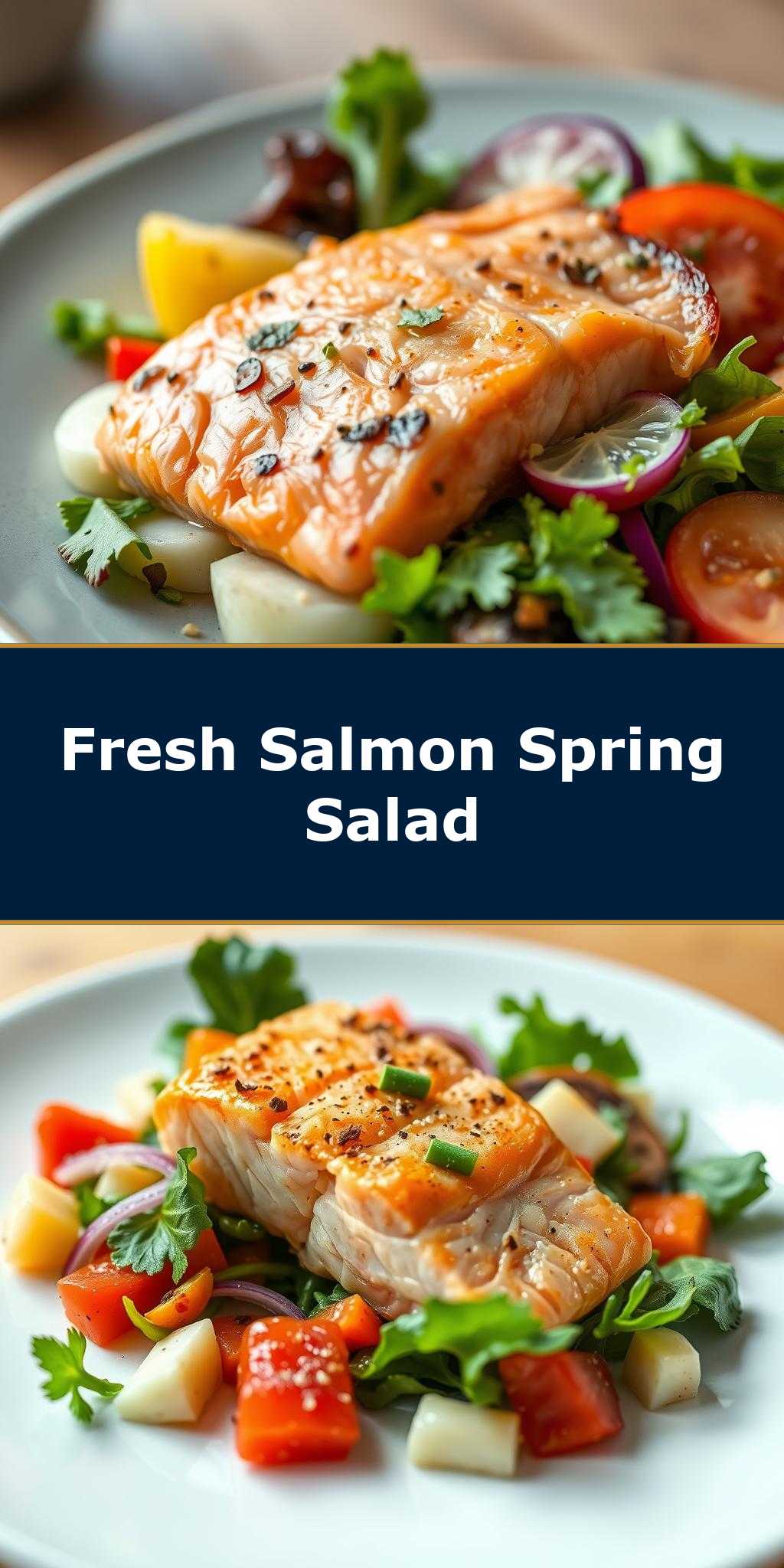
What’s the perfect way to welcome spring to your plate? This salmon and spring vegetable salad is a quick and easy homemade solution, featuring seared salmon and roasted vegetables. Save this idea for a fast weeknight dinner that’s sure to become a family favorite, try it soon with freshly picked veggies.
Salmon & Spring Vegetable Salad
Introduction
Welcome to the vibrant world of spring with a dish that embodies the freshness and vitality of the season: the Salmon & Spring Vegetable Salad. This recipe is a masterpiece of simplicity, requiring minimal effort while delivering a symphony of flavors and textures that will leave you and your guests in awe. By combining the richness of salmon with the crispness of spring vegetables, all tied together with a zesty and light dressing, you create a culinary experience that is both healthy and indulgent. The beauty of this salad lies in its ease of preparation, making it perfect for a quick lunch, a light dinner, or even as a centerpiece for your next gathering.
Why This Works
- The balance of flavors in this salad is unparalleled, with the fatty acidity of the salmon, the earthy sweetness of the vegetables, and the tang of the dressing creating a harmonious taste experience.
- The accessibility of the ingredients is a significant advantage, as most can be found in your local market or perhaps already stocked in your pantry, making this dish feasible for anyone to prepare.
- Despite its impressive presentation and complex flavors, the preparation of this salad is remarkably straightforward, requiring minimal cooking and mostly focusing on assembly and dressing, making it an impressive dish to serve with minimal effort.
Key Ingredients
The foundation of this salad begins with fresh salmon fillets, preferably wild-caught for the best flavor and texture. Alongside the salmon, a variety of spring vegetables such as asparagus, bell peppers, carrots, and radishes provide a delightful mix of colors and textures. For the dressing, a simple vinaigrette made from olive oil, lemon juice, Dijon mustard, and a hint of honey offers a light and refreshing contrast to the richness of the salmon. Practical substitutions can include using different types of fish like trout or tilapia for the salmon, and swapping out vegetables based on personal preference or seasonal availability.
Instructions
- Step 1: Begin by preparing your ingredients. Chop the spring vegetables into bite-sized pieces, ensuring they are all roughly the same size for even cooking. Cut the salmon into small cubes, setting it aside for later use.
- Step 2: Cook the salmon. This can be done by grilling, baking, or pan-searing. For a simple approach, season the salmon with salt, pepper, and a squeeze of lemon juice, then bake in the oven at 400°F (200°C) for about 12-15 minutes, or until it reaches your desired level of doneness.
- Step 3: While the salmon is cooking, lightly sauté the spring vegetables in olive oil with a pinch of salt and pepper until they are tender but still crisp. This should take about 5-7 minutes, depending on the vegetables and your desired level of doneness.
- Step 4: To assemble the salad, place the cooked vegetables on a platter or individual plates, top with the cooked salmon, and drizzle with the prepared vinaigrette. Garnish with fresh herbs like parsley or dill for added freshness and visual appeal.
Handy Tips
- For the best results, ensure your salmon is at room temperature before cooking to help it cook more evenly.
- Don’t overcook the vegetables; they should retain some crunch to provide a nice texture contrast in the salad.
- Consider making the vinaigrette ahead of time and letting it sit in the fridge for a few hours to allow the flavors to meld together.
Heat Control
When cooking the salmon, it’s crucial to maintain a medium heat if pan-searing, to prevent the outside from burning before the inside is cooked through. For baking, a consistent oven temperature is key. The salmon is done when it flakes easily with a fork and has reached an internal temperature of 145°F (63°C).
Crunch Factor
Achieving the right crunch in this salad is about balance. The vegetables should be cooked just until they start to soften, preserving their natural crunch. Adding elements like chopped nuts or seeds can also enhance the texture, providing a satisfying crunch with each bite.
Pro Kitchen Tricks
- To prevent the salmon from sticking to the pan, make sure it’s dry before seasoning and adding to the hot skillet.
- For an extra burst of flavor, marinate the salmon in your favorite seasonings and a bit of olive oil for 30 minutes before cooking.
- Chill the salad in the refrigerator for about 30 minutes before serving to allow the flavors to meld together and the ingredients to cool, making the salad more refreshing.
Storage Tips
- Leftover salad can be stored in an airtight container in the fridge for up to a day. It’s best consumed fresh, but if you must store it, keep the dressing separate and dress the salad just before serving.
- For reheating cooked salmon, a low-temperature oven (about 200°F or 90°C) for a few minutes can help warm it through without drying it out.
- Consider using glass containers for storage, as they preserve flavors and textures better than plastic.
Gift Packaging Ideas
If you’re considering gifting this salad, perhaps for a potluck or as a healthy option for a friend, packaging it in a decorative glass jar with a tight-fitting lid can make for a beautiful and practical gift. Add a ribbon around the lid and a handwritten note with the recipe and your thoughts, and you have a thoughtful and healthy gift.
Flavor Variations
- Experiment with different spices on the salmon, such as a mix of paprika, garlic powder, and dill for a smoky flavor.
- Add creative toppings like pickled onions, capers, or chopped hard-boiled eggs to introduce new textures and flavors.
- Swap out the salmon for other proteins like grilled chicken or tofu for a vegetarian option, adjusting the seasoning and cooking method accordingly.
Troubleshooting
- If your salmon turns out dry, it may have been overcooked. Aim for a lower cooking temperature and check for doneness more frequently.
- For vegetables that are too soft, reduce the cooking time or try cooking methods like steaming or roasting to preserve their texture.
- If the dressing is too thick, a small amount of water or additional lemon juice can thin it out to the desired consistency.
FAQs
- Can I freeze it? While you can freeze cooked salmon and many vegetables, the texture and freshness of the salad are best preserved when consumed fresh. However, components can be prepared ahead and stored separately in the fridge or freezer.
- Is it gluten-free? Yes, this recipe is naturally gluten-free, making it a great option for those with gluten intolerance or sensitivity.
- Can I double the recipe? Absolutely, this salad scales well. Simply double all the ingredients and adjust the cooking time for the salmon if necessary, based on its size and your oven’s performance.
Conclusion
The Salmon & Spring Vegetable Salad is a testament to the magic that happens when simple, fresh ingredients come together in harmony. With its ease of preparation, impressive presentation, and adaptability, this dish is perfect for any occasion, from a casual dinner to a special event. Feel free to experiment with the recipe, making it your own by adding your favorite vegetables, spices, or proteins. The beauty of cooking lies in its creativity and sharing, so don’t hesitate to adapt and share this recipe with your loved ones, enjoying the process and the joy of mealtime together.