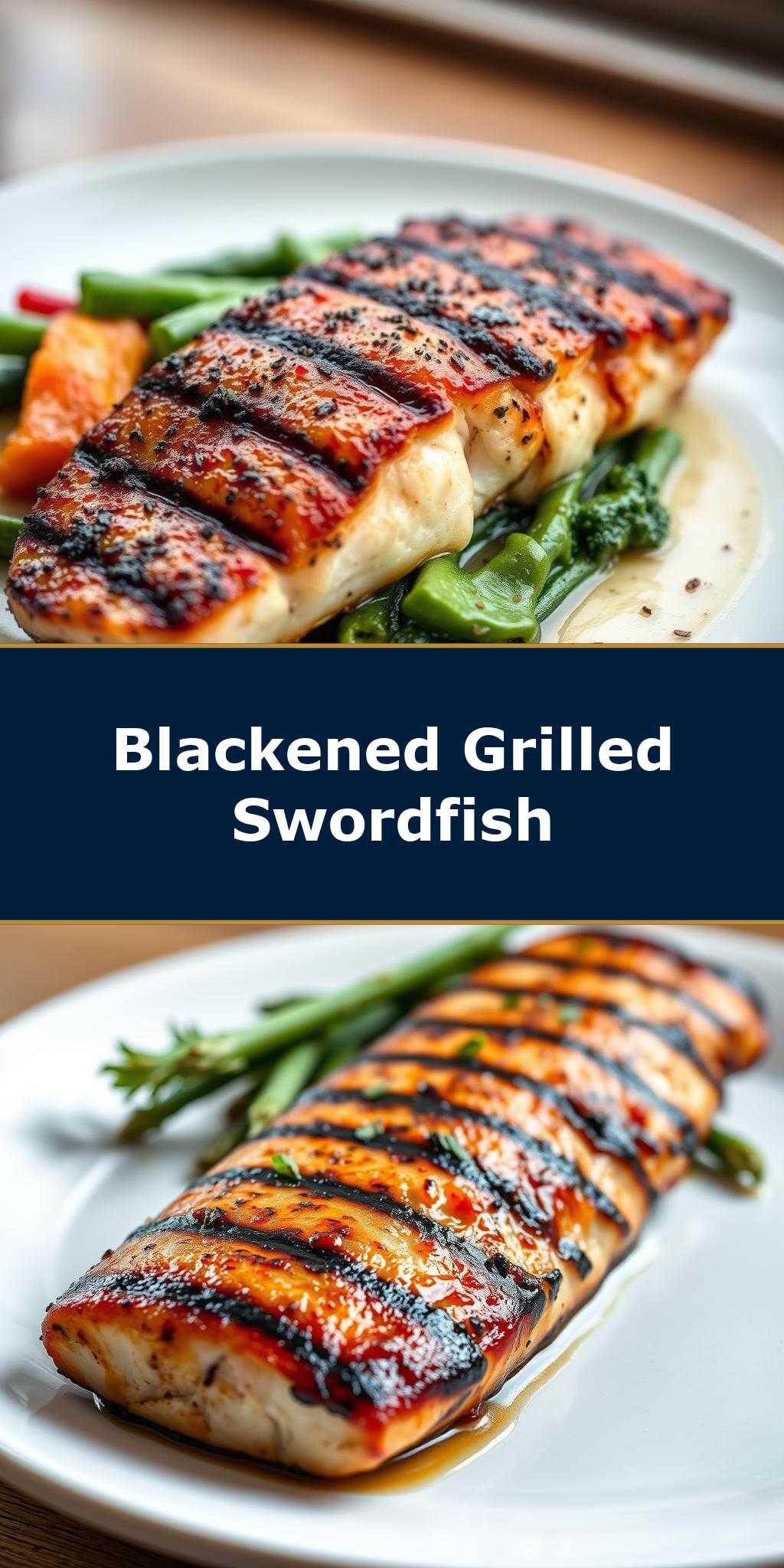
What makes the perfect weeknight dinner recipe? A quick and easy grilled blackened swordfish dish that’s packed with flavor and can be ready in no time, thanks to a simple homemade seasoning blend and a hot grill. Featuring fresh swordfish and a spicy kick, this family favorite is sure to please. Save this idea for a speedy homemade meal solution.
Grilled Blackened Swordfish Recipe
Introduction
Imagine a dish that combines Ease, Flavor, and Creativity, all while utilizing everyday ingredients. Look no further than this Grilled Blackened Swordfish Recipe, a culinary masterpiece that will leave your taste buds wanting more. With its unique blend of spices and the simplicity of grilling, this recipe is perfect for both novice and experienced chefs alike. The blackening seasoning adds a depth of flavor that complements the swordfish beautifully, making each bite a delightful experience. Whether you’re looking to impress your family or guests, this recipe is sure to be a hit.
Why This Works
- Flavor balance and ingredient accessibility: The combination of blackening seasoning and the natural flavor of swordfish creates a perfect balance of spices and seafood taste. Moreover, the ingredients are easily accessible in most grocery stores.
- Ease of preparation: Despite its impressive outcome, this recipe requires minimal effort. The preparation involves simple steps like marinating the fish and grilling it to perfection.
- Impressive results with minimal effort: The end result is a dish that looks and tastes like it was prepared by a professional chef, all achieved with relatively little effort and time.
Key Ingredients
The main ingredients for this Grilled Blackened Swordfish Recipe include swordfish steaks, blackening seasoning, olive oil, lemon juice, garlic powder, onion powder, salt, and pepper. For the blackening seasoning, you can either use a store-bought mix or create your own blend using paprika, cayenne pepper, thyme, oregano, and other herbs and spices. Swordfish is the star of the dish, providing a meaty texture that holds up well to the bold flavors of the blackening seasoning. If swordfish is not available, you can substitute it with other firm-fleshed fish like mahi-mahi or tuna.
Instructions
- Step 1: Begin by preheating your grill to medium-high heat. While the grill is heating up, prepare your swordfish steaks by rinsing them under cold water and patting them dry with a paper towel.
- Step 2: In a small bowl, mix together the blackening seasoning, garlic powder, onion powder, salt, and pepper. Brush the swordfish steaks with olive oil and then coat each steak evenly with the seasoning mixture, pressing the spices onto the fish to ensure they stick.
- Step 3: Place the seasoned swordfish steaks on the grill and cook for about 4-5 minutes per side, or until they reach an internal temperature of 145°F. The fish should flake easily with a fork when it’s done.
- Step 4: Once the swordfish is cooked, remove it from the grill and let it rest for a few minutes before serving. Serve hot, garnished with lemon wedges and your choice of sides, such as grilled vegetables or a salad.
Handy Tips
- Make sure to not overcrowd the grill, as this can lower the temperature and affect the cooking time. Cook the swordfish steaks one or two at a time if necessary.
- Avoid pressing down on the fish with your spatula while it’s grilling, as this can cause it to break apart and lose its juices.
- For an extra crispy crust, make sure the grill is hot before adding the swordfish. You should see a sizzle when the fish hits the grill.
Heat Control
Heat control is crucial when grilling swordfish to achieve the perfect doneness. The ideal temperature for grilling swordfish is medium-high heat, around 400°F to 450°F. Cook the swordfish for 4-5 minutes per side, or until it reaches an internal temperature of 145°F. Signs of doneness include the fish flaking easily with a fork and the flesh turning opaque.
Crunch Factor
The crunch factor in this recipe comes from the blackening seasoning, which forms a crispy crust on the swordfish when grilled. To achieve this, make sure the grill is hot and the fish is cooked at the right temperature. The crust should be dark and crispy, adding a satisfying texture to each bite.
Pro Kitchen Tricks
- Use a cast-iron or stainless steel skillet on the grill to achieve a crispy crust if you don’t have a grill basket or prefer a pan-seared finish.
- For a more intense flavor, let the swordfish marinate in a mixture of olive oil, lemon juice, and your choice of herbs for 30 minutes to an hour before grilling.
- Keep the grill clean and brush it with oil before cooking to prevent the fish from sticking and to make cleanup easier.
Storage Tips
- Leftover grilled swordfish can be stored in an airtight container in the refrigerator for up to 2 days. Reheat it in the oven or microwave until warmed through.
- For longer storage, consider freezing the cooked swordfish. Place it in a freezer-safe bag or container and store it in the freezer for up to 3 months. Thaw frozen swordfish overnight in the refrigerator before reheating.
- When storing or reheating, make sure the swordfish is heated to an internal temperature of 145°F to ensure food safety.
Gift Packaging Ideas
While grilled swordfish is typically served fresh, if you’re looking to gift a related item, consider packaging a homemade blackening seasoning mix in decorative jars or bags. You can also offer to grill the swordfish for a dinner party or event as a unique gift. For a more personal touch, include a recipe card with your favorite sides and a bottle of wine or lemon juice to complement the meal.
Flavor Variations
- Different spices: Experiment with various spice blends, such as Cajun, jerk, or Mediterranean seasonings, to give your swordfish a unique flavor.
- Creative toppings: Top your grilled swordfish with salsa, avocado, sour cream, or grilled pineapple for added flavor and texture.
- Ingredient swaps: Substitute swordfish with other firm-fleshed fish or try using different types of oil or citrus juice for marinating.
Troubleshooting
- Texture problems: If the swordfish becomes too dry, it may be overcooked. Adjust your cooking time and temperature accordingly. If it’s undercooked, continue grilling until it reaches the safe internal temperature.
- Ingredient replacements: If you can’t find swordfish, try using mahi-mahi, tuna, or other firm-fleshed fish. For the blackening seasoning, you can substitute spices or use a pre-mixed blend.
- Over/undercooking signs: Overcooked swordfish will be dry and flake easily but feel hard. Undercooked swordfish will be soft and moist but not flake easily. Adjust your cooking time based on the thickness of the fish and the heat of your grill.
FAQs
- Can I freeze it? Yes, you can freeze cooked swordfish for up to 3 months. Thaw it overnight in the refrigerator before reheating.
- Is it gluten-free? This recipe is gluten-free, making it a great option for those with gluten intolerance or sensitivity. However, always check the ingredients of your blackening seasoning to ensure it’s gluten-free.
- Can I double the recipe? Yes, you can easily double or triple this recipe for larger groups. Just ensure you have enough space on your grill and adjust the cooking time slightly if necessary.
Conclusion
This Grilled Blackened Swordfish Recipe is a must-try for anyone looking to add some excitement to their seafood dishes. With its bold flavors, crispy texture, and ease of preparation, it’s perfect for both weeknight dinners and special occasions. Don’t be afraid to experiment with different seasonings and toppings to make the recipe your own. Share your creations with friends and family, and enjoy the compliments that come with serving a dish that’s both delicious and visually appealing. Happy grilling!