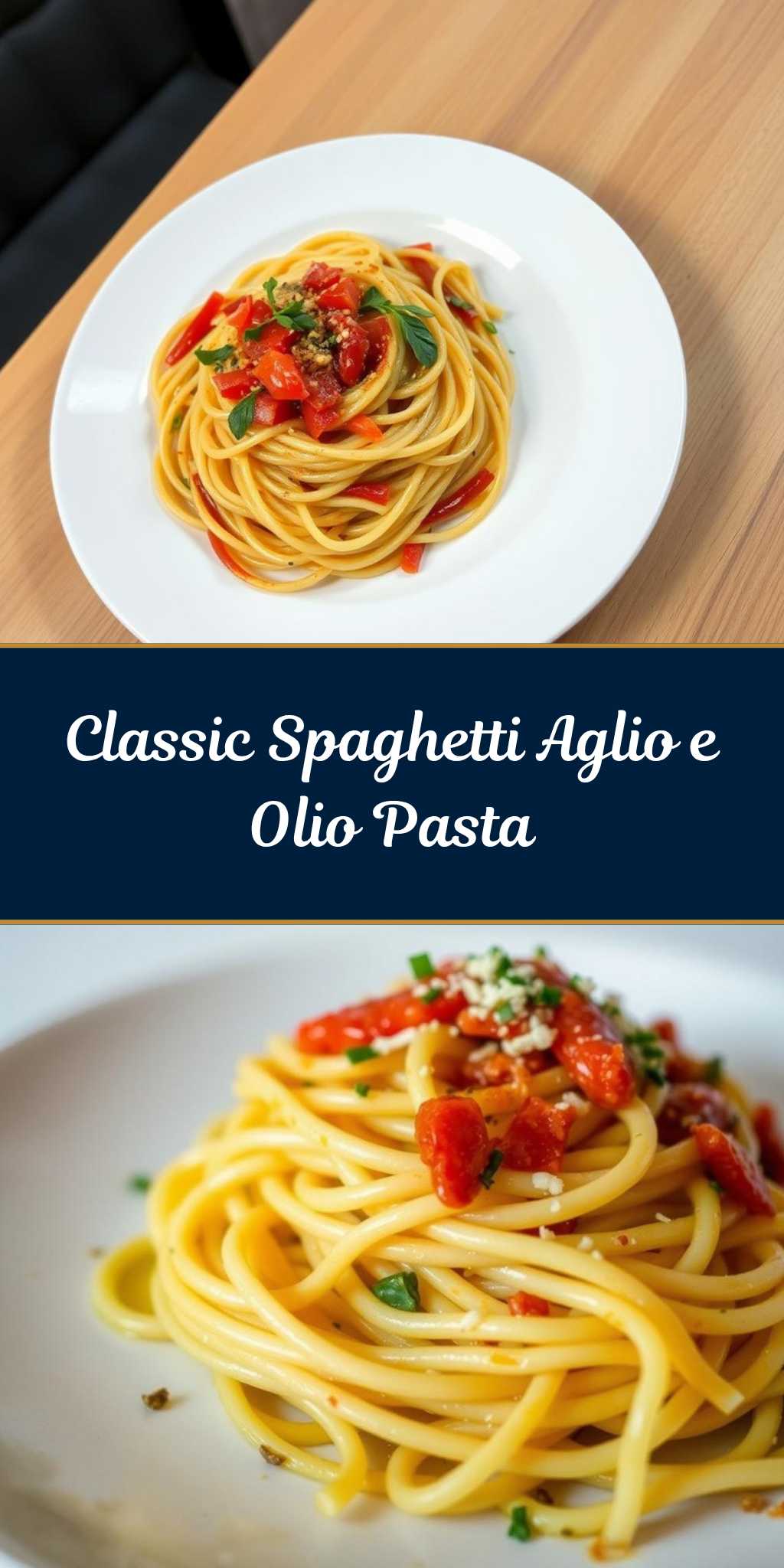
Craving a weeknight dinner that’s easy and quick? Spaghetti Aglio e Olio is a homemade family favorite made with garlic, olive oil, and spaghetti. Save for later and make it your new go-to meal tonight
Spaghetti Aglio e Olio
Introduction
Imagine a dish that embodies the essence of Italian cuisine, with its simplicity, rich flavors, and the ability to elevate everyday ingredients into a culinary masterpiece. Spaghetti Aglio e Olio is just that – a traditional Italian recipe that has been a staple for centuries, celebrated for its ease of preparation, profound flavor profile, and the creativity it allows in using the most basic of ingredients. This spaghetti dish, flavored with garlic (aglio) and oil (olio), along with sometimes red pepper flakes, is a testament to the Italian philosophy of letting high-quality ingredients shine in their simplest form. It’s a recipe that not only satisfies your hunger but also nourishes your soul, reminding us that sometimes, less is indeed more.
Why This Works
- Flavor balance and ingredient accessibility: The beauty of Spaghetti Aglio e Olio lies in its perfect balance of flavors achieved through minimal ingredients, all of which are easily accessible in most kitchens.
- Ease of preparation: This dish is incredibly straightforward to make, requiring minimal cooking time and effort, making it perfect for a quick weeknight dinner or a lazy Sunday afternoon.
- Impressive results with minimal effort: Despite its simplicity, the dish presents beautifully and tastes extraordinary, making it an impressive option for dinner parties or special occasions without requiring extensive culinary expertise.
Key Ingredients
The core ingredients of Spaghetti Aglio e Olio include high-quality spaghetti, garlic, extra virgin olive oil, and sometimes red pepper flakes for an added kick of spice. While traditional recipes are quite minimalist, modern variations might include additional ingredients such as chopped fresh parsley, grated Parmesan cheese, or even anchovies for added depth of flavor. For those looking to make substitutions, consider using other types of long, thin pasta if spaghetti is not available, and feel free to adjust the amount of garlic and red pepper flakes according to your taste preferences. The quality of the olive oil is crucial as it serves as the sauce, so opting for a rich, fruity extra virgin olive oil will significantly enhance the dish’s overall flavor.
Instructions
- Step 1: Begin by bringing a large pot of salted water to a boil. Cook the spaghetti according to the package instructions until it reaches al dente, usually around 8-10 minutes. Reserve 1 cup of pasta water before draining the spaghetti.
- Step 2: In a large skillet, heat the olive oil over medium-low heat. Add the thinly sliced garlic and cook, stirring occasionally, until the garlic is golden brown and fragrant, being careful not to burn it. If using red pepper flakes, add them towards the end of the garlic’s cooking time to infuse the oil with their spice.
- Step 3: Add the reserved pasta water to the skillet with the garlic and oil mixture. Stir to combine, creating a light, oily sauce. Then, add the cooked spaghetti to the skillet, tossing everything together to coat the pasta evenly with the garlic oil sauce. Season with salt to taste.
- Step 4: Serve the spaghetti hot, garnished with chopped fresh parsley and grated Parmesan cheese if desired. This simple yet elegant presentation allows the natural flavors of the dish to shine through, making it a satisfying and delicious meal.
Handy Tips
- When cooking the garlic, it’s essential to stir occasionally and keep an eye on the heat to prevent burning, as burnt garlic can quickly ruin the dish. Using a lower heat setting helps in achieving the perfect golden color without burning.
- Reserving pasta water is crucial as it helps in achieving the right consistency for the sauce. The starch in the water combines with the olive oil and garlic to create a smooth, coating sauce for the spaghetti.
- Feel free to experiment with the amount of garlic and red pepper flakes based on personal taste preferences. Some might prefer a stronger garlic flavor or a spicier kick, while others might like it more subtle.
Heat Control
Maintaining the right temperature is key in cooking Spaghetti Aglio e Olio. For the garlic, a medium-low heat is ideal as it allows for a slow and even cooking process, preventing burning and ensuring the garlic is fragrant and golden. When combining the pasta with the garlic oil sauce, a brief toss over low heat can help the flavors meld together, but be cautious not to overcook the spaghetti, as it should retain its al dente texture.
Crunch Factor
The texture of Spaghetti Aglio e Olio is primarily about the al dente pasta coated in a smooth, oily sauce. However, adding some crunch can elevate the dish. Consider topping it with toasted breadcrumbs or chopped nuts for a satisfying crunch that contrasts beautifully with the soft spaghetti. Fresh parsley also adds a nice freshness and a bit of texture.
Pro Kitchen Tricks
- Using high-quality ingredients is a pro trick in itself. Investing in a good extra virgin olive oil and fresh garlic will make a significant difference in the flavor of your Spaghetti Aglio e Olio.
- Don’t overcook the spaghetti. The key to a great pasta dish is the texture of the pasta, and al dente is perfect for holding onto the flavorful sauce.
- For an added depth of flavor, consider adding a pinch of red pepper flakes towards the end of cooking the garlic. This will infuse the oil with a subtle spicy flavor without overpowering the dish.
Storage Tips
- Leftover Spaghetti Aglio e Olio can be stored in an airtight container in the refrigerator for up to 2 days. Reheat it gently over low heat, adding a bit of pasta water if the sauce seems too thick.
- While freezing is not recommended due to the risk of the sauce separating, you can prepare the garlic oil sauce ahead of time and store it in the fridge for up to a week or freeze it for up to 2 months. Simply thaw and combine with freshly cooked spaghetti when ready.
- For the best results, use glass containers for storing leftovers, as they preserve the flavors and textures better than plastic.
Gift Packaging Ideas
While Spaghetti Aglio e Olio is primarily a dish to be enjoyed fresh, the garlic oil sauce can be packaged in decorative jars or bottles and given as a gift. Consider pairing it with a packet of artisanal spaghetti, a block of Parmesan cheese, and some fresh parsley for a complete Italian culinary experience. Wrap the items in a rustic basket or a beautifully designed box, and don’t forget to include the recipe and some suggestions for variations to make it a thoughtful and interactive gift.
Flavor Variations
- Different spices: Experiment with various spices like dried basil, oregano, or even a pinch of cumin to give your Spaghetti Aglio e Olio a unique twist.
- Creative toppings: Consider adding grilled shrimp, cherry tomatoes, or sautéed mushrooms to add protein, color, and texture to the dish.
- Ingredient swaps: For a vegan version, swap the Parmesan cheese with nutritional yeast, which mimics the cheesy, nutty flavor. You can also use different types of pasta or add other vegetables like bell peppers or zucchini to the garlic oil for added flavor and nutrition.
Troubleshooting
- Texture problems: If the spaghetti becomes too soft, it’s likely overcooked. Aim for al dente, and if you’re reheating leftovers, do so gently to prevent further cooking.
- Ingredient replacements: If you’re out of spaghetti, other long, thin pasta shapes can work as substitutes. However, keep in mind that the cooking time may vary.
- Over/undercooking signs: Undercooked spaghetti will be hard and crunchy, while overcooked spaghetti will be soft and mushy. Adjust your cooking time based on the package instructions and your personal preference for texture.
FAQs
- Can I freeze it? While it’s possible to freeze the garlic oil sauce, freezing the complete dish is not recommended due to the potential for the sauce to separate and the pasta to become mushy upon reheating.
- Is it gluten-free? Traditional spaghetti contains gluten, making this dish unsuitable for those with gluten intolerance or sensitivity. However, gluten-free pasta alternatives can be used to make a gluten-free version of Spaghetti Aglio e Olio.
- Can I double the recipe? Yes, the recipe can be easily doubled or tripled to serve larger groups. Just ensure you have a large enough pot for cooking the spaghetti and a spacious skillet for preparing the garlic oil sauce.
Conclusion
Spaghetti Aglio e Olio is more than just a recipe; it’s an experience that combines simplicity with sophistication, allowing anyone to create a truly Italian culinary masterpiece with minimal ingredients and effort. Whether you’re a seasoned chef or a beginner in the kitchen, this dish is sure to delight with its profound flavors and satisfying textures. Feel free to experiment, add your own twist, and make it a staple in your culinary repertoire. With its ease of preparation, impressive results, and the room for creativity it offers, Spaghetti Aglio e Olio is a dish that will continue to inspire and nourish both body and soul.