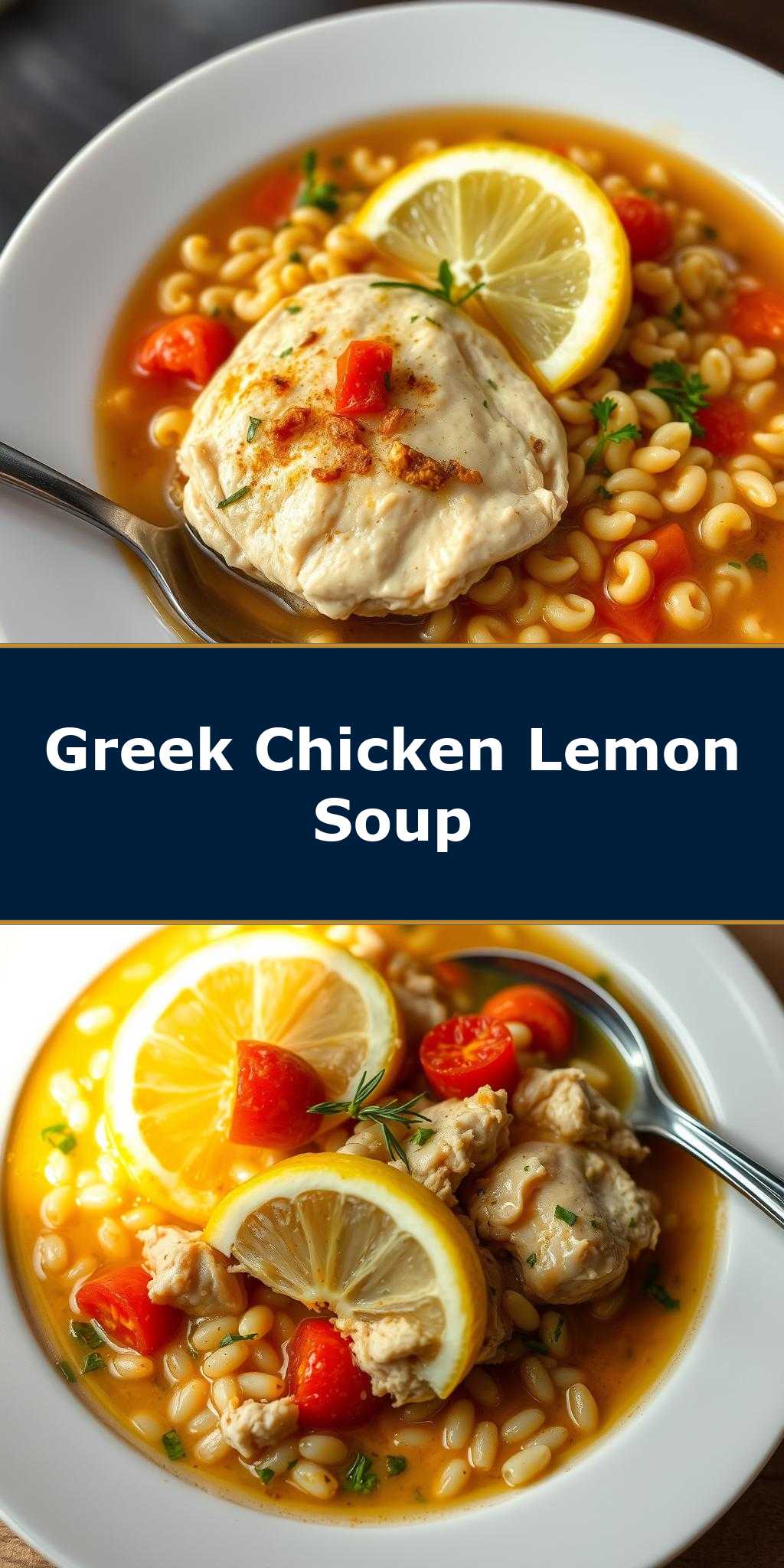
What’s the secret to a cozy night in with a delicious meal that’s ready in no time? This homemade Greek chicken soup with lemon and orzo is a quick and easy weeknight dinner solution, featuring tender chicken and a burst of citrus flavor from freshly squeezed lemon juice. Save this idea for a comforting family favorite meal to enjoy on a chilly evening.
Greek Chicken Soup with Lemon and Orzo
Introduction
This Greek Chicken Soup with Lemon and Orzo is a vibrant and refreshing take on traditional chicken soup, infused with the brightness of lemon and the comforting warmth of orzo. It’s a dish that embodies the essence of Greek cuisine, with its emphasis on simple, high-quality ingredients and bold flavors. What makes this recipe particularly appealing is its ease of preparation, requiring minimal effort for a meal that’s both nourishing and delicious. Using everyday ingredients, you can create a soup that’s not only a staple for cold winter nights but also a creative outlet, allowing you to experiment with various herbs and spices to make it your own.
Why This Works
- Flavor balance and ingredient accessibility: The combination of chicken, lemon, and orzo creates a perfectly balanced flavor profile that’s easy to achieve with commonly found ingredients.
- Ease of preparation: Despite its rich flavor, this soup is incredibly straightforward to make, requiring basic cooking techniques and minimal preparation time.
- Impressive results with minimal effort: The simplicity of the recipe belies the impressive, restaurant-quality results, making it an ideal choice for both weeknight dinners and special occasions.
Key Ingredients
The foundation of this Greek Chicken Soup with Lemon and Orzo lies in its carefully selected ingredients. You’ll need boneless, skinless chicken breasts for lean protein, orzo as the comforting and familiar grain, fresh lemons for their zest and juice to add a burst of citrus flavor, chicken broth for a rich and savory base, and a variety of aromatic vegetables such as onions, carrots, and celery. For added depth, consider including some dried or fresh herbs like thyme or oregano, which are staples in Greek cuisine. Practical substitutions can be made with the vegetables and herbs based on personal preference and seasonal availability, allowing for creativity and flexibility in the recipe.
Instructions
- Step 1: Begin by prepping your ingredients. Chop the onions, carrots, and celery into bite-sized pieces. Mince a couple of cloves of garlic. Cut the chicken into small, manageable pieces to ensure even cooking. Measure out your orzo, chicken broth, and herbs.
- Step 2: In a large pot, heat a couple of tablespoons of olive oil over medium heat. Add the chopped onions, carrots, and celery, sautéing until they’re tender and lightly browned. Add the garlic and cook for another minute, stirring constantly to prevent burning.
- Step 3: Add the chicken to the pot, cooking until it’s browned on all sides and cooked through. Then, add the chicken broth, orzo, lemon zest, lemon juice, and your chosen herbs. Bring the mixture to a boil, then reduce the heat to low and let simmer until the orzo is cooked and the soup has reached your desired consistency.
- Step 4: For the final touches, taste and adjust the seasoning as needed. You might want to add more lemon juice for brightness, salt for depth, or herbs for freshness. Serve hot, garnished with additional lemon slices and a sprinkle of fresh herbs if desired.
Handy Tips
- One of the most helpful tips for this recipe is to not overcook the orzo, as it can quickly become mushy and unappetizing. Aim for an al dente texture, where it still retains a bit of firmness in the center.
- Consider using high-quality chicken broth for the best flavor. Homemade broth is ideal, but a good store-bought option can also yield excellent results.
- Don’t be afraid to experiment with different herbs and spices to give the soup your personal touch. Greek cuisine often includes ingredients like bay leaves, cinnamon, and nutmeg, which can add unique and intriguing flavors to your soup.
Heat Control
Heat control is crucial in this recipe, especially when cooking the chicken and orzo. For the chicken, cook it over medium-high heat to achieve a nice brown on the outside, which enhances the flavor. Once the chicken is browned, reduce the heat to prevent overcooking. For the orzo, a gentle simmer is best, allowing it to cook slowly and absorb all the flavors of the broth without becoming mushy. The ideal temperature for simmering is around 180°F to 190°F, maintaining a low bubble. Timing is also key; cook the orzo for about 8 to 10 minutes, or according to the package instructions, and check for doneness by tasting. The orzo should be slightly firm in the center and not hard or crunchy.
Crunch Factor
The texture of this soup is primarily comforting and soft, thanks to the orzo and cooked chicken. However, a bit of crunch can be a lovely contrast. Consider adding some crunchy elements on top, such as toasted pine nuts, a sprinkle of crispy croutons made from bread, or even some fresh vegetables like diced bell peppers or carrots that have been lightly sautéed to retain their crunch. Consider adding your crunchy toppings just before serving to maintain their texture.
Pro Kitchen Tricks
- One expert tip is to use a mixture of lemon zest and juice. The zest adds a deeper, more complex citrus flavor, while the juice provides brightness and acidity. Use a fine grater to zest the lemon and squeeze the juice freshly just before adding it to the soup.
- For easier cleanup, consider cooking the soup in a large Dutch oven or a pot with a heavy bottom, as these retain heat well and can be easily cleaned.
- A shortcut to enrich the flavor of your soup is to use the chicken’s cooking time to your advantage. While the chicken is browning, scrape up any browned bits from the bottom of the pan, as these contain a lot of flavor.
Storage Tips
- The soup can be stored in the refrigerator for up to 3 days. Let it cool completely before refrigerating to prevent bacterial growth. Reheat it gently over low heat, adding a bit more broth if the soup has thickened too much.
- For longer storage, consider freezing the soup. It’s best to freeze it without the orzo, as orzo can become mushy when thawed. Cook the orzo separately when you’re ready to serve and add it to the thawed and reheated soup.
- Use airtight, moisture-proof containers for storage to keep the soup fresh and prevent freezer burn if freezing.
Gift Packaging Ideas
If you’re considering gifting this soup, especially during the colder months, it can be packaged in decorative, airtight containers. Mason jars are a popular choice, as they can be sealed tightly and are visually appealing. Add a ribbon around the lid and include a bag of orzo and a lemon on the side, along with heating instructions, for a complete and thoughtful gift. For a more rustic appeal, consider using wooden crates or baskets lined with a checkered cloth, adding a homemade touch to your gift.
Flavor Variations
- Different spices: Experiment with various spices to give your soup a unique twist. Cumin and coriander can add a warm, earthy flavor, while paprika can introduce a smoky note.
- Creative toppings: Beyond the usual suspects, consider toppings like diced avocado for creaminess, sour cream for a tangy contrast, or pickled vegetables for a burst of acidity and texture.
- Ingredient swaps: For a vegetarian version, swap the chicken with roasted and diced eggplant or zucchini, maintaining the hearty and comforting essence of the soup.
Troubleshooting
- Texture problems: If the soup becomes too thick, add a bit more chicken broth. If it’s too thin, simmer it for a longer period or add a slurry made from flour and water to thicken it.
- Ingredient replacements: If you’re out of orzo, other small pasta shapes like elbow macaroni or ditalini can be used as substitutes. For lemon, lime juice can offer a similar acidity, though it will change the flavor profile slightly.
- Over/undercooking signs: Check the chicken for doneness by ensuring it reaches an internal temperature of 165°F. For the orzo, taste it regularly during the cooking time to avoid overcooking.
FAQs
- Can I freeze it? Yes, this soup can be frozen, but it’s recommended to freeze it without the orzo to maintain texture. Cook the orzo fresh when you’re ready to serve.
- Is it gluten-free? The orzo in this recipe contains gluten, making it not suitable for those with gluten intolerance. Consider substituting the orzo with a gluten-free alternative like rice or quinoa.
- Can I double the recipe? Yes, this recipe can be easily doubled or tripled for larger crowds. Just ensure you have a large enough pot and adjust the cooking time slightly, as larger quantities may take longer to cook through.
Conclusion
This Greek Chicken Soup with Lemon and Orzo is a versatile and delicious addition to any meal repertoire. With its bright, citrusy flavor and comforting warmth, it’s perfect for cozy nights in or as a healthy, satisfying meal on-the-go. The recipe’s flexibility and ease of preparation make it accessible to cooks of all levels, from beginners to seasoned chefs. Whether you’re looking for a creative outlet, a nourishing meal, or simply a way to warm up on a chilly day, this soup is sure to become a favorite. So go ahead, share it with friends and family, experiment with new flavors, and enjoy the comforting goodness it brings to your table.