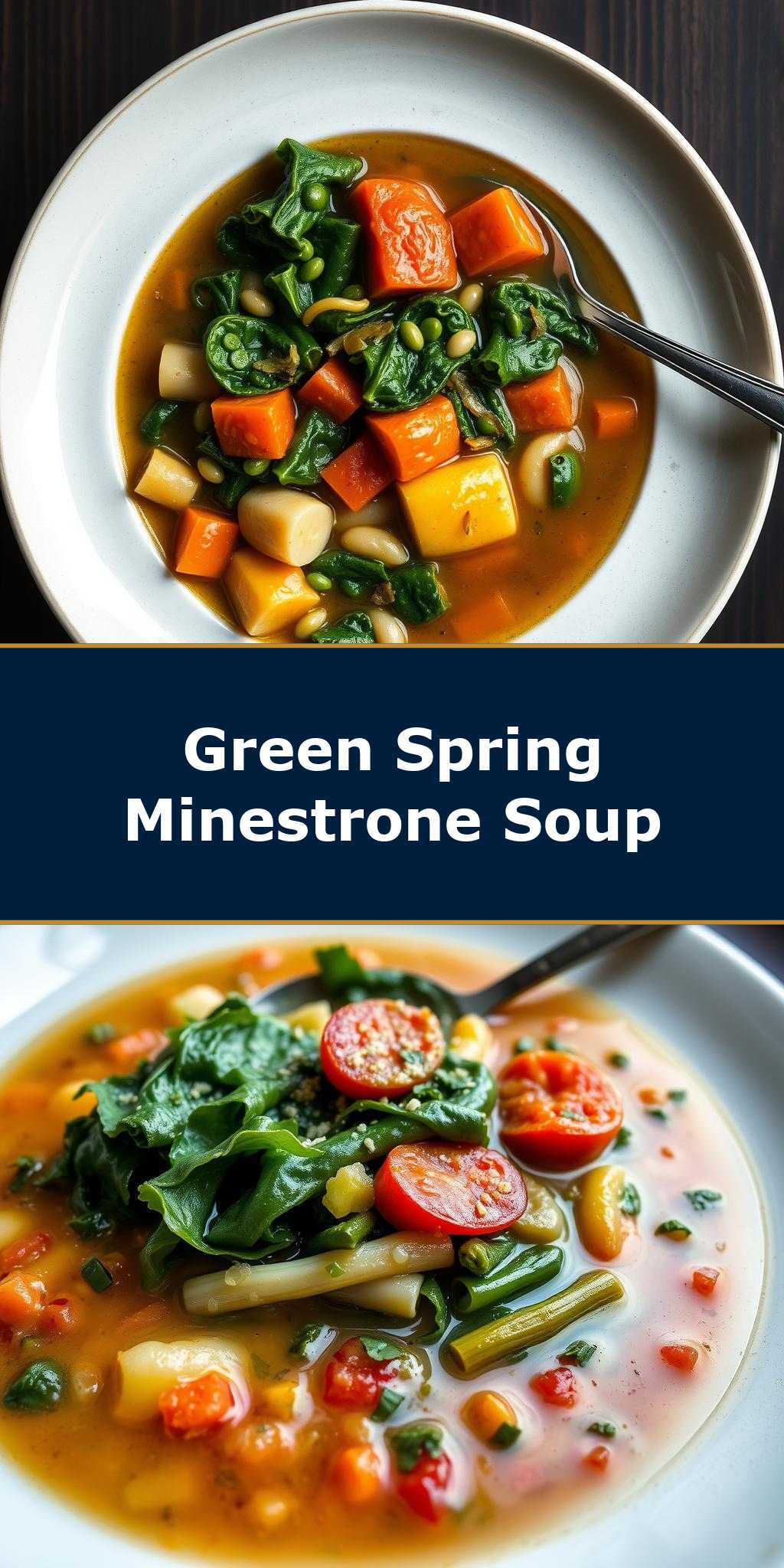
What’s the perfect way to welcome spring into your kitchen? This Spring Green Minestrone is a quick and easy homemade soup made with tender beans and fresh kale, perfect for a weeknight dinner. Save this idea for a delicious and comforting meal to enjoy all season long.
Spring Green Minestrone
Introduction
As the seasons change and spring arrives, our palates yearn for something fresh and vibrant, a dish that captures the essence of the season. Spring Green Minestrone is just that – a hearty, yet light and refreshing Italian-inspired soup that celebrates the best of spring’s bounty. With its ease of preparation, incredible flavor, and the versatility to use everyday ingredients, this recipe is perfect for a quick weeknight dinner or a leisurely weekend meal. The beauty of Spring Green Minestrone lies in its simplicity and creativity, allowing you to experiment with a variety of spring vegetables and ingredients, making each bowl a unique reflection of the season’s offerings.
Why This Works
- Flavor balance and ingredient accessibility: The key to a great minestrone is achieving a perfect balance of flavors, which is easily done with the combination of aromatic vegetables, beans, and tomatoes. The accessibility of these ingredients in most supermarkets makes this dish highly practical for everyday cooking.
- Ease of preparation: Despite its rich and complex flavor profile, Spring Green Minestrone is surprisingly easy to prepare. It involves simple chopping, sautéing, and simmering, making it a great option for those looking for a meal that doesn’t require extensive culinary skills.
- Impressive results with minimal effort: The end result of this recipe is a soup that is not only delicious but also visually appealing, filled with a variety of colorful vegetables. This makes it perfect for serving to guests or as a special treat for the family, all achieved with minimal fuss and effort.
Key Ingredients
The foundation of Spring Green Minestrone includes a mix of spring vegetables such as zucchini, bell peppers, and spinach, which provide a fresh and light base. Canned tomatoes and vegetable broth add depth and warmth, while beans (such as cannellini or kidney beans) contribute protein and texture. Olive oil, garlic, and onions serve as the aromatic base, flavoring the soup from the start. Practical substitutions can include using frozen spinach when fresh is not available, or swapping zucchini with other summer squash varieties. The versatility of this recipe allows for creativity and adaptation based on personal preference and the freshest ingredients available.
Instructions
- Step 1: Begin by preparing your ingredients. Chop the onions, garlic, and bell peppers. Slice the zucchini into half-moon shapes. Measure out your canned tomatoes, beans, broth, and olive oil. This step is crucial as it sets the stage for a smooth and efficient cooking process.
- Step 2: In a large pot, heat the olive oil over medium heat. Add the chopped onions and sauté until they are translucent, followed by the garlic and bell peppers. Cook until the vegetables are tender, adding a pinch of salt to enhance the flavors. This base will form the aromatic foundation of your minestrone.
- Step 3: Add the sliced zucchini, canned tomatoes, beans, and vegetable broth to the pot. Season with salt, pepper, and any desired herbs (such as basil or thyme). Bring the mixture to a boil, then reduce the heat and let it simmer until the vegetables are cooked through and the flavors have melded together. This step allows the various components to come together, creating a rich and satisfying soup.
- Step 4: Just before serving, stir in a handful of fresh spinach leaves. They will wilt into the soup, adding a burst of fresh flavor. Serve hot, garnished with grated Parmesan cheese and a drizzle of extra virgin olive oil, if desired. This final touch adds a luxurious feel to the dish, perfect for special occasions or everyday meals alike.
Handy Tips
- For an added depth of flavor, consider adding a rind of Parmesan cheese to the pot during the simmering process. Remove it before serving for a creamy, cheesy flavor infusion.
- Be mindful of the cooking time for the vegetables to ensure they retain some crunch and do not become overly soft. This balance of textures is key to the soup’s appeal.
- Experiment with different types of beans or vegetables based on what’s available and in season. This adaptability is a hallmark of minestrone and allows the dish to evolve with the seasons.
Heat Control
Heat control is crucial in cooking Spring Green Minestrone. Initially, medium heat is ideal for sautéing the onions and garlic to bring out their natural sweetness without burning. Once the soup is assembled, reducing the heat to a simmer allows the flavors to meld together gently, preventing the vegetables from becoming mushy. A gentle simmer, around 180°F to 190°F, is perfect for cooking the soup over 20 minutes, ensuring all the vegetables are tender and the flavors are well combined.
Crunch Factor
Achieving the right texture in Spring Green Minestrone is about balance. You want a soup that is hearty and comforting, yet still retains a freshness and crunch from the vegetables. To achieve this, cook the vegetables until they are just tender. The zucchini and bell peppers should still have a bit of firmness, while the spinach adds a soft, wilted texture. This contrast of textures, along with the creamy beans and rich broth, makes the soup engaging and satisfying to eat.
Pro Kitchen Tricks
- Use high-quality ingredients, especially the olive oil and canned tomatoes, as they form the flavor backbone of the soup.
- Acidity, such as a squeeze of fresh lemon juice, can brighten the flavors of the soup. Add it to taste just before serving.
- For a clearer broth, skim off any excess fat that rises to the surface after cooking, or use a paper towel to absorb it.
Storage Tips
- Spring Green Minestrone can be stored in the refrigerator for up to 3 days. Reheat it gently over low heat, adding a bit of water if the soup has thickened too much.
- For longer storage, the soup can be frozen. Let it cool completely, then transfer it to airtight containers or freezer bags, removing as much air as possible before sealing. Frozen minestrone will keep for up to 3 months. When reheating, you may need to add a bit of water to achieve the desired consistency.
- Consider portioning the soup into individual servings before freezing for easy lunches or dinners.
Gift Packaging Ideas
Spring Green Minestrone makes a thoughtful and nourishing gift, especially for those in need of a comforting meal. Package the cooled soup in decorative glass jars or containers, topping each with a sprinkle of Parmesan cheese and a few fresh herbs. Add a baguette or a loaf of crusty bread on the side, along with a pat of butter or a bottle of olive oil, for a complete and satisfying gift. For a more rustic touch, wrap the jars in twine or ribbon and include a handwritten recipe card with suggestions for serving and reheating.
Flavor Variations
- Different spices: Consider adding a pinch of red pepper flakes for a spicy kick or some dried basil for an Italian twist.
- Creative toppings: In addition to Parmesan cheese, try topping your minestrone with a dollop of pesto, some crispy bacon, or a sprinkle of chopped fresh parsley.
- Ingredient swaps: Swap the beans for lentils or the zucchini for yellow squash to change up the texture and flavor profile.
Troubleshooting
- Texture problems: If the soup becomes too thick, add a bit of water or broth. For a thinner consistency, simmer the soup for a shorter time or add less beans and vegetables.
- Ingredient replacements: Don’t have cannellini beans? Try using kidney beans or Great Northern beans as a substitute. For a vegetarian version, omit any meat broth and use vegetable broth instead.
- Over/undercooking signs: Vegetables that are overcooked will be mushy and lose their vibrant color. Undercooked vegetables will retain too much crunch. Adjust cooking time based on the freshness and type of vegetables used.
FAQs
- Can I freeze it? Yes, Spring Green Minestrone can be frozen for up to 3 months. Cool it completely, then transfer it to airtight containers or freezer bags.
- Is it gluten-free? This recipe is naturally gluten-free, making it a great option for those with gluten intolerance. However, always check the ingredients of your broth and canned goods to ensure they are gluten-free.
- Can I double the recipe? Absolutely. Simply multiply all the ingredients by two. You may need to adjust the cooking time slightly, ensuring that all the vegetables are tender and the flavors are well combined.
Conclusion
Spring Green Minestrone is more than just a recipe; it’s an invitation to embrace the simplicity and beauty of seasonal cooking. With its vibrant colors, hearty flavors, and nourishing ingredients, this soup is sure to become a staple in your kitchen. Feel free to experiment and adapt the recipe to your taste, using it as a canvas to celebrate the freshest ingredients of each season. Whether you’re a seasoned chef or a culinary newcomer, the joy of cooking and sharing a delicious, homemade meal like Spring Green Minestrone is undeniable. So go ahead, gather around the table, and let the warmth and comfort of this minestrone bring you and your loved ones closer together.