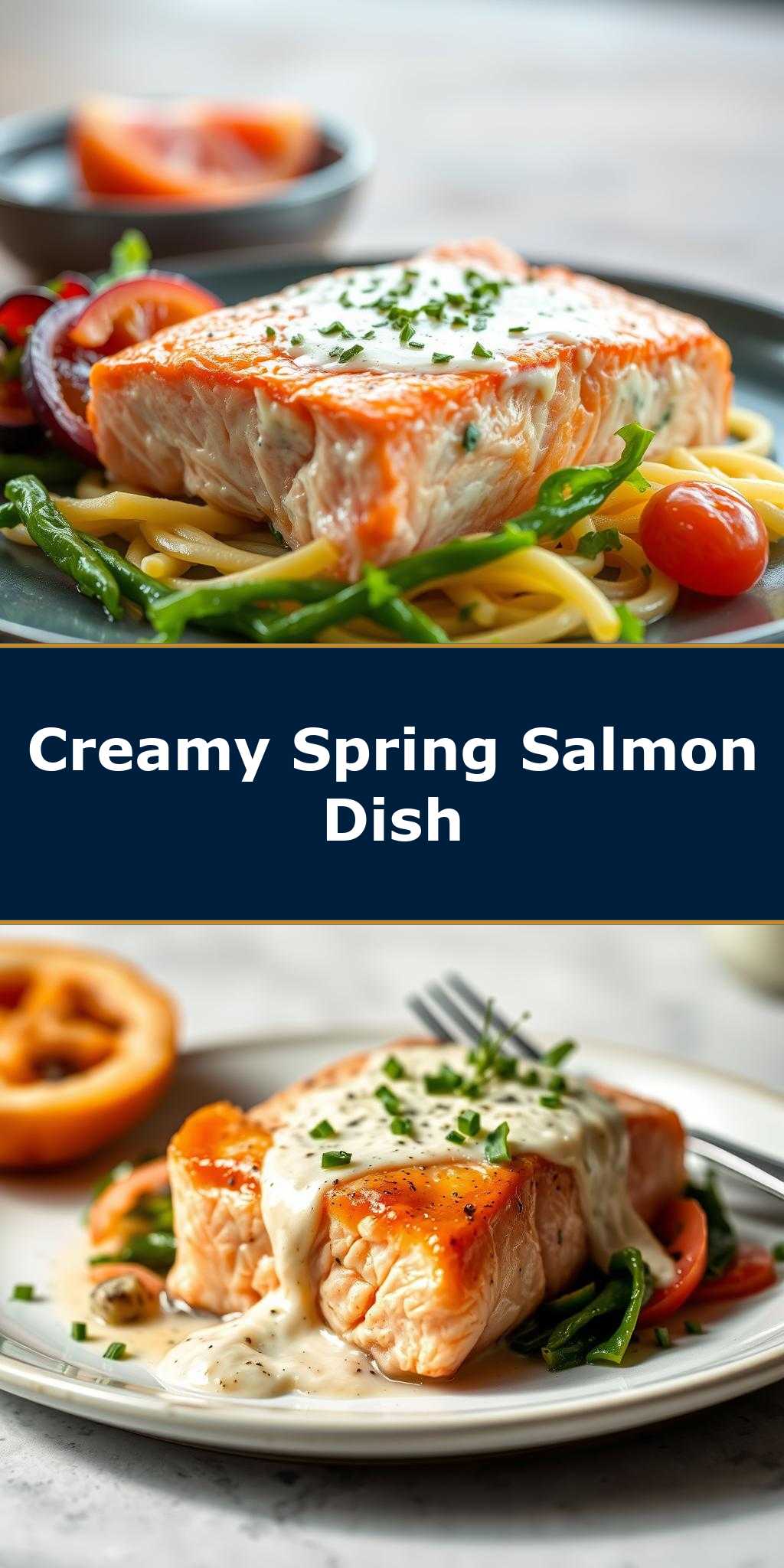
What makes a perfect spring dinner? Fresh salmon cooked to perfection with a rich and creamy sauce, of course. This quick and easy recipe is a homemade weeknight dinner staple, featuring pan-seared salmon and a delicious lemon butter sauce. Save this idea for a family favorite meal that is sure to please, try it soon and enjoy the flavors of the season.
Creamy Spring Salmon
Introduction
As the warmth of spring begins to unfold, our palates crave dishes that are as vibrant and refreshing as the season itself. The Creamy Spring Salmon recipe is a masterpiece of simplicity, combining the richness of salmon with the brightness of spring vegetables, all enveloped in a creamy sauce that will leave you and your guests in awe. What makes this dish truly special is its accessibility – using everyday ingredients, you can create a culinary experience that’s both impressive and effortless. Whether you’re a seasoned chef or a beginner in the kitchen, this recipe is sure to become a staple, perfect for any occasion from a cozy family dinner to a springtime gathering with friends.
Why This Works
- Flavor balance and ingredient accessibility: The beauty of this recipe lies in its balance of flavors, from the savory salmon to the slight sweetness of spring onions, all of which can be found at your local grocery store.
- Ease of preparation: With straightforward steps and minimal ingredients, this dish is incredibly easy to prepare, making it perfect for a weeknight meal or a special occasion.
- Impressive results with minimal effort: Despite its simplicity, the Creamy Spring Salmon presents beautifully and tastes exquisite, ensuring that you’ll receive compliments without slaving away in the kitchen for hours.
Key Ingredients
The main ingredients for this recipe include four salmon fillets (about 6 ounces each), 2 tablespoons of olive oil, 1 large onion finely chopped, 2 cloves of garlic minced, 1 cup of mixed spring vegetables (such as asparagus, bell peppers, and zucchini), 1 cup of heavy cream, 1 teaspoon of Dijon mustard, 1 teaspoon of dried dill weed, salt, and pepper. For practical substitutions, you can use any combination of your favorite spring vegetables and, if needed, replace heavy cream with a non-dairy alternative to accommodate dietary restrictions.
Instructions
- Step 1: Begin by preheating your oven to 400°F (200°C). Season the salmon fillets with salt, pepper, and a sprinkle of dill weed. Set them aside on a plate.
- Step 2: In a large skillet, heat the olive oil over medium heat. Add the chopped onion and cook until it’s translucent, about 5 minutes. Add the minced garlic and cook for an additional minute, until fragrant.
- Step 3: Add the mixed spring vegetables to the skillet and cook until they’re tender but still crisp, about 3-4 minutes. Stir in the heavy cream and Dijon mustard. Bring the mixture to a simmer and let cook for about 2 minutes, until slightly thickened. Season with salt and pepper to taste.
- Step 4: Place the salmon fillets in a baking dish and spoon the creamy vegetable sauce over them. Bake in the preheated oven for about 12-15 minutes, or until the salmon is cooked through and flakes easily with a fork. Serve hot, garnished with additional dill if desired.
Handy Tips
- For an extra burst of flavor, marinate the salmon fillets in a mixture of lemon juice, olive oil, and your favorite herbs for about 30 minutes before baking.
- Be gentle when cooking the salmon to prevent it from breaking apart. Also, ensure your skillet is hot before adding the vegetables to get a nice sear.
- Don’t overcook the spring vegetables; they should retain some crunch to provide a nice texture contrast to the creamy sauce and tender salmon.
Heat Control
Heat control is crucial in this recipe, especially when cooking the salmon. The ideal temperature for baking the salmon is 400°F (200°C), and it should be cooked for 12-15 minutes, or until it reaches an internal temperature of 145°F (63°C). The sauce should simmer over medium heat, and you should adjust the heat as needed to prevent boiling or scorching.
Crunch Factor
The crunch factor in this dish comes from the spring vegetables, which should be cooked just until tender but still crisp. This texture provides a delightful contrast to the creamy sauce and the flaky salmon. To achieve this, cook the vegetables over medium-high heat for a shorter duration, stirring frequently to prevent overcooking.
Pro Kitchen Tricks
- Use high-quality ingredients: Fresh and flavorful ingredients will elevate the dish significantly. Choose the freshest salmon and spring vegetables you can find.
- Don’t overmix: When combining the sauce ingredients, stir gently to avoid creating a too-thick or separated sauce.
- Cleanup as you go: To make the cooking process more enjoyable and to reduce cleanup time afterward, clean and chop ingredients in advance and wash utensils and pans as soon as you’re done using them.
Storage Tips
- Leftover salmon can be stored in the refrigerator for up to 2 days. Reheat it gently in the oven or microwave until warmed through.
- For longer storage, consider freezing the cooked salmon. Place it in an airtight container or freezer bag, making sure to press out as much air as possible before sealing. Frozen cooked salmon will keep for about 2-3 months.
- When storing, keep the salmon and sauce separate to prevent the sauce from making the salmon soggy. Reheat the sauce over low heat, whisking occasionally, until warmed through.
Gift Packaging Ideas
If you’re considering gifting this dish, perhaps for a potluck or as a meal for a friend, consider packaging it in a decorative ceramic dish covered with aluminum foil or in a microwave-safe container. Include a side of warm bread or a salad for a complete meal. You could also add a personal touch with a handwritten recipe card or a small bouquet of fresh herbs.
Flavor Variations
- Different spices: Experiment with various spice blends, such as lemon pepper or garlic and herb, to add unique flavors to your salmon.
- Creative toppings: Add some crunch with toasted almonds or pistachios, or a burst of freshness with diced tomatoes or chopped fresh parsley.
- Ingredient swaps: Substitute the salmon with another fish like cod or tilapia, or use different types of cream for varying richness levels.
Troubleshooting
- Texture problems: If your sauce turns out too thick, whisk in a bit more cream or milk. If it’s too thin, simmer it for a few more minutes to reduce it.
- Ingredient replacements: If you can’t find heavy cream, half-and-half or a mixture of milk and butter can be used as substitutes.
- Over/undercooking signs: Check the salmon frequently towards the end of its cooking time. It should flake easily with a fork and have a opaque, firm texture. If it’s undercooked, it will appear raw and flaky; if overcooked, it will be dry and tough.
FAQs
- Can I freeze it? Yes, you can freeze the cooked salmon for up to 2-3 months. It’s best to freeze it without the sauce to preserve texture.
- Is it gluten-free? This recipe is naturally gluten-free, making it a great option for those with gluten intolerance or sensitivity.
- Can I double the recipe? Absolutely, this recipe can be easily doubled or tripled for larger gatherings. Just ensure you have a large enough skillet and baking dish to accommodate the increased quantity.
Conclusion
The Creamy Spring Salmon is a recipe that embodies the spirit of spring – fresh, vibrant, and full of life. With its easy preparation, impressive presentation, and delicious flavors, it’s a dish that will quickly become a favorite. Don’t be afraid to experiment with different ingredients and spices to make it your own, and enjoy the process of creating something truly special. Whether you’re a foodie, a busy parent, or just someone who loves to cook, this recipe is sure to bring joy and satisfaction to your table.