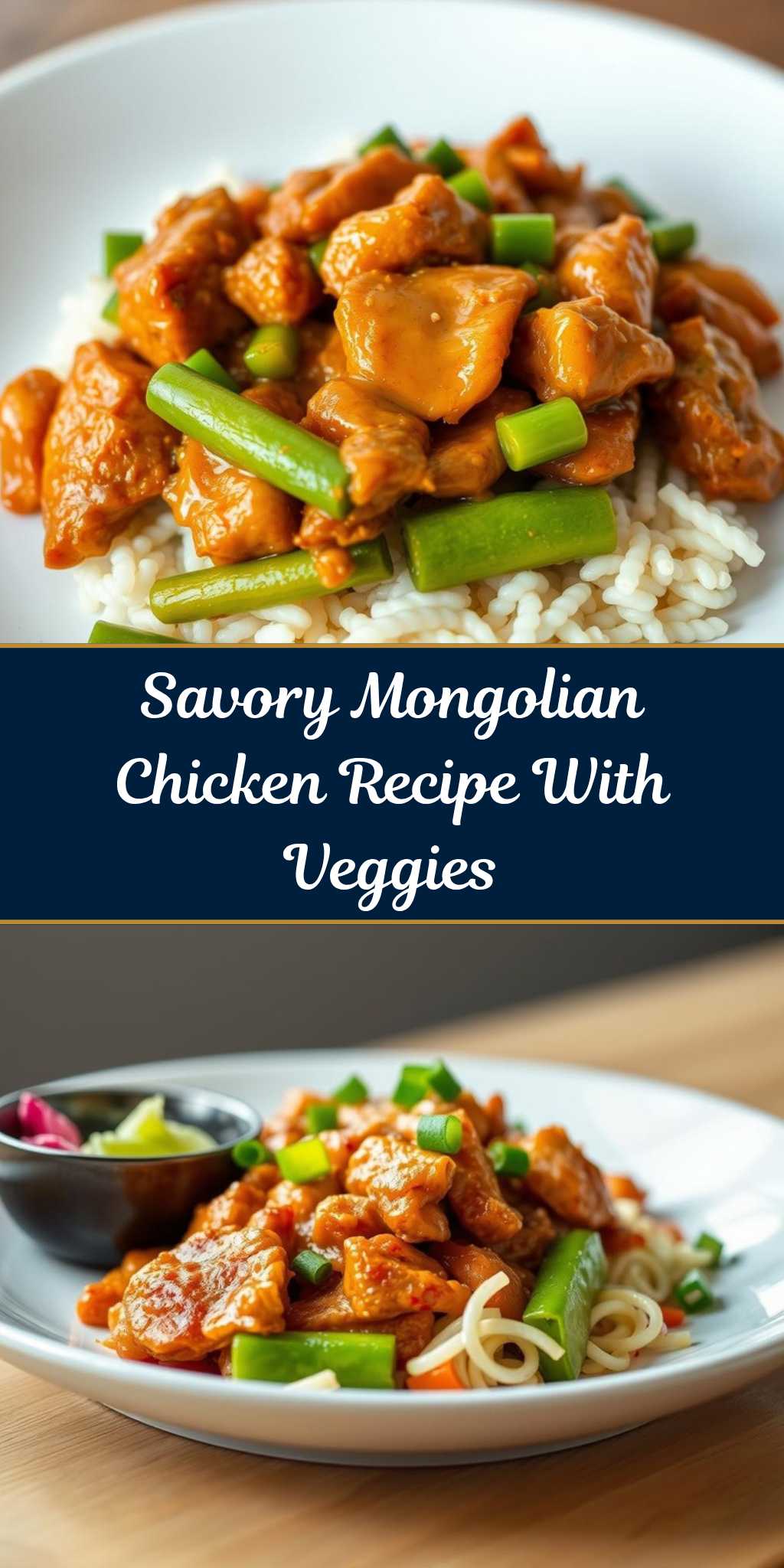
Craving a quick and easy weeknight dinner solution? This homemade Mongolian chicken recipe is a family favorite, made with tender chicken, savory soy sauce, and stir-fried veggies. Save for later and try it tonight!
Mongolian Chicken Recipe:
Introduction
Mongolian Chicken is a dish that embodies the perfect blend of ease, flavor, and creativity, making it a standout among everyday recipes. This recipe is a masterclass in using simple, accessible ingredients to create a culinary experience that is both exotic and comforting. With its origins in Chinese-American cuisine, Mongolian Chicken offers a rich, savory flavor profile that is sure to impress, whether you’re cooking for a weeknight dinner or a special occasion. The beauty of this recipe lies in its versatility and the ease with which it can be prepared, making it an ideal choice for both novice cooks and seasoned chefs alike.
Why This Works
- Flavor balance and ingredient accessibility: The combination of soy sauce, garlic, ginger, and chili flakes creates a deep, balanced flavor that is both tangy and slightly spicy, while the use of chicken breast, bell peppers, and onions ensures that the dish is not only delicious but also packed with nutrients.
- Ease of preparation: One of the most appealing aspects of this recipe is how quickly and easily it comes together. With a preparation time of just 10 minutes and a cooking time of 20 minutes, you can have a mouth-watering, restaurant-quality meal on the table in under half an hour.
- Impressive results with minimal effort: Despite its simplicity, Mongolian Chicken is a dish that is sure to impress. The combination of crispy, caramelized chicken, crunchy vegetables, and a sauce that is both savory and slightly sweet makes for a presentation that is as appealing as it is delicious.
Key Ingredients
The success of Mongolian Chicken hinges on the quality and combination of its key ingredients. These include 1 tablespoon of olive oil for sautéing, 2 boneless, skinless chicken breasts cut into bite-sized pieces, 1 large onion sliced into thin rings, 2 cloves of garlic minced for added depth of flavor, 1 large bell pepper sliced into strips, 2 teaspoons of soy sauce for a salty, umami taste, 1 teaspoon of grated fresh ginger for warmth and spice, and 1/2 teaspoon of chili flakes for a touch of heat. Practical substitutions can be made for some ingredients, such as using coconut oil instead of olive oil or swapping bell peppers with other colorful peppers for varied texture and flavor.
Instructions
- Step 1: Begin by preparing all the ingredients. Chop the chicken into bite-sized pieces, slice the onion and bell pepper into thin strips, mince the garlic, and grate the ginger. This step is crucial as it ensures that all ingredients are ready to go, streamlining the cooking process.
- Step 2: Heat 1 tablespoon of olive oil in a large skillet or wok over medium-high heat. Once the oil is hot, add the chicken and cook until it is browned and cooked through, about 5-7 minutes. Remove the chicken from the skillet and set it aside. This step is essential for developing the flavor and texture of the chicken.
- Step 3: In the same skillet, add a bit more oil if necessary, then add the sliced onion and cook until it starts to caramelize, about 3-4 minutes. Add the minced garlic and grated ginger and cook for another minute, stirring constantly to prevent burning. Then, add the sliced bell pepper and cook until all the vegetables are tender-crisp, about 4 minutes. This layering of flavors and textures is what gives Mongolian Chicken its depth and complexity.
- Step 4: Return the cooked chicken to the skillet, add 2 teaspoons of soy sauce and 1/2 teaspoon of chili flakes, and stir everything together to combine. Cook for an additional 1-2 minutes to allow the flavors to meld together. Finally, season with salt and pepper to taste, and serve hot over rice or noodles. This final step is where all the elements come together to create a dish that is greater than the sum of its parts.
Handy Tips
- One of the most helpful kitchen advice for making Mongolian Chicken is to prepare all ingredients before starting to cook. This ensures a smooth and efficient cooking process. Additionally, using high-quality ingredients, especially the soy sauce and chili flakes, can significantly impact the flavor of the dish. It’s also worth noting that you can customize the dish to your taste by adding other vegetables like mushrooms, carrots, or snow peas, making it a versatile recipe for any occasion.
Heat Control
Heat control is crucial when making Mongolian Chicken. The ideal temperature for cooking the chicken and vegetables is medium-high heat, which allows for a good sear on the chicken and a crispy texture on the vegetables. It’s also important to not overcrowd the skillet, as this can lower the temperature of the oil and result in steamed rather than stir-fried ingredients. Timing is everything; cook the chicken until it is browned and cooked through, and the vegetables until they are tender-crisp. Signs of doneness include the chicken being opaque and firm to the touch, and the vegetables still retaining a bit of crunch.
Crunch Factor
Achieving the right crunch factor is key to a successful Mongolian Chicken dish. The chicken should be crispy on the outside and juicy on the inside, while the vegetables should be tender but still crisp. This can be achieved by not overcooking the ingredients and by using the right amount of oil for stir-frying. For an extra crunchy texture, you can also add nuts or seeds like peanuts or sesame seeds on top of the dish before serving.
Pro Kitchen Tricks
- One expert tip for better results is to marinate the chicken in a mixture of soy sauce, ginger, and garlic before cooking. This step can be done ahead of time and adds a depth of flavor to the dish. Another trick is to use a wok or a large skillet with a non-stick surface, which prevents the ingredients from sticking and makes cleanup easier. For a shortcut, pre-cut vegetables can be used, and for a cleanup hack, have all utensils and plates ready before starting to cook to minimize mess and maximize efficiency.
Storage Tips
- Mongolian Chicken can be stored in the refrigerator for up to 3 days or frozen for up to 2 months. For leftover storage, cool the dish to room temperature, then transfer it to an airtight container. For reheating, simply microwave or stir-fry the dish until it’s hot and steaming. The best containers for storage are glass or plastic containers with tight-fitting lids. When freezing, it’s a good idea to divide the dish into portions before freezing for easier reheating.
Gift Packaging Ideas
While Mongolian Chicken is typically served hot and fresh, it can also be packaged as a gift, especially when served with rice or noodles in a decorative bowl or container. For a more portable gift, consider packaging the dish in microwave-safe containers or jars and adding a ribbon or a gift tag with heating instructions. This makes for a thoughtful and practical gift for friends, family, or coworkers.
Flavor Variations
- Different spices can be used to give Mongolian Chicken a unique twist. For example, adding a pinch of cumin can give it a smoky flavor, while a sprinkle of paprika can add a smoky depth. Creative toppings like green onions, sesame seeds, or diced fresh chili peppers can also enhance the flavor and texture of the dish.
- Ingredient swaps are another way to vary the flavor. Swapping chicken with beef, pork, or tofu can change the protein profile of the dish, while using different types of peppers or vegetables can alter the flavor and texture. For a vegan version, tofu and vegan soy sauce can be used, making the dish accessible to a wider range of dietary preferences.
Troubleshooting
- Texture problems can arise if the chicken is overcooked or the vegetables are undercooked. To avoid this, cook the chicken until it’s just done and the vegetables until they’re tender-crisp. Ingredient replacements can also affect the texture and flavor of the dish, so it’s best to use the recommended ingredients whenever possible.
- Over/undercooking signs include chicken that is dry and tough (overcooked) or pink and raw (undercooked), and vegetables that are mushy (overcooked) or raw (undercooked). Adjusting cooking times and temperatures can help prevent these issues.
FAQs
- Can I freeze it? Yes, Mongolian Chicken can be frozen for up to 2 months. It’s best to freeze it in portions for easier reheating.
- Is it gluten-free? The traditional recipe includes soy sauce, which contains gluten. However, gluten-free soy sauce can be used as a substitute to make the dish gluten-free.
- Can I double the recipe? Yes, the recipe can be doubled or even tripled if you’re serving a large crowd. Just remember to adjust the cooking time accordingly to ensure that all ingredients are cooked through.
Conclusion
In conclusion, Mongolian Chicken is a recipe that embodies the spirit of adventurous cooking while remaining accessible and easy to make. With its rich flavor profile, versatile ingredient list, and quick preparation time, it’s a dish that can be enjoyed on any occasion. Whether you’re a seasoned chef or a novice cook, this recipe is sure to become a staple in your culinary repertoire. Feel free to experiment with different ingredients and spices to make the dish your own, and don’t hesitate to share your creations with friends and family. Happy cooking!