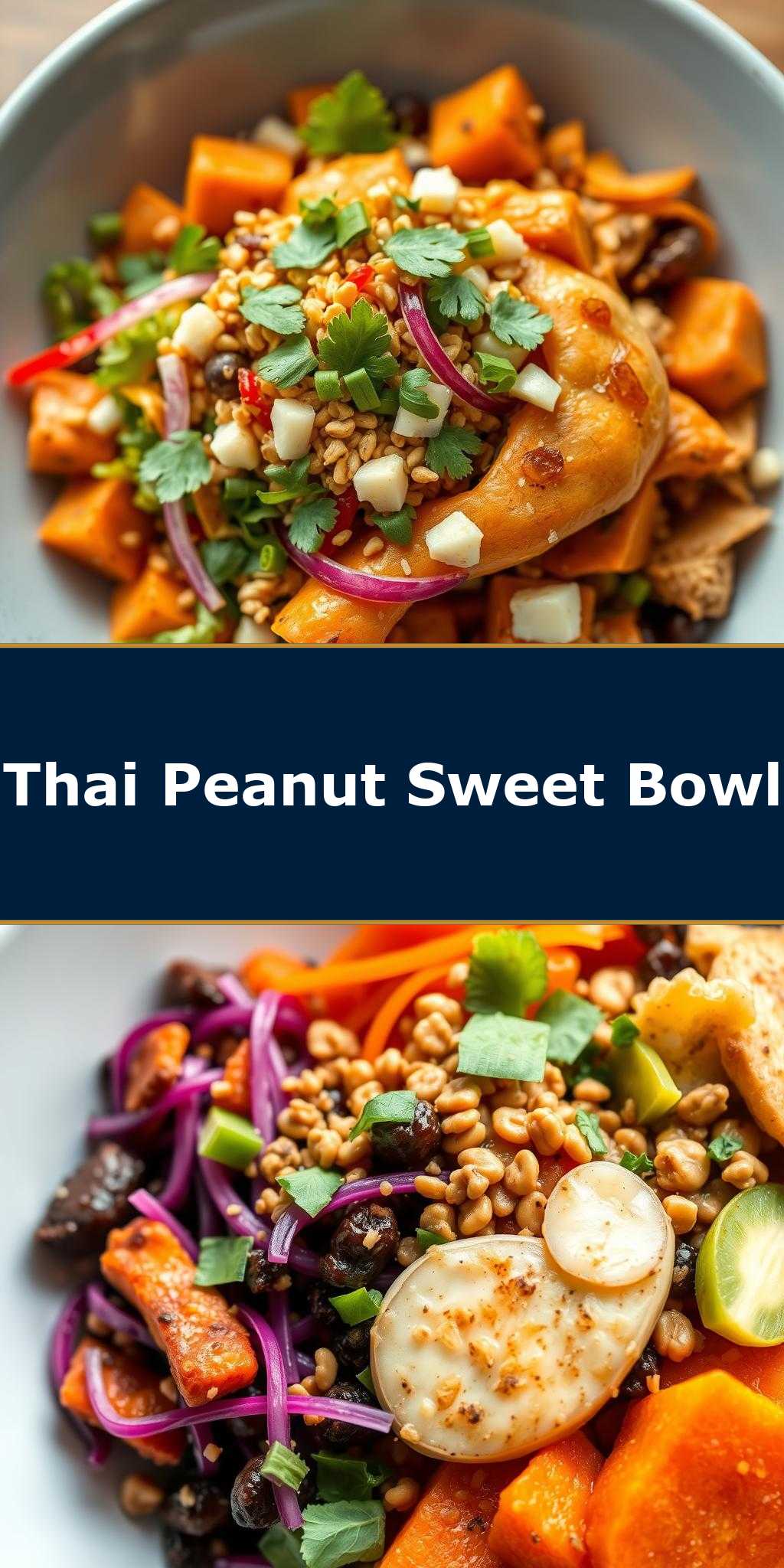
What makes a perfect weeknight dinner? This Thai Peanut Sweet Potato Buddha Bowl is a game changer with its roasted sweet potatoes and creamy peanut sauce making for a quick and easy homemade meal, save this idea for a delicious family favorite to try soon
Thai Peanut Sweet Potato Buddha Bowl
Introduction
Imagine a dish that combines the vibrant flavors of Thailand with the comforting warmth of a roasted sweet potato, all wrapped up in a nutritious and visually stunning Buddha bowl. The Thai Peanut Sweet Potato Buddha Bowl is a masterpiece of ease, flavor, and creativity, using everyday ingredients to create a culinary experience that will leave you and your guests in awe. This recipe is perfect for a weeknight dinner, a weekend brunch, or even as a meal prep option, thanks to its simplicity and the fact that it can be customized to suit any taste or dietary preference.
Why This Works
- Flavor balance and ingredient accessibility: The combination of roasted sweet potatoes, creamy peanut sauce, and a variety of textures from crunchy peanuts to soft herbs creates a perfectly balanced flavor profile that is both exotic and approachable.
- Ease of preparation: Despite its impressive presentation, this dish is surprisingly easy to prepare, requiring minimal cooking skills and effort, making it accessible to cooks of all levels.
- Impressive results with minimal effort: The layering of colors, textures, and flavors in a Buddha bowl format makes for a dish that looks as good as it tastes, perfect for special occasions or everyday meals when you want to add a bit of extra flair.
Key Ingredients
The Thai Peanut Sweet Potato Buddha Bowl centers around a few key ingredients: sweet potatoes, which provide a comforting base; peanuts or peanut butter, which add a rich, nutty flavor; Thai red curry paste, which brings a deep, slightly spicy flavor; coconut milk, which adds creaminess; and a variety of toppings such as herbs (basil, cilantro), beans (edamame, chickpeas), and seeds (sesame, pumpkin) for added texture and nutrition. Practical substitutions can be made with ingredients like almond butter for peanut butter or using different types of curry paste for varying levels of heat and flavor.
Instructions
- Step 1: Begin by preheating your oven to 425°F (220°C). Scrub and poke some sweet potatoes, then roast them in the oven for about 45-60 minutes, or until they’re tender when pierced with a fork. While the sweet potatoes are roasting, prepare your peanut sauce by blending together peanut butter, coconut milk, Thai red curry paste, soy sauce, maple syrup, and lime juice in a blender until smooth.
- Step 2: Cook your protein of choice (chicken, tofu, tempeh) according to your preference. For chicken, marinate it in a mixture of soy sauce, maple syrup, and lime juice, then grill or bake until cooked through. For tofu or tempeh, marinate and pan-fry until golden and crispy.
- Step 3: Prepare your toppings. Cook edamame according to package instructions, slice some red bell peppers and cucumbers, chop fresh herbs like basil and cilantro, and toast some peanuts or pumpkin seeds in a pan with a little oil until fragrant and lightly browned.
- Step 4: Assemble your Buddha bowls by slicing the roasted sweet potatoes in half lengthwise and topping them with your cooked protein, spooning the peanut sauce over the top, and then adding your prepared toppings. Finish with a sprinkle of toasted nuts or seeds and a few fresh herbs.
Handy Tips
- For a creamier peanut sauce, add more coconut milk. For a thicker sauce, add more peanut butter.
- Customize your toppings based on what’s in season and your personal preferences. Other great options include diced mango, sliced avocado, and pickled carrots.
- Avoid overcooking your sweet potatoes, as they can become too soft and fall apart. Similarly, don’t overcook your protein, as it can become dry.
Heat Control
When cooking your protein, especially if pan-frying tofu or tempeh, make sure to not overcrowd the pan, as this can lower the oil temperature, leading to greasy or undercooked food. Cook in batches if necessary, and always adjust the heat as needed to prevent burning. For roasting sweet potatoes, a consistent oven temperature is key, so ensure your oven is at the correct temperature before putting them in.
Crunch Factor
Achieving the right crunch factor in your Buddha bowl can elevate the dish from good to great. This can be done by adding a variety of crunchy elements such as toasted nuts or seeds, crispy fried onions, or raw vegetables like bell peppers and cucumbers. The key is to balance crunchy elements with softer components like the sweet potato and peanut sauce to create a satisfying mouthfeel.
Pro Kitchen Tricks
- For an extra creamy peanut sauce, soak the peanuts in water for a few hours before blending them into the sauce.
- Use leftover peanut sauce as a dip for vegetables or as a sauce for noodles or salads.
- Prepare components of the dish ahead of time. Roast sweet potatoes and cook protein a day in advance, and store them in the refrigerator until ready to assemble the bowls.
Storage Tips
- Store roasted sweet potatoes and cooked protein in airtight containers in the refrigerator for up to 3 days.
- Peanut sauce can be stored in the fridge for up to a week. Reheat gently before using.
- Assemble the Buddha bowls just before serving for the best texture and freshness. However, you can prepare all the components and store them separately in the fridge for up to a day before assembling.
Gift Packaging Ideas
If you’re considering gifting this dish, perhaps for a potluck or as a meal for a friend, consider packaging the components separately for a build-your-own bowl experience. Use a large, shallow container or a Mason jar for the sweet potato and protein, small jars for the peanut sauce and toppings, and decorate with a ribbon or a fresh herb sprig. Include a card with assembly instructions and suggestions for additional toppings.
Flavor Variations
- Different spices: Experiment with various curry pastes or add a sprinkle of cumin or coriander for a different flavor profile.
- Creative toppings: Try adding diced apples for sweetness, pickled ginger for tanginess, or grilled shrimp for added protein.
- Ingredient swaps: Use almond butter instead of peanut butter for a nutty twist, or substitute sweet potatoes with roasted cauliflower for a low-carb option.
Troubleshooting
- Texture problems: If your peanut sauce is too thick, add a bit more coconut milk. If it’s too thin, add more peanut butter.
- Ingredient replacements: Don’t have Thai red curry paste? Use a combination of curry powder and chili flakes as a substitute.
- Over/undercooking signs: Check your sweet potatoes for tenderness and your protein for internal temperature (165°F for chicken, 145°F for tofu/tempeh).
FAQs
- Can I freeze it? Yes, you can freeze cooked sweet potatoes and protein, but it’s best to assemble the bowls fresh for the best flavor and texture.
- Is it gluten-free? Yes, this recipe is gluten-free, making it suitable for those with gluten intolerance or sensitivity.
- Can I double the recipe? Absolutely, this recipe scales well. Just ensure you have enough oven space for the sweet potatoes and adjust cooking times accordingly.
Conclusion
The Thai Peanut Sweet Potato Buddha Bowl is a vibrant, nutritious, and incredibly delicious meal that embodies the spirit of creative and mindful eating. With its balance of flavors, ease of preparation, and versatility in customization, it’s a recipe that will quickly become a staple in your kitchen. Feel free to experiment with different toppings and ingredients to make it your own, and don’t hesitate to share your creations with friends and family. Happy cooking, and enjoy the journey of culinary exploration and sharing!