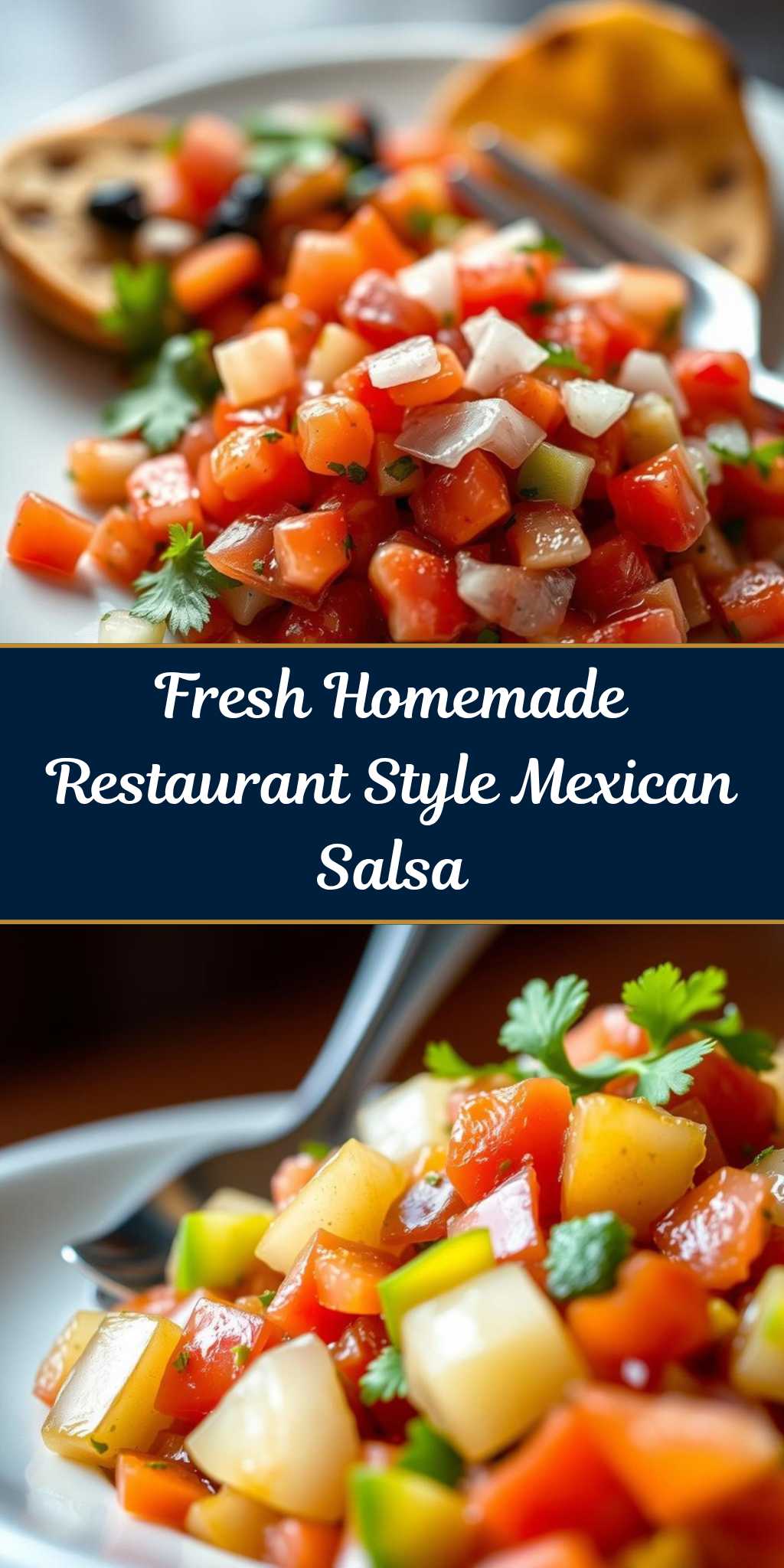
Craving authentic Mexican flavor at home? This easy homemade salsa recipe is a quick weeknight dinner game changer made with fresh tomatoes and jalapenos, perfect for a family favorite meal, save for later
Restaurant Style Salsa
Introduction
Imagine the vibrant flavors and freshness of a restaurant-style salsa, right in the comfort of your own home. This recipe is a testament to how easily you can elevate your snacks, meals, and gatherings with a simple, yet incredibly flavorful condiment made from everyday ingredients. The beauty of this salsa lies not just in its taste, but in its versatility and the creativity it inspires. Whether you’re a fan of spicy kicks, tangy twists, or herbaceous notes, this salsa recipe is your canvas, waiting for your personal touch. And the best part? It’s surprisingly easy to make, requiring minimal effort for a payoff that’s sure to impress.
Why This Works
- Flavor balance and ingredient accessibility: The secret to a great salsa is achieving a perfect balance of flavors—sweet, sour, spicy, and smoky. This recipe uses easily accessible ingredients, ensuring that you can replicate the magic without a special trip to the store.
- Ease of preparation: Unlike many recipes that require hours of preparation or complex cooking techniques, this salsa comes together in a breeze. Chop, mix, and serve—it’s that straightforward.
- Impressive results with minimal effort: What’s most rewarding about this recipe is the disproportionate return on effort. With just a few minutes of your time, you’ll have a salsa that rivals your favorite restaurant’s, perfect for snacking, as a topping, or as a dip.
Key Ingredients
The foundation of a great salsa is in its ingredients. For this recipe, you’ll need:
– 1 cup of diced fresh tomatoes (or 1 can of diced tomatoes for a year-round option)
– 1/2 cup of diced red onion
– 1/4 cup of diced fresh cilantro
– 1 jalapeño pepper, seeded and finely chopped
– 1 lime, juiced
– 2 cloves of garlic, minced
– Salt and pepper to taste
– Optional: For an added depth of flavor, a tablespoon of olive oil can be used to sauté the garlic and jalapeño briefly before mixing with the other ingredients.
Practical substitutions can include using different types of hot peppers for varying heat levels or swapping cilantro with parsley for a slightly different flavor profile.
Instructions
- Step 1: Begin by preparing your ingredients. Chop the tomatoes, red onion, cilantro, and jalapeño. Mince the garlic. If using fresh tomatoes, ensure they are diced into small, uniform pieces to release their juices and blend flavors well.
- Step 2: In a large bowl, combine the chopped tomatoes, red onion, cilantro, jalapeño, garlic, salt, and pepper. Mix well to ensure all the ingredients are evenly distributed.
- Step 3: Squeeze the lime juice over the mixture and toss to coat. This step is crucial as the acidity helps to bring out the flavors of the other ingredients and adds a bright, fresh taste to the salsa.
- Step 4: Taste and adjust the seasoning as needed. If the salsa needs more heat, add more jalapeño. If it needs a bit more acidity, add a squeeze more of lime juice. This is your chance to personalize the flavor to your liking.
Handy Tips
- For the best flavor, use the freshest ingredients possible. Fresh tomatoes, especially, make a significant difference in the overall taste and texture of the salsa.
- Don’t overmix. The ingredients should be combined but still retain some texture. Overmixing can lead to a salsa that’s too smooth and loses its fresh, chunky appeal.
- Consider the intended use of your salsa when deciding on the level of heat or the ingredients to include. For example, if you’re serving it with delicate fish, you might opt for a milder version.
Heat Control
Since this recipe involves raw ingredients, there’s no cooking time to worry about. However, if you choose to sauté the garlic and jalapeño in olive oil for added depth, do so over medium heat for about 1-2 minutes, until fragrant. Be cautious not to burn the garlic, as it can quickly become bitter.
Crunch Factor
The desired crunch in this salsa comes from the fresh, raw ingredients, particularly the onions and the tomatoes. To maintain this texture, avoid overmixing or letting the salsa sit for too long, which can cause the ingredients to become soggy. If you prefer a smoother salsa, a quick blend in a food processor can help, but be sure to leave some texture for the best experience.
Pro Kitchen Tricks
- Use a variety of peppers to add complex heat and flavor profiles. For example, combining jalapeño with a bit of habanero can add a fruity, intense heat.
- Let the salsa sit at room temperature for about 30 minutes before serving to allow the flavors to meld together. This simple step can elevate the salsa from good to great.
- For cleanup, have a bowl of water ready to rinse your chopping board and utensils immediately after handling peppers to avoid the oils from spreading and causing discomfort.
Storage Tips
- The salsa can be stored in an airtight container in the refrigerator for up to 3 days. Give it a good stir before serving.
- For longer storage, consider canning the salsa using a water bath canner, following safe canning practices to ensure the salsa remains fresh and safe to eat.
- Freezing is also an option, though the texture might suffer slightly. Freeze in ice cube trays for easy portioning and thaw as needed.
Gift Packaging Ideas
This salsa makes a wonderful gift, especially when packaged with thought and care. Consider filling decorative jars, topping them with a fresh sprig of cilantro, and wrapping them in a ribbon or twine. For a more rustic look, mason jars with a handmade label can add a personal touch. Don’t forget to include a few tortilla chips or fresh vegetables for a complete gift.
Flavor Variations
- Different spices: Add a pinch of cumin for a smoky flavor or some smoked paprika for a deep, earthy note.
- Creative toppings: Experiment with adding diced mango for a sweet and spicy combination or some crumbled queso fresco for a salty, creamy element.
- Ingredient swaps: Replace jalapeño with serrano peppers for an even brighter, more vibrant heat or use lemon juice instead of lime for a slightly different acidity profile.
Troubleshooting
- Texture problems: If the salsa becomes too watery, try straining it through a fine-mesh sieve to remove excess liquid. For a salsa with too much texture, a quick blend can help.
- Ingredient replacements: Always taste as you go and adjust the seasoning. If an ingredient is not available, look for substitutes that offer similar flavor profiles.
- Over/undercooking signs: Since this is a raw salsa, the concern is more about the freshness and handling of the ingredients. Ensure all ingredients are fresh and handled safely to avoid spoilage or foodborne illness.
FAQs
- Can I freeze it? Yes, though the texture might change slightly. It’s best to freeze in portions (like ice cube trays) for easy thawing and use.
- Is it gluten-free? Yes, this recipe is naturally gluten-free, making it suitable for those with gluten intolerance or sensitivity.
- Can I double the recipe? Absolutely. Simply multiply all the ingredients by two. This is a great option if you’re planning a large gathering or want to have some extra salsa on hand.
Conclusion
Making restaurant-style salsa at home is not just about following a recipe; it’s about embracing the freedom to experiment, to personalize, and to share. This salsa is more than just a condiment; it’s a way to bring people together, to add a burst of flavor to any meal, and to experience the joy of creating something delicious with your own hands. So, don’t be afraid to try new combinations, to add your own twist, and to make this recipe your own. Happy cooking, and let the salsa making begin!